COMMON KESTREL (Falco tinnunculus) Birds of prey, also known as raptors, are a group of birds specialised in hunting and feeding on other animals. Their unique anatomical and behavioural traits make them some of the most capable hunters in the animal kingdom. These birds play a key role in the ecosystem, maintaining the natural balance among prey populations Birds of prey have developed a range of adaptations that make them exceptional hunters. Sharp beaks: their curved, powerful beaks are used to tear the flesh of their prey. Strong, curved claws: the claws, known as talons, are ideal for catching, holding and killing prey. Exceptional eyesight: the vision of these birds is often ten times sharper than a human’s, allowing them to spot prey from great distances. Speed and agility: many birds of prey can reach high speeds in flight, which gives them an advantage when hunting. The peregrine falcon (Falco peregrinus), for example, is the fastest bird in the world, reaching speeds of over 300 km/h in a dive. Silent flight: nocturnal birds of prey, such as owls, have plumage that allows almost silent flight so they can attack prey unnoticed.
COMMON KESTREL (Falco tinnunculus)
What does a kestrel look like?
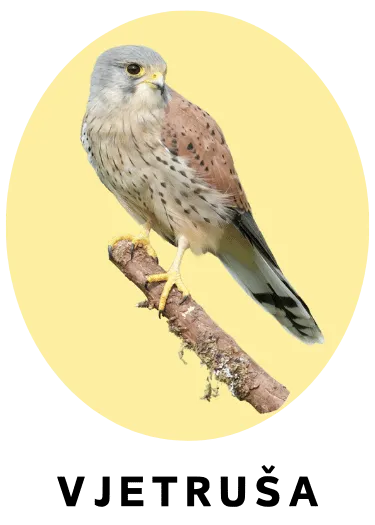
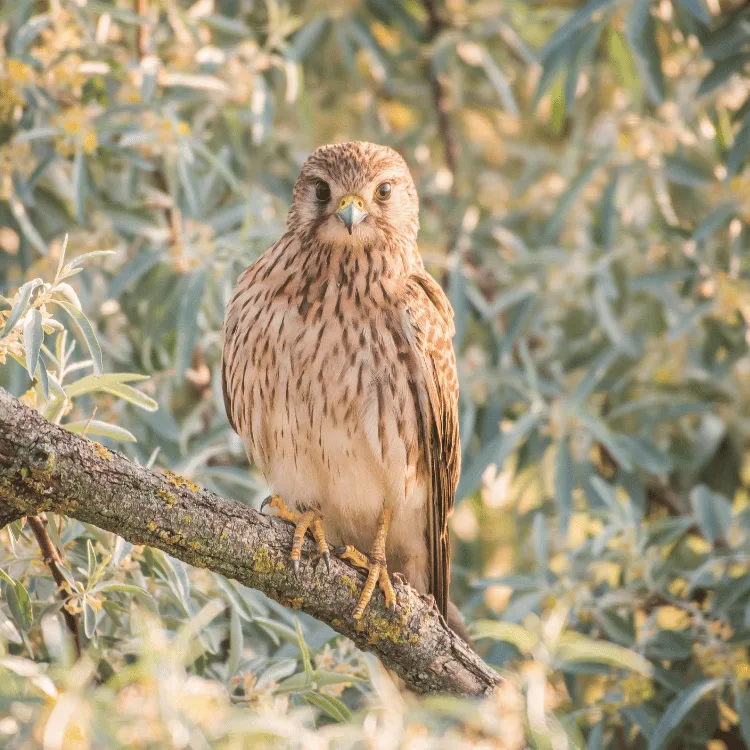
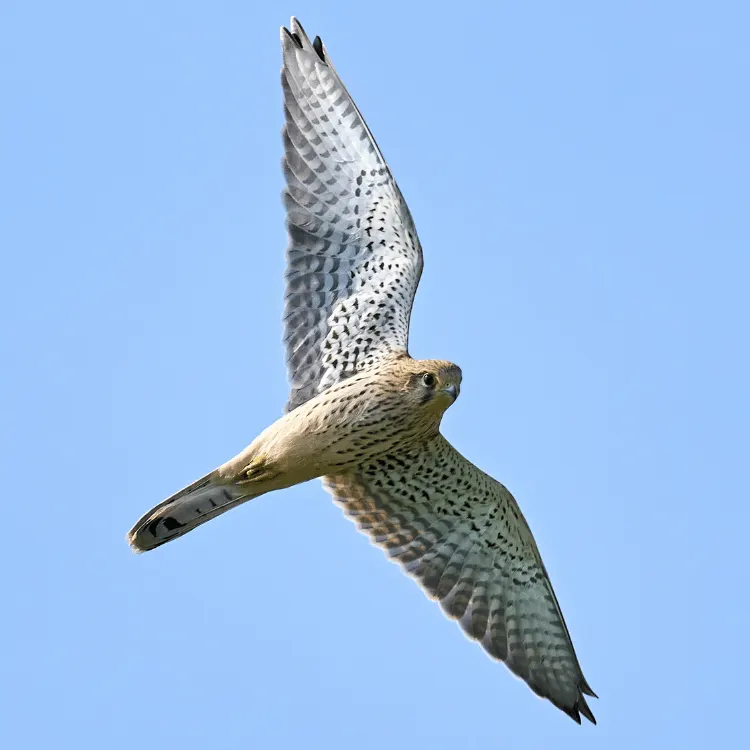
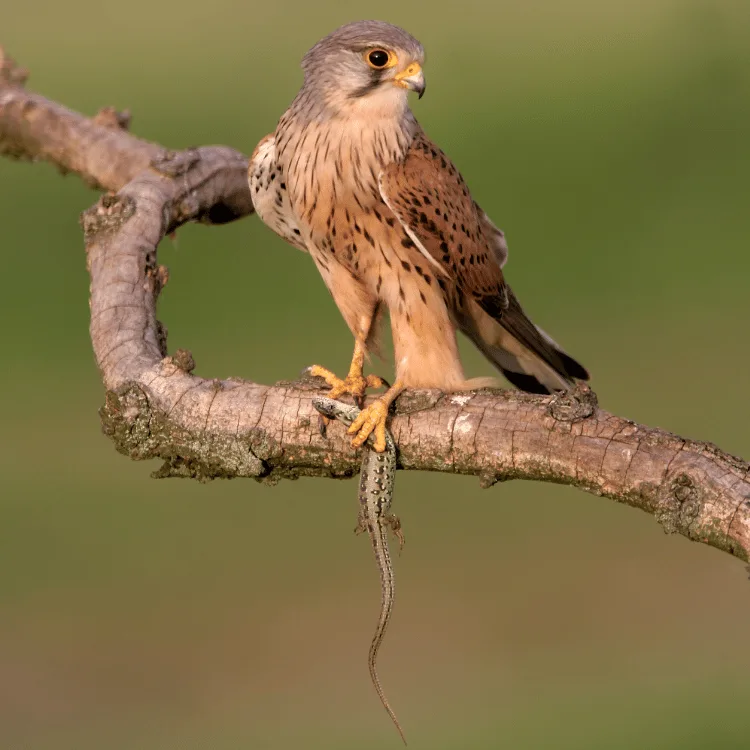
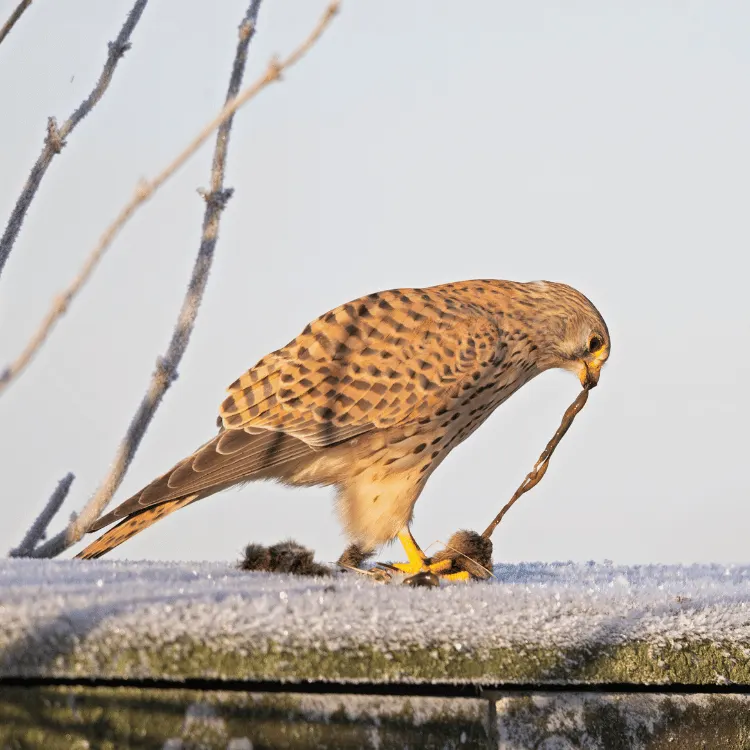
The common kestrel is a medium-sized bird of prey with a body length of 32–39 cm and a wingspan of 65–82 cm. Males and females differ in colour: Males: they have a characteristic blue-grey head and a grey tail with a black tip, while the body is reddish-brown with dark spots. Females are usually brown and patterned, and instead of a grey tail they have a brown, barred one. Their slender build and long, pointed wings give them incredible agility in the air. One of the kestrel’s most striking features is its “hovering flight”. When hunting, the kestrel can hold itself in one spot in the air, beating its wings while using its tail to keep stable. This allows it to scan the ground precisely for prey. When it spots its prey, it drops down quickly and grabs it with its strong talons. Kestrels are very adaptable birds that live in a variety of habitats.
It flies like the wind
The common kestrel (Falco tinnunculus) is one of the best-known birds of prey that can be seen in Croatia. This slender, elegant bird is known for its ability to hover in one spot in the air while searching for prey. Its Croatian name, vjetruša, comes from exactly this trait, because it looks as though it is defying the wind.
Habitats
Open fields and meadows Woodland edges Rocky areas and mountain slopes Urban areas – they often nest on buildings, churches and bridges Kestrels are found throughout Europe, Asia and Africa. In Croatia you can see them in almost every region, especially in rural areas.
What do kestrels eat?
The common kestrel feeds mainly on small rodents such as mice and voles, but it also hunts birds, insects, lizards and, occasionally, frogs. Its diet plays a key role in the ecosystem because it helps control pest numbers. A single kestrel can catch several dozen rodents a day, reducing damage to crops and farmland.
Nesting and breeding
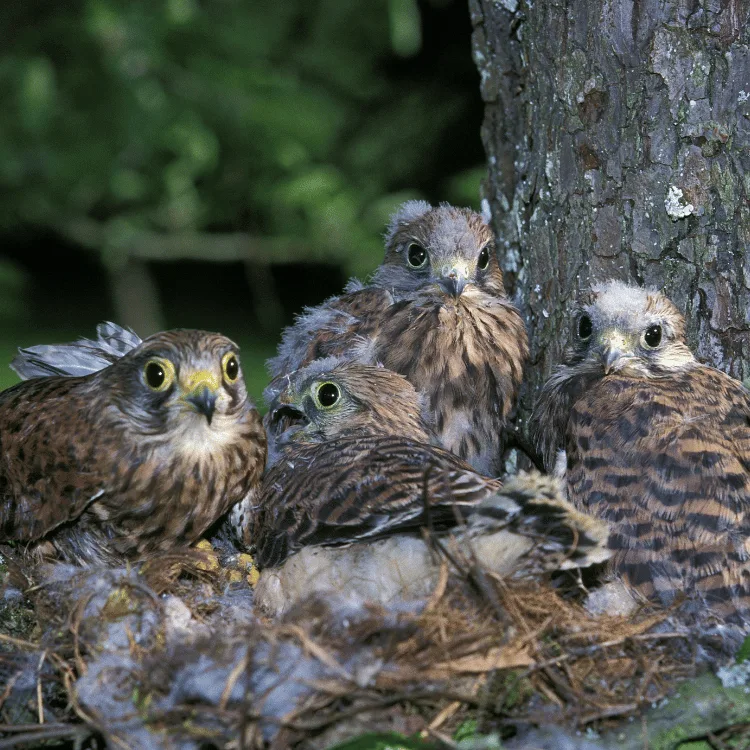
Kestrels do not build their own nests but use the abandoned nests of other birds, holes in rocks or even holes in buildings. Breeding season: it begins in spring, usually in April. Eggs: the female lays 4–6 eggs, which she incubates for about 28 days. After hatching, the chicks stay in the nest for about a month and then begin learning to fly and hunt under their parents’ supervision. Young kestrels become independent very quickly and often disperse over large areas in search of their own territory.
Interesting facts about the kestrel
Eyesight as a superpower: kestrels have incredible eyesight – as much as 8 times better than a human’s. They can see the slightest movement of prey from a height of 50 metres. Ultraviolet vision: their eyes can see ultraviolet light, which allows them to follow rodents’ urine trails on the ground. Fast and agile: although they are not among the fastest birds of prey, as falcons are, kestrels can fly at up to 60 km/h and are incredibly nimble in the air. A symbol of purity: in some cultures the kestrel is seen as a symbol of purity and harmony with nature.
Threats and protection
Although kestrels are adaptable birds, they face a number of threats. Habitat loss: intensive farming and urbanisation reduce the space available for hunting and nesting. Pesticide poisoning: the use of rodent poisons often affects kestrels indirectly. Climate change: changes in the environment can affect the availability of food and nesting sites.
Thanks to bird protection laws, the kestrel population in Europe is stable. Even so, further efforts are needed to preserve their habitats and to raise awareness of their important role in nature. Kestrels are not only a symbol of freedom and the beauty of nature – they are also farmers’ natural allies, helping to keep harmful rodent populations in check. Their presence is a sign of a healthy ecosystem, and their survival depends on our willingness to protect nature and these fascinating birds of prey. If you notice a kestrel hovering in the sky above a meadow or field, stop for a moment and enjoy the sight of a true artist of flight!