The jackdaw, a member of the crow family (Corvidae), is one of the most intelligent birds in the world. Found across Europe, Asia and North Africa, this medium-sized bird fascinates with its remarkable adaptability, complex social life and incredible problem-solving skills. Their high cognitive ability has made them the subject of numerous scientific studies, which reveal just how unique the jackdaw is in the bird world.
Western jackdaw (Coloeus monedula)
Appearance and physical features of the jackdaw
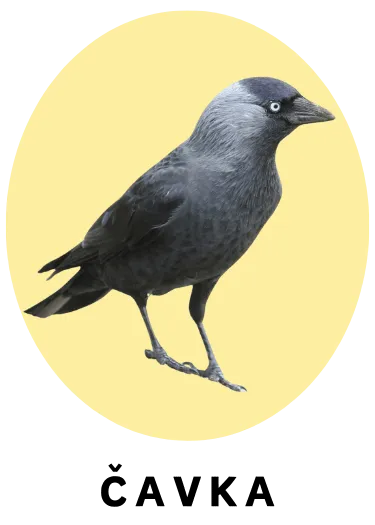
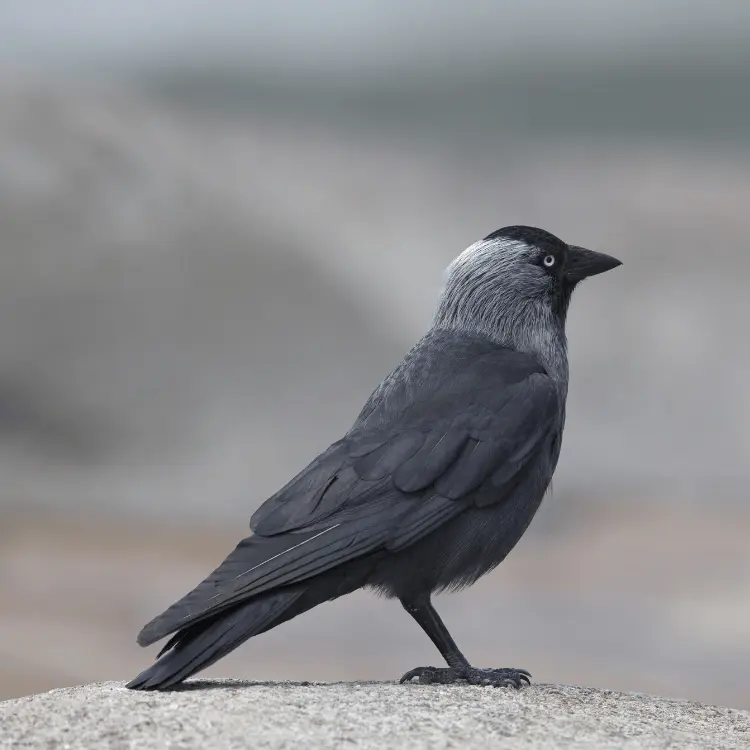
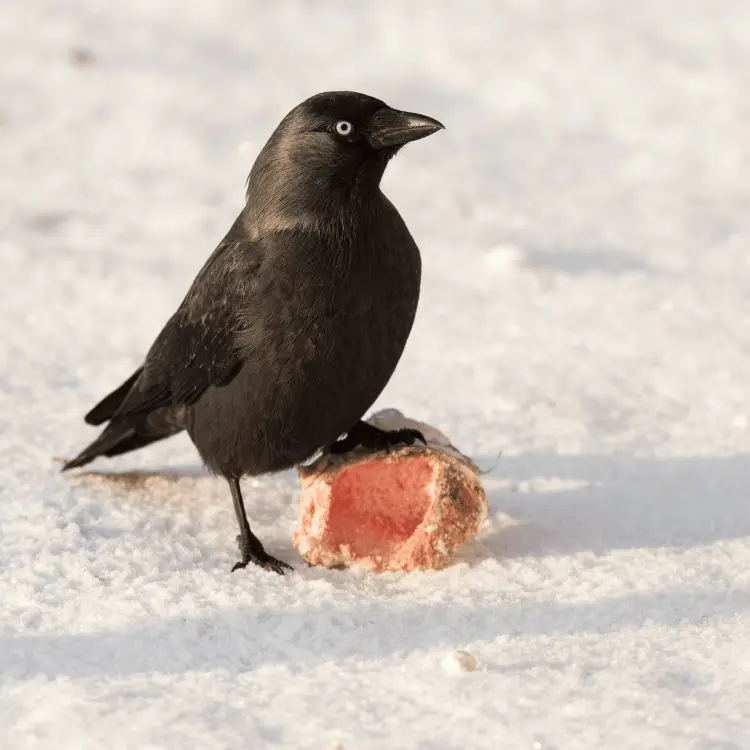
The jackdaw is an elegant bird that is easy to recognise. Its body is covered in glossy black feathers with a metallic sheen on the head and neck, while the rest of the body has a dark grey tinge. The jackdaw’s eyes are pale blue or greyish-white, giving it a piercing, almost hypnotic gaze. The beak is short but strong, perfectly suited to a varied diet. Adult jackdaws reach a length of about 34 centimetres, and their wingspan is between 60 and 70 centimetres.
Diet and dietary adaptability
Jackdaws are omnivores and are known for their ability to adapt to a wide range of food sources. Their diet includes insects, worms, fruit, seeds and nuts, as well as food scraps they find near human settlements. They are extremely skilled at using tools to get at food. They are known to crack nuts by dropping them from a height onto hard surfaces, or to use twigs to pull insects out of cracks. Such behaviour shows a high level of cognitive ability that makes jackdaws comparable to some primates.
Social structure and mating in jackdaws
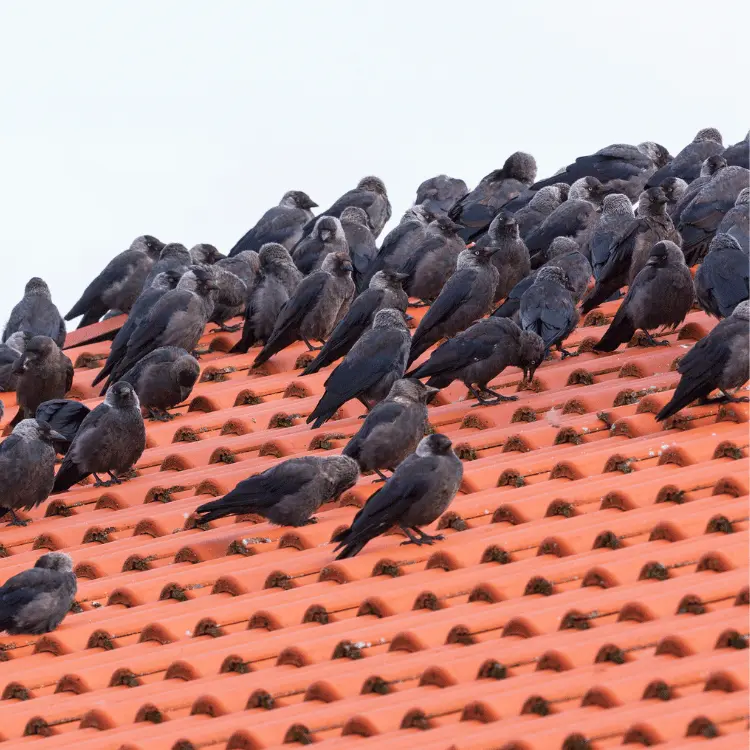
In the wild, jackdaws live for 10 to 15 years, while in captivity they can reach more than 20 years. Their social nature is very pronounced. Jackdaws live in flocks and form complex social relationships. During the breeding season they form monogamous pairs that build their nests together in tree hollows, rock crevices or on buildings. The female usually lays four to six eggs and incubates them for about 18 days, while the male provides food. The chicks stay in the nest for up to four weeks after hatching, and the parents continue to look after and feed them even after they have learned to fly.
Jackdaw intelligence: problem-solving and tool use
Scientific research has revealed that jackdaws have an incredible ability to solve problems and use tools, placing them among the most intelligent birds. In experiments they have shown that they can adapt tools to reach food that is hard to get at. In one study, a jackdaw bent a wire into a hook to pull food out of a tube – a process that requires thinking ahead and the ability to imagine a solution. Jackdaws also have a developed sense of self-awareness. In mirror experiments they successfully recognised their own reflection, which is extremely rare in the animal world. Their calls are also very complex; they use a wide range of sounds to communicate within the flock, and some researchers believe that jackdaws even develop dialects that differ depending on the region where they live.
Curious behaviour: collecting shiny objects
One interesting aspect of jackdaw behaviour is their curiosity about shiny objects. Although not all of them do it, they occasionally collect small objects such as bits of glass, metal or other glittering items. This behaviour may be linked to play, exploration or even aesthetic preferences, which only confirms how complex their behaviour is and that they can think beyond their basic needs.
The jackdaw’s role in the ecosystem
Jackdaws play a key role in the ecosystem. As opportunists, they help control insect populations and clean up the environment by removing food waste. Their adaptability has allowed them to thrive not only in natural habitats but also in urban settings. Because of their exceptional intelligence and adaptability, jackdaws often serve as model organisms in research on bird behaviour and cognition
Conclusion: the jackdaw as a symbol of adaptability and intelligence
The jackdaw is a bird that never stops fascinating scientists and nature lovers around the world. Its striking appearance, complex behaviour and exceptional intelligence make it a symbol of adaptability and resourcefulness in the bird world. Every sighting of a jackdaw is a chance to learn about and marvel at one of the most special creatures in nature.