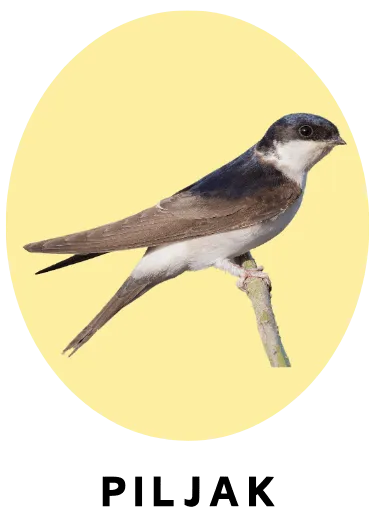
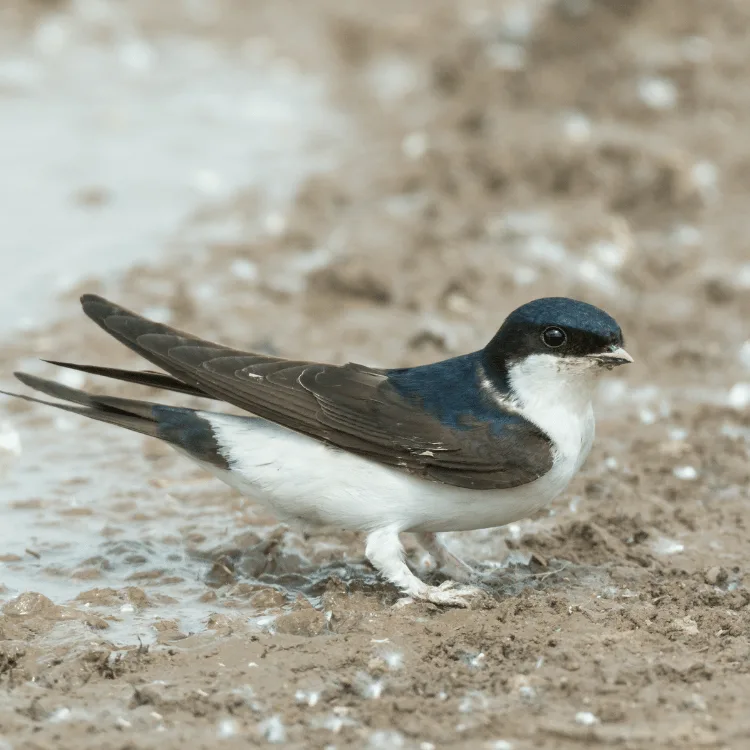
The common house martin (Delichon urbicum), also known in Croatian as the “town swallow”, is one of the most recognisable migratory birds in Europe. This small member of the swallow family can often be seen flying fast in search of insects or building its mud nests under eaves and on the walls of buildings. In this article you can find out more about its characteristics, diet, habitat and how to protect it.
Common house martin (Delichon urbicum)
What does the house martin look like?
The house martin is a migratory bird that breeds throughout Europe, Asia and North Africa and spends the winter in sub-Saharan Africa. It is most often seen in towns, villages and on cliffs, where it builds its nests under eaves and overhangs. These birds are sociable and often nest in colonies. Migration begins in September, and they return to Europe in March and April, when the breeding season begins.
What do house martins eat?
House martins are insectivorous birds, which means they feed exclusively on insects caught in flight. Their diet includes: small flies, mosquitoes, aphids and other flying insects; spiders and small grasshoppers that sometimes end up in the air; and occasionally small beetles and butterflies
These birds play a key role in controlling insect numbers, especially in urban areas, where they reduce populations of mosquitoes and other pest insects.
Nesting and raising the young
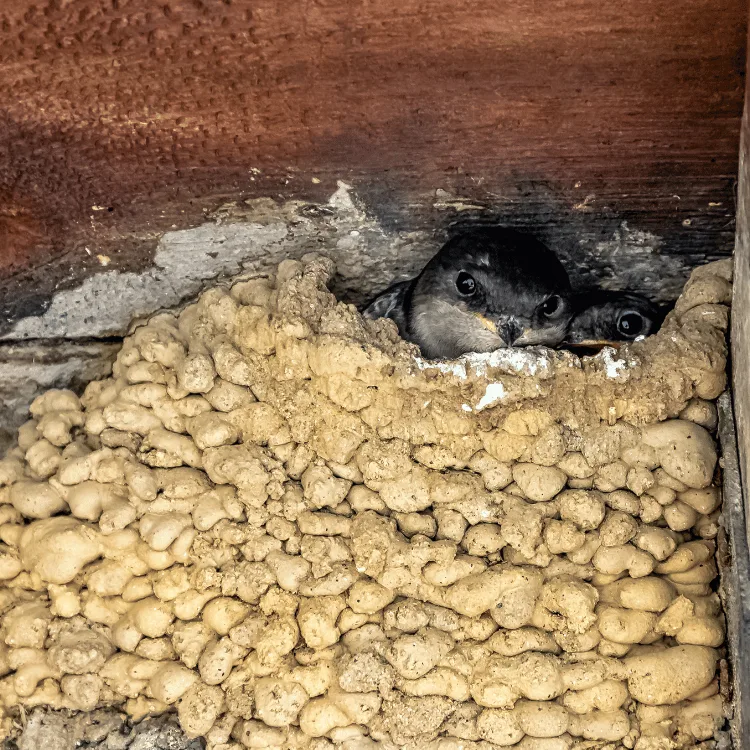
The house martin is known for building its nests from mud, often on the walls of buildings, under bridges and overhangs. The breeding season lasts from May to August. The pair builds the nest from small pellets of mud mixed with saliva, and the same nest is often used for several years.
The female lays 3–5 white eggs, which she incubates for about 14–16 days.
After hatching, the young stay in the nest for about 22–25 days, and the parents feed them tirelessly.
Protecting the house martin
Sadly, the house martin population is gradually declining due to habitat loss and falling insect numbers caused by pesticide use. Here are a few ways we can help them: Preserve their nests – do not remove or destroy house martin nests, as they are protected by law in many countries, including Croatia. Put up artificial nests – if house martins are struggling to find suitable nesting sites, you can offer them artificial nests. Avoid pesticides – pesticides reduce insect numbers, making it harder for house martins to find food. Look after green spaces – parks, gardens and meadows rich in insects help to secure their food supply.
Conclusion
The common house martin (Delichon urbicum) is not only a beautiful and useful bird but also an important part of our ecosystem. Its presence helps to control insect numbers, and its nesting in towns brings a special charm to urban life. By conserving their habitats and supporting natural food sources, we can help protect this species for future generations.