The hoopoe – an unmistakable bird with a distinctive look
The Eurasian hoopoe (Upupa epops) is a bird known for its remarkable appearance, especially its long beak and its distinctive crest. This bird is not only visually striking but is also a symbol of the plains and woodlands of Europe and Asia. Although it is not especially widespread, the hoopoe is often noticed because of its unusual appearance and behaviour.
What does the hoopoe look like?
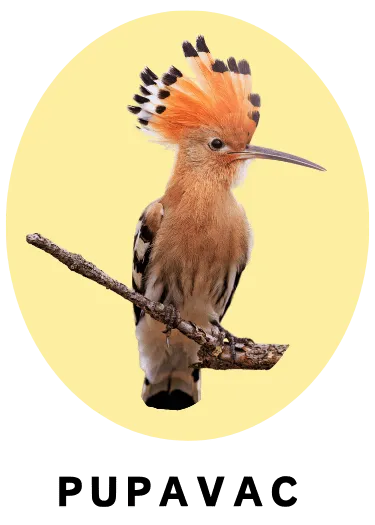
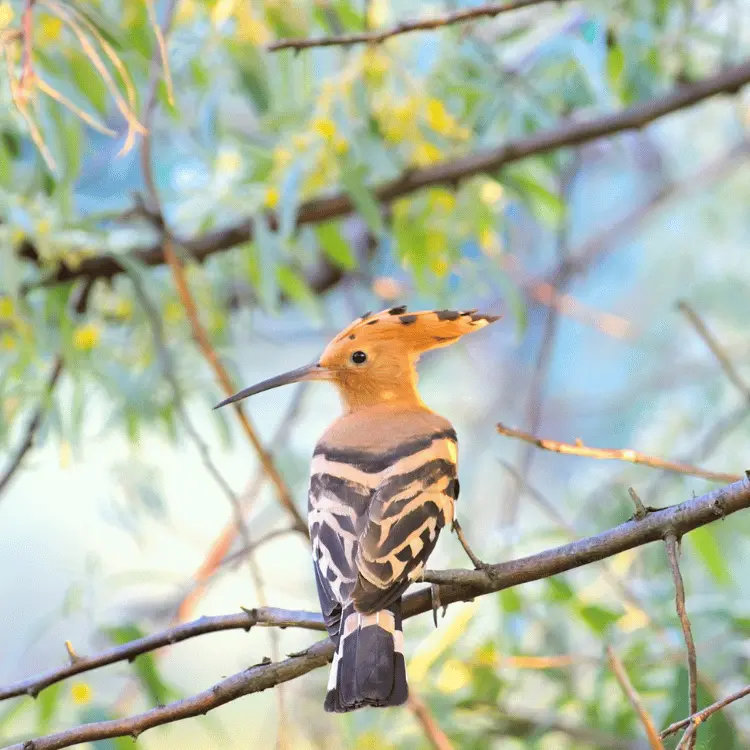
The hoopoe is a medium-sized bird with a very distinctive appearance, including colourful plumage, a long beak and a prominent crest on its head.
Plumage: the hoopoe has distinctive orange and brown plumage, while its wings are dark with white bars that make it stand out in nature.
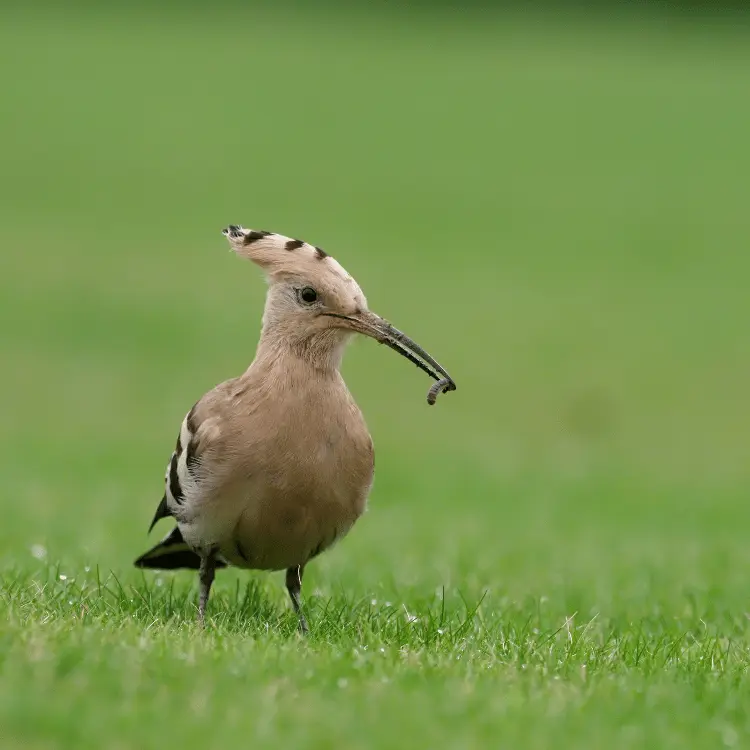
Beak: it uses its long, curved beak to dig insects and other small creatures out of the ground.
Crest: the most striking feature of its appearance is the large crest on its head, which it can raise when it is alarmed or excited.
Eyes: large eyes that allow it to find its way around its habitat with great precision.
The hoopoe is a bird that can be proud of its beauty and special features, and it is often admired for its unusual appearance and behaviour. It lives in various habitats, including woodland edges, meadows and fields.
Hoopoe habitat and distribution
The hoopoe lives in Central and Eastern Europe, as well as in Asia and parts of North Africa. It is associated with open country and meadows, but also with sparsely wooded areas. Hoopoes often make use of natural cavities such as hollow trees and holes in the ground, where they nest and find shelter from predators.
Hoopoe migration
The hoopoe is a migratory bird that flies south for the winter and returns to its breeding grounds in spring, when conditions for nesting improve.
What does the hoopoe eat?
The hoopoe is an insectivorous bird, which means it feeds mainly on small insects, including ants, bugs, caterpillars and beetles.
Hunting habits
Digging for food: the hoopoe uses its long beak to probe the ground in search of prey. Its diet often includes small insects that hide in the soil or under tree bark.
Hunting on the ground: this bird specialises in hunting on the ground, where it spends the vast majority of its time.
Hoopoe behaviour during the breeding season
The male takes up a territory and starts calling for a female with a loud “oop-oop-oop” song.
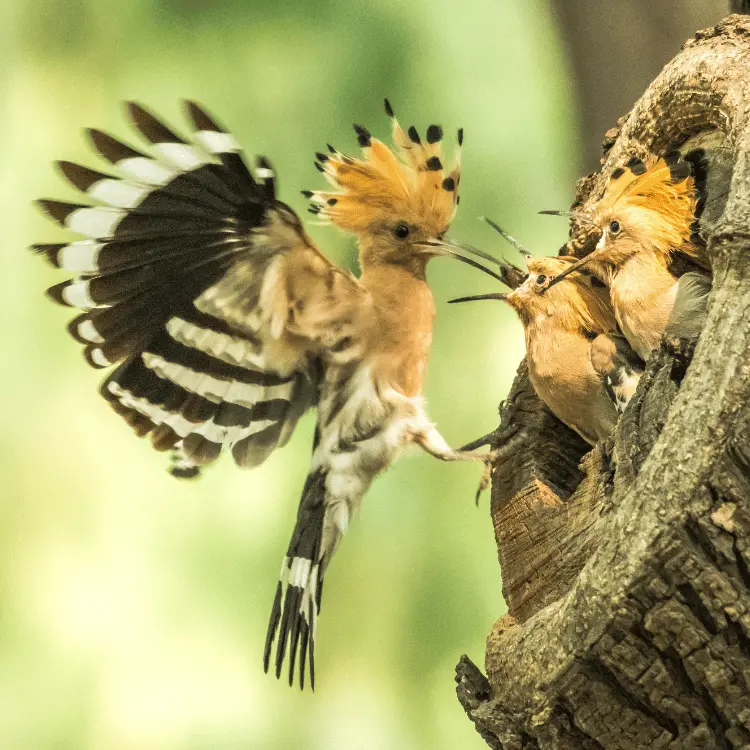
When a female approaches, the male performs a courtship ritual – he offers her food (insects, larvae) and shows off his splendid crest by raising the feathers on his head.
If the female is interested, she accepts the food, which often marks the start of mating.
The pair looks for tree hollows, cracks in walls or holes in the ground to nest in.
During nesting, the female stays in the nest and secretes a foul-smelling substance that repels predators.
Caring for the young: both parents are actively involved in raising the chicks. After the young leave the nest, the parents continue to feed them until they become independent.
Hoopoes are monogamous during the breeding season, and the male keeps feeding the female while she sits on the eggs.
Territoriality
Hoopoes are often territorial and defend their patch, with males usually taking on the role of guarding the territory against other males.
Interesting facts about the hoopoe
Crest: the crest, which is raised and lowered, plays a key role in signalling the bird’s state of mind, whether it is in danger or wants to attract a female’s attention.
It likes dry ground: hoopoes often choose dry, open areas to hunt in, as these make it easier to get at insects.
A symbol in many cultures: in many cultures the hoopoe is considered a symbol of luck, love and victory because of its grace and distinctive appearance.
Research on the hoopoe
Research on hoopoes focuses on their migration patterns, feeding habits and the impact of climate change on their habitats. Scientists are also studying how urbanisation affects the availability of natural habitats and the quality of food for this bird.
Conclusion
The hoopoe is a bird that fascinates with its unique appearance, its behaviour and its important role in the ecosystem. With its distinctive beak and crest, this bird carries not only beauty but also symbolic value in many cultures. Whether we look at its nesting, its hunting skills or its territorial behaviour, the hoopoe remains not only beautiful but also an important part of the balance of nature.