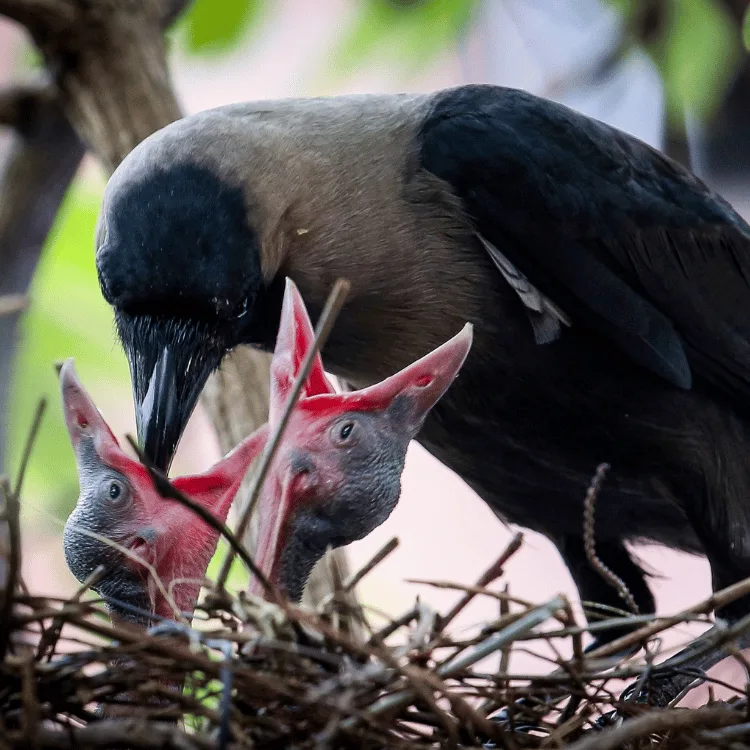
The hooded crow: a symbol of intelligence and adaptability
The hooded crow(Corvus cornix) is one of the best-known and most adaptable members of the crow family. Its presence in towns, forests and farmland makes it an important part of local ecosystems, and its remarkable cognitive abilities attract the attention of scientists and nature watchers.
Hooded crow (Corvus cornix)
Appearance and identification
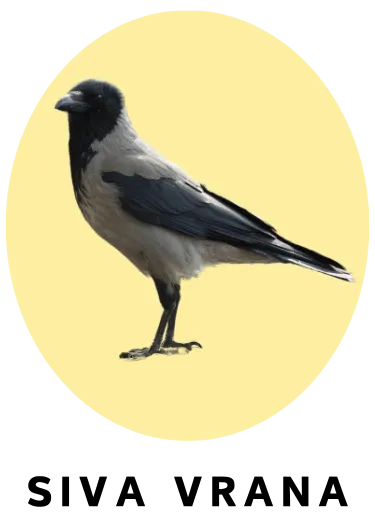
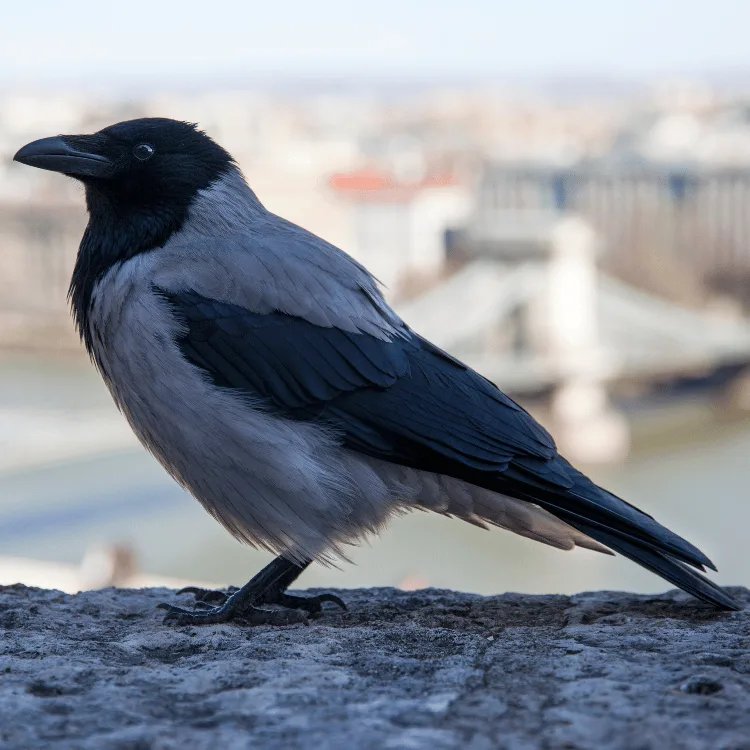
The hooded crow is recognisable by its striking two-tone plumage. Its head, throat, wings and tail are black with a metallic sheen, while its neck, belly and back are grey. Adults have a strong black beak and dark eyes. With its slender body, a length of about 45 centimetres and a wingspan of up to 100 centimetres, the hooded crow makes an impressive and elegant impression.
Habitat and distribution
The hooded crow is widespread throughout Europe and Asia, and in Croatia it can be seen in almost every region, from the coast to the inland areas. This adaptable bird thrives in a variety of habitats, including forests, farmland and urban areas, where it has become part of everyday life.
Diet and feeding habits
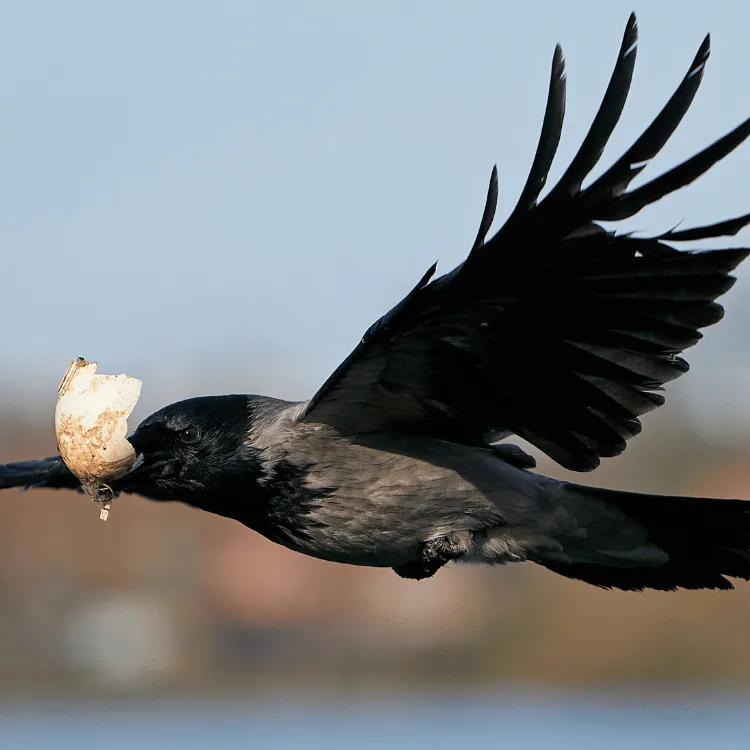
The hooded crow is omnivorous and shows an exceptional ability to adapt in its search for food. Its diet includes insects, small mammals, fruit, seeds, food scraps and carrion. In towns it often looks for food at rubbish tips or follows people in search of leftovers. It is known for its ability to use tools, such as twigs to extract food from hard-to-reach places, which makes it one of the most resourceful birds.
Behaviour and social life
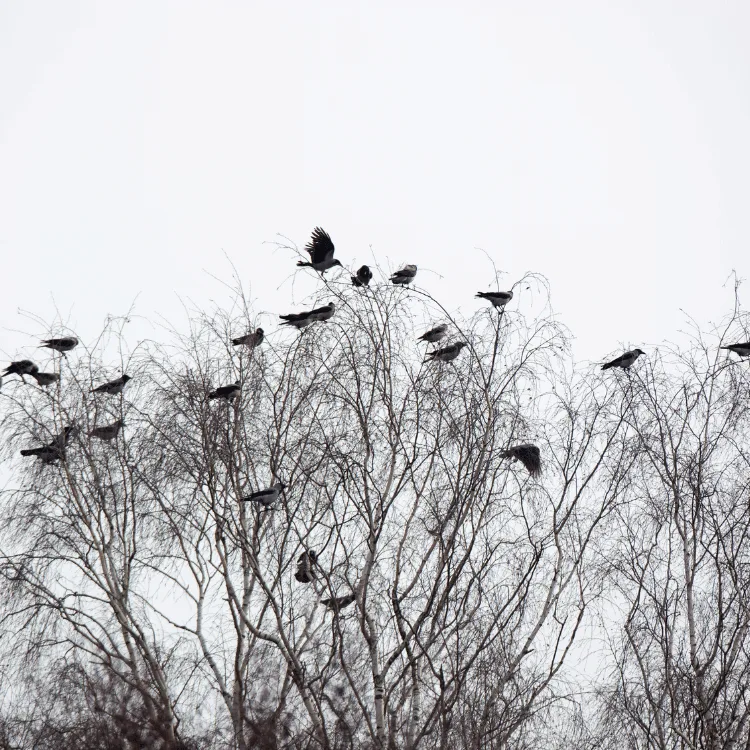
Hooded crows are known for their intelligence and complex social structures. They are most often seen in pairs or small groups, but in winter they form larger flocks. Their behaviour includes a range of complex activities such as sharing food, playing and establishing a hierarchy within the group. Hooded crows communicate using a range of calls, from the characteristic “kraa-kraa” to more complex sounds used as warnings or to keep in contact.
Lifespan and nesting
In the wild, the hooded crow can live for between 10 and 15 years, while under controlled conditions, such as in zoos, it can reach more than 20 years. These birds are monogamous, and pairs often stay together for life. They build their nests in tall trees or inaccessible places, using twigs, leaves and mud. The female usually lays 4–6 eggs, which she incubates for about 18 days, while the male provides the food. The young stay in the nest for several weeks before becoming fully independent.
Scientific research
Hooded crows are often studied because of their exceptional cognitive abilities.Research shows that they have an excellent memory, recognise human faces and can tell friendly people from hostile ones. It has also been shown that they are capable of complex planning, such as hiding food for later and manipulating objects to reach a goal. Their ability to learn and adapt to environmental conditions attracts the attention of ethologists and ecologists.
Interesting facts about the hooded crow
Hooded crows are often linked with myths and folklore, where they have been regarded as symbols of wisdom or bad luck, depending on the culture. Interestingly, the hooded crow can recognise its reflection in a mirror, which is a sign of a high level of self-awareness. They are also known for “vengeful” behaviour – if someone disturbs them, they will remember that person and may behave aggressively towards them, or even teach other crows to avoid them.
Hooded crows in Croatia
In Croatia, hooded crows arecommon and highly adaptable in every region. They can be seen in cities such as Zagreb, Split and Osijek, where they play a key role in controlling pest populations. In coastal areas they often share their habitat with other crow species and birds of prey, and their presence contributes to the ecological balance.
Conclusion
The hooded crowis a symbol of intelligence and adaptability, playing an important role in ecosystems across Croatia and the world. Although it is sometimes seen as a nuisance, its complex nature and its contribution to the environment make it a fascinating bird worthy of respect and admiration.