The hawfinch (Coccothraustes coccothraustes) is a large, powerful finch known for its impressive beak, which can crush even the hardest seeds. This migratory species often goes unnoticed because of its secretive nature, even though it lives in forests, orchards and parks across Europe and Asia.
Appearance and distinctive features
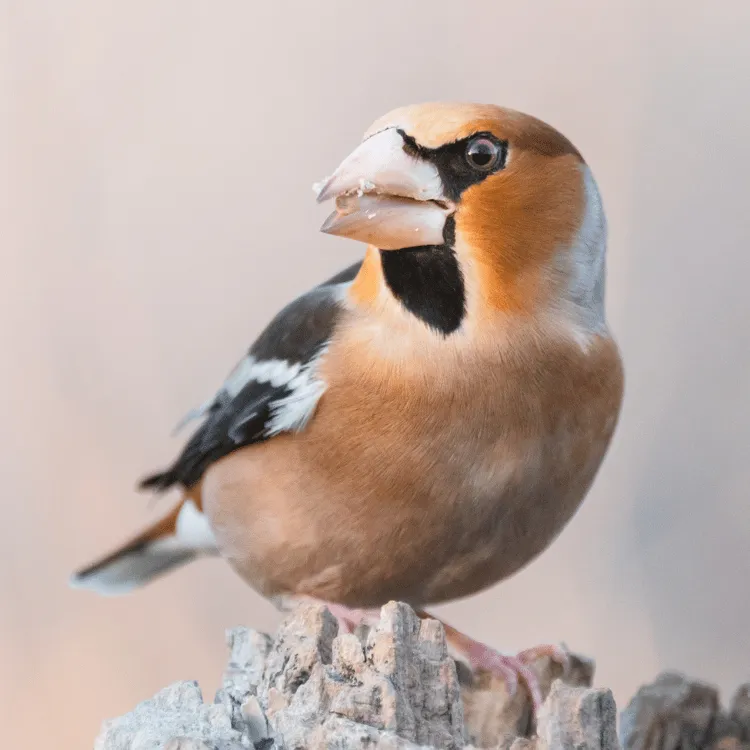
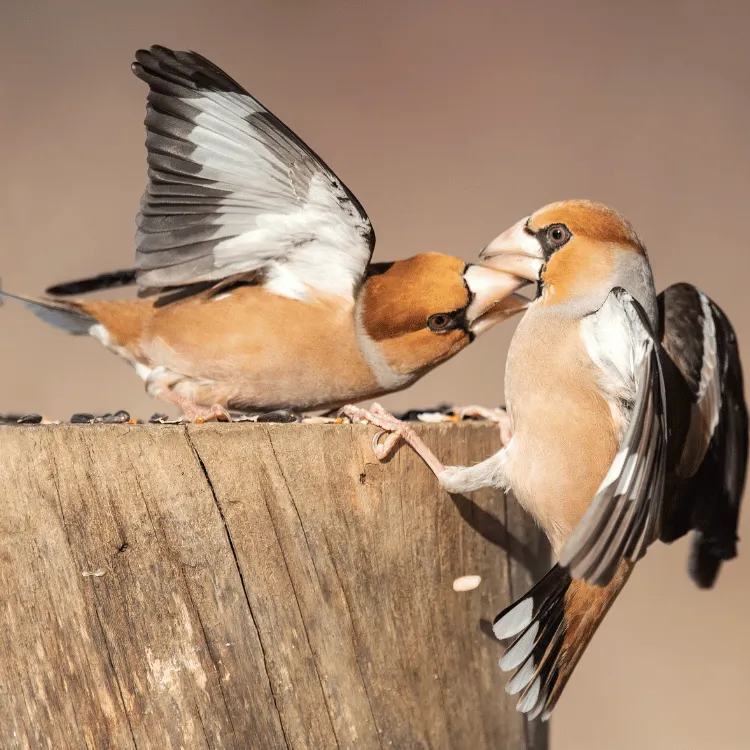
The hawfinch is Europe’s largest finch, with a body length of 16 to 18 cm and a wingspan of 29 to 33 cm. It has a compact, powerful body and a distinctive large, conical beak that can exert a force of 50 kg – strong enough to crack a cherry or plum stone.
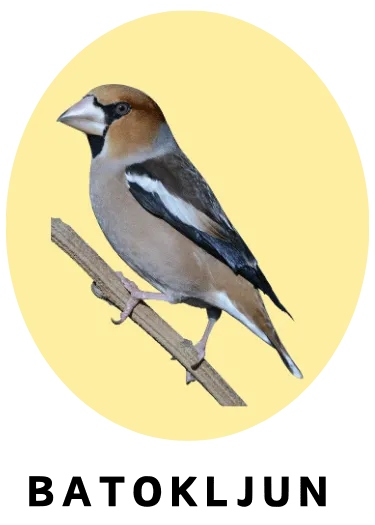
Its plumage is a combination of warm brown and orange tones, with black markings on the wings and tail. The beak changes colour with the seasons – it is bluish in spring and summer, while in winter it turns pale yellow or brownish-grey.
Habitat and distribution
The hawfinch lives in temperate woodland, especially deciduous forests rich in beech, oak and fruit trees. It can also often be found in gardens, parks and orchards, where it looks for seeds and fruit.
It is found throughout Europe, parts of Asia and North Africa. In warmer regions it is a resident bird, while populations from colder regions migrate to warmer areas in winter.
Diet – a master at cracking hard seeds
The hawfinch specialises in feeding on hard seeds and stone fruit, such as:
Cherries, plums and olives – it easily cracks the stones to get at the nutritious kernel.
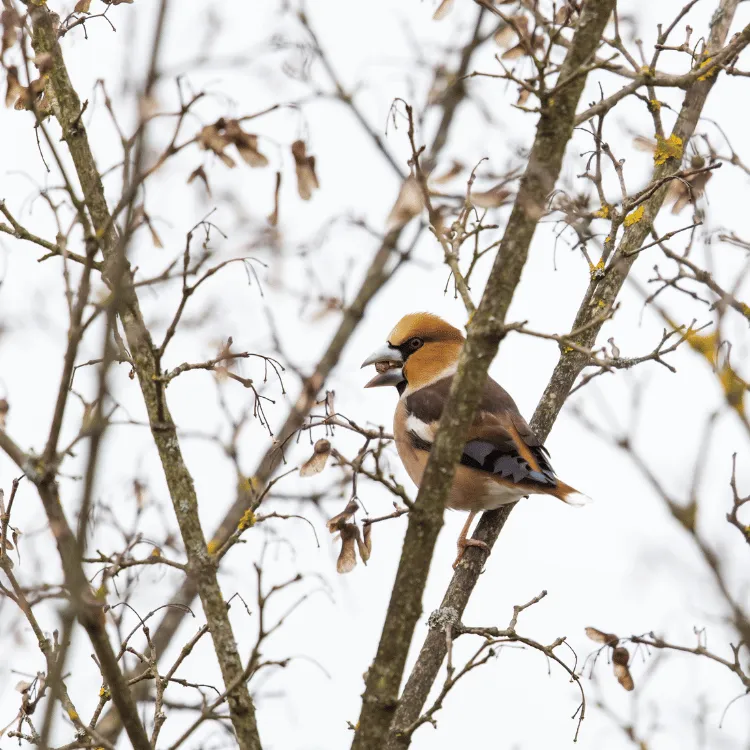
Beech, oak and maple seeds – these make up the main part of its diet in the autumn and winter months.
Berries and insects – especially during the breeding season, when protein is vital for the growing chicks.
Its powerful beak lets it feed on fruit that other birds can’t use, which gives it an edge in the competition for food.
Breeding and nesting
The hawfinch’s breeding season begins in spring, when males attract females with their loud song and fluttering flight.
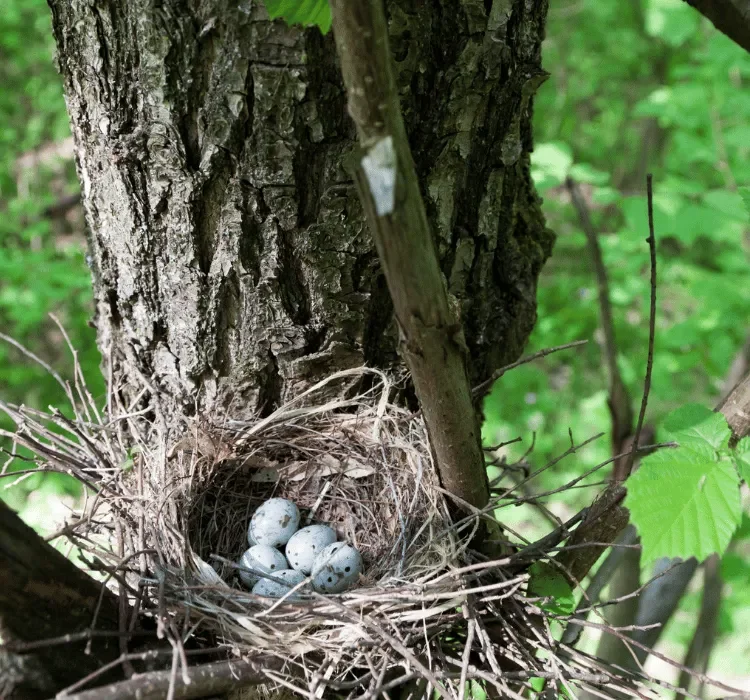
It builds its nest in the treetops, hidden among dense branches. The nest is made of twigs, moss and roots, and lined with soft plant material.
The female lays 4 to 6 eggs and incubates them for about 12 to 14 days. After hatching, both parents feed the young, which leave the nest after two weeks but remain dependent on their parents for some time.
Calls and behaviour
The hawfinch is not a noisy bird, and its discreet behaviour makes it hard to spot. In flight it gives a sharp, short “tik” call, while in the breeding season the males sing in a deep, husky voice.
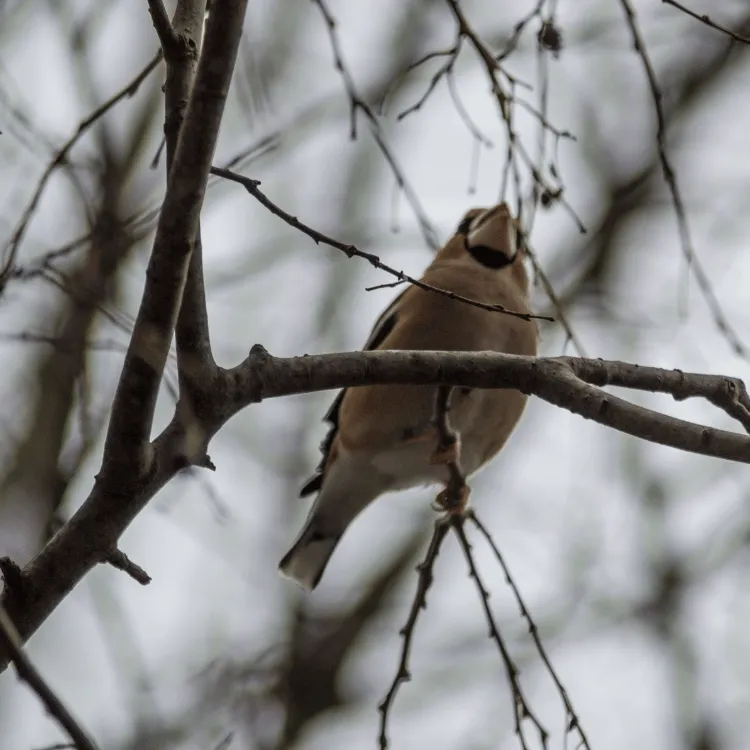
It is most often seen perched high in the treetops, and it rarely comes down to the ground – usually only to feed. In winter it may form small flocks, but it often stays solitary.
Hawfinch facts
Its powerful beak can crush a cherry stone in a fraction of a second, which is comparable to a human bite with 80 kg of pressure.
It is very shy and hard to spot, despite its striking colours.
It adapts easily to different kinds of food, which helps it survive even hard winters.
Conservation and threats
Although the hawfinch is not a particularly endangered species, its population is declining because of habitat destruction, logging and the loss of orchards. Pesticides and a shrinking supply of natural food can also affect the numbers of these birds.
Preserving natural forests, planting fruit trees and keeping old orchards are key to protecting the hawfinch and its natural habitat.
Conclusion
The hawfinch is a unique and powerful finch whose strength and adaptability make it stand out among seed-eating birds. Its shyness and secretive lifestyle make it a rare sight in the wild, but for those who manage to see one it is a fascinating experience. Protecting its habitat is key for future generations of these impressive birds.