
About the European hare
European hare: appearance, diet, life and the difference between hares and rabbits
The European hare (Lepus europaeus), also called the brown hare, is one of the best-known animals of our fields and meadows. It is fast and wary and spends almost its whole life out in the open, without a burrow. Many people confuse it with the rabbit, and it is precisely because people do not know how it lives that every year they carry young hares away from meadows although they are not abandoned at all. In this article you will learn how hares live and how you can really help them.
What does a European hare look like?
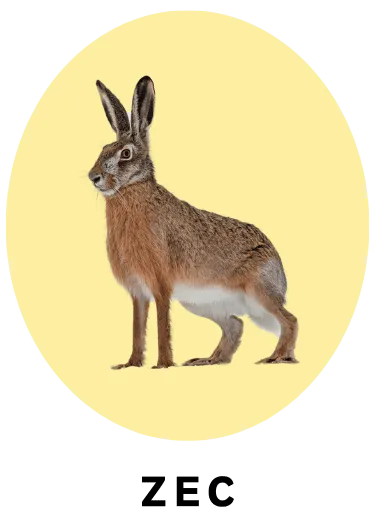
An adult hare is about fifty to sixty centimetres long and weighs three to five kilograms. Its fur is brown to yellowish-brown, flecked with darker hairs, and its belly is pale. You will recognise it by its very long ears with black tips, its long, powerful hind legs and its large amber eyes. The tail is black on top and white underneath. When running it reaches more than seventy kilometres an hour and can change direction suddenly.
What is the difference between a hare and a rabbit?
The hare and the European rabbit (Oryctolagus cuniculus) are related, but they differ in appearance and way of life.
- Size and build: the hare is larger, with long legs and long ears with black tips. The rabbit is smaller and stockier, with shorter ears without black tips and brown eyes.
- Home: the hare lives above ground and rests in a shallow hollow (a form) in the grass or soil. The rabbit digs underground burrows and lives in groups.
- Defence: the hare crouches motionless and then flees into the open. The rabbit runs for its burrow.
- Young: baby hares (leverets) are born furred and with open eyes, ready for life in the open. Baby rabbits are born naked and blind in a burrow.
The European rabbit is not a native species in Croatia. It was introduced long ago and today lives mainly on some islands and in parts of Dalmatia. A patterned or white rabbit that is not afraid of people is usually an escaped domestic rabbit.
Where do hares live in Croatia?
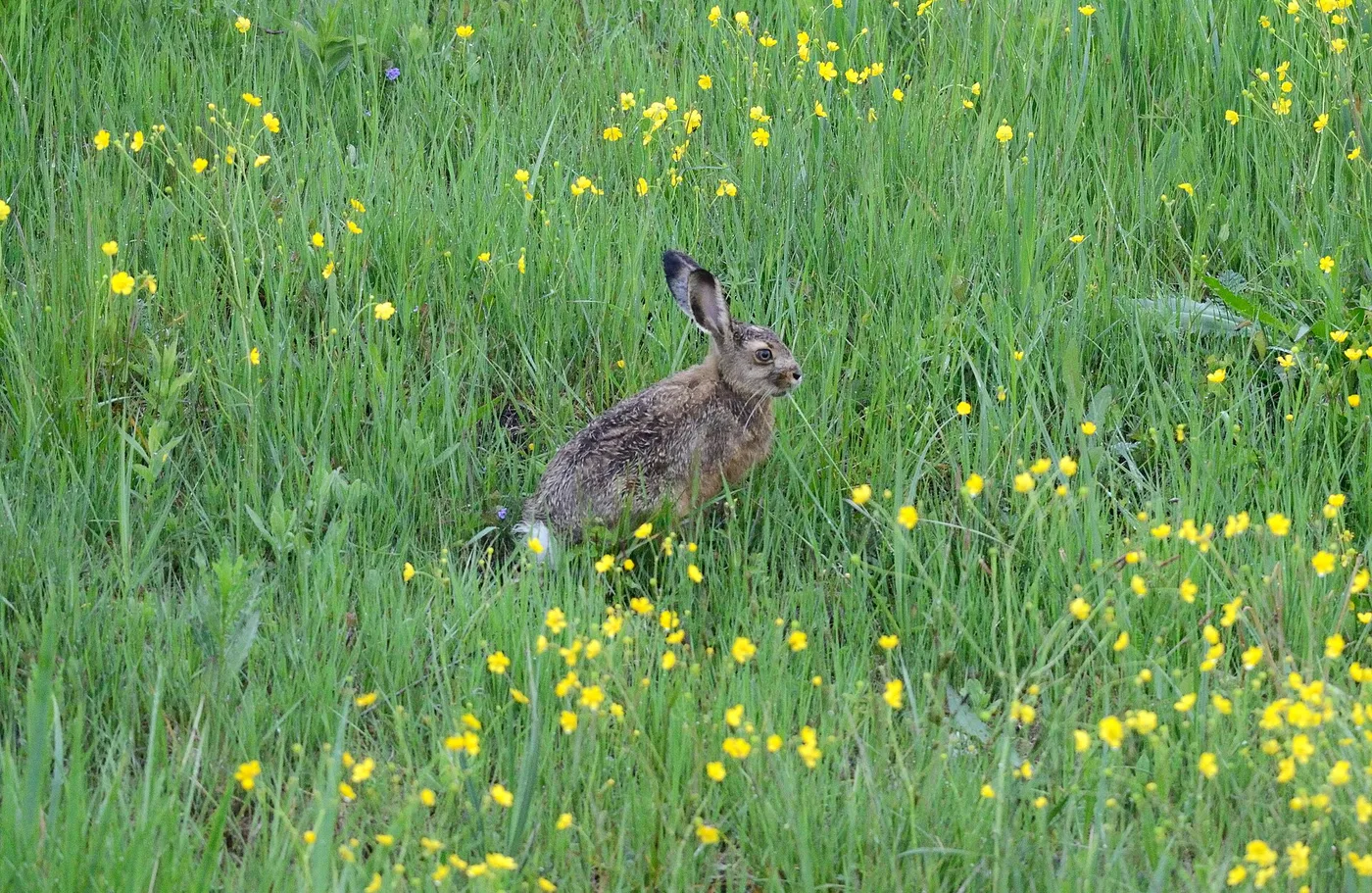
The European hare lives in almost all of Croatia, from the lowland fields of Slavonia and the Sava valley to hill pastures and the coast. It is best suited to a mosaic landscape: meadows, arable fields, pastures and vineyards broken up by hedgerows, shrubs and woodland edges. There it finds enough varied food and cover. It is less common in large uniform fields without hedgerows and in dense forests.
What do hares eat?
The hare is a herbivore. In summer it eats young grasses, clover, alfalfa, herbaceous plants and young cereal crops. In winter, when there is little grass, it nibbles buds, twigs and the bark of shrubs and young trees, as well as leftovers in the fields. Like rabbits, it eats some of its droppings again to extract as many nutrients as possible from its food.
Never leave a hare bread, pastries, milk or leftover cooked food. Its digestion is sensitive and such food can kill it. The best food for a hare is a varied meadow that has not been sprayed.
How do hares live, and how many young do they have?
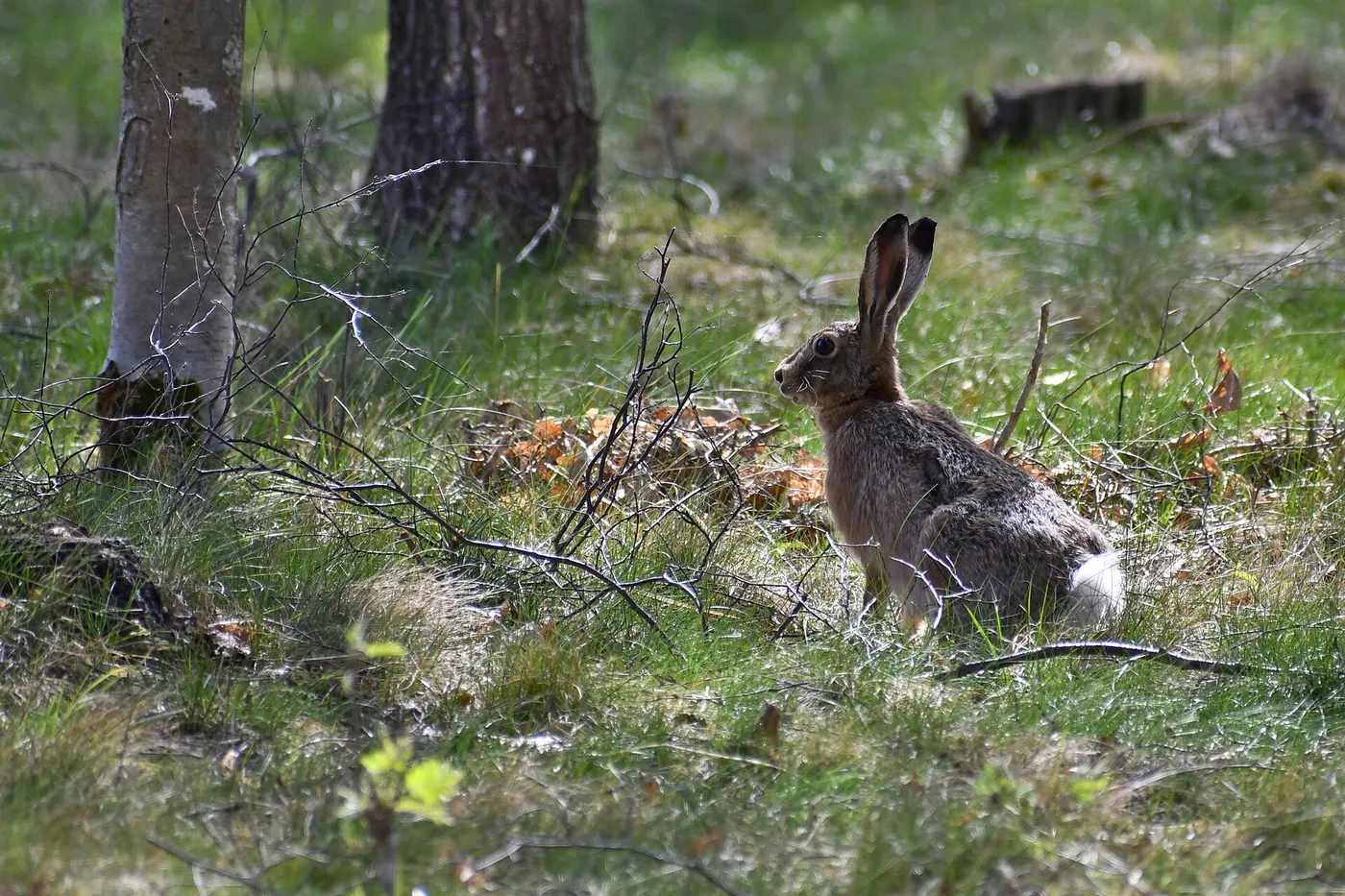
The hare is active mainly at dusk and at night. It spends the day crouched in its form, with its ears pressed flat against its back, relying on not being noticed. It mostly lives alone, and in spring you can see males chasing females and hares standing on their hind legs “boxing” with their front paws. Usually this is a female fending off a male.
A female hare has several litters a year, roughly from February to September, each usually with two to four young. Pregnancy lasts about six weeks. She spreads the leverets around the area, each in its own hiding place, and comes to suckle them only once a day, at dusk; at about four weeks old the young are independent. In the wild a hare rarely lives longer than a few years, because many die in their first year.
Why is a baby hare alone in a field not an orphan?
A young hare lying quietly alone in the grass and not running away is behaving completely normally. The mother stays away on purpose so that her scent does not attract a fox, a dog or a bird of prey, and she only comes back at dusk. I’ve learned from experience that this is the most common misconception: people think they are rescuing an abandoned leveret, when in fact they are taking it away from its mother. Do not touch it, take your dog and children away and leave. It only needs help if it is visibly injured, cold and limp, if it has been brought in by a cat or dog, or if its mother has died.
If you have found a baby hare, you can read everything about raising it in our article on hand-rearing a baby hare.
What threatens hares?
- Farm machinery: mowers and combine harvesters, especially when meadows are mown in spring, when the young lie hidden in the grass.
- The loss of hedgerows and cover, and large uniform areas without varied food.
- Poisons and pesticides in the fields.
- Traffic, especially at night.
- Predators: foxes, birds of prey and, above all, free-roaming dogs and cats.
- Diseases and cold, wet springs in which many young die.
How can you help hares, and what does the law say?
Mow meadows from the centre outwards and more slowly, so that hares have time to escape, and check the grass around your house before mowing. Leave a hedge or an unmown edge in your garden, do not spray poisons, and keep your dog on a lead in the fields. Wearing gloves, put an injured hare in a closed box in a quiet, warm place, do not give it food or water, and call a vet or a wildlife rescue centre straight away. A list of association and rescue centre contacts can be found on our website. Hares can transmit tularaemia, so do not touch them with bare hands and wash your hands well afterwards.
In Croatia the European hare is a game species and is managed under hunting regulations. This means you may not take it and keep it at home as a pet. Decisions about a young or injured hare should be left to a vet or a wildlife rescue centre, who will notify the holder of the hunting rights for the area if necessary.
Conclusion
The European hare is an animal of open country that survives thanks to its speed, caution and ability to lie low. You can easily tell it from a rabbit by its long, black-tipped ears. My advice is to watch it from a distance, protect hedgerows and poison-free meadows, and leave a baby hare in the grass to its mother. That is the greatest help you can give it.