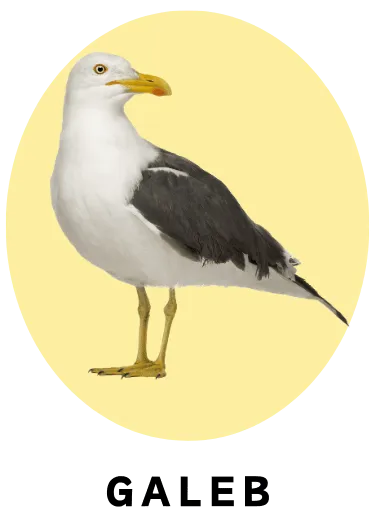
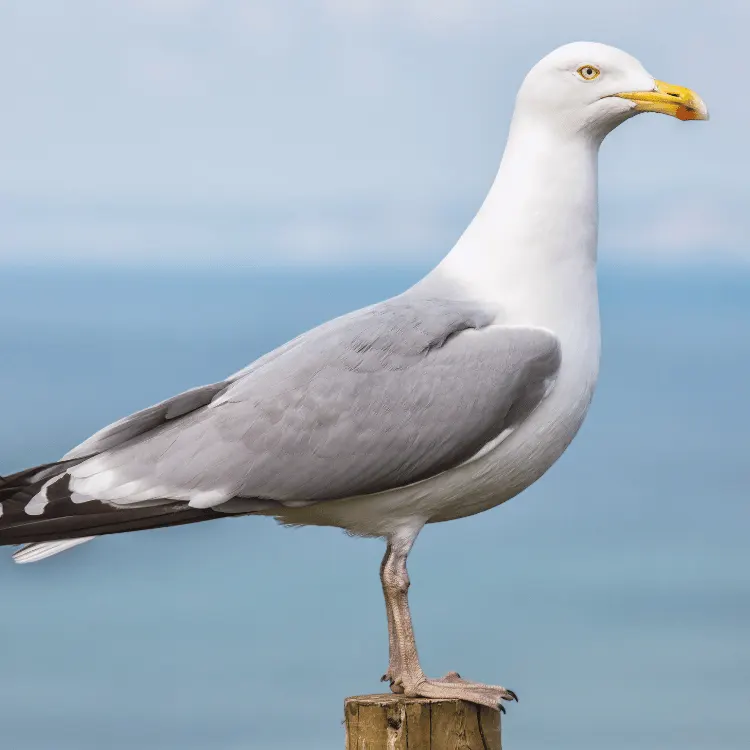
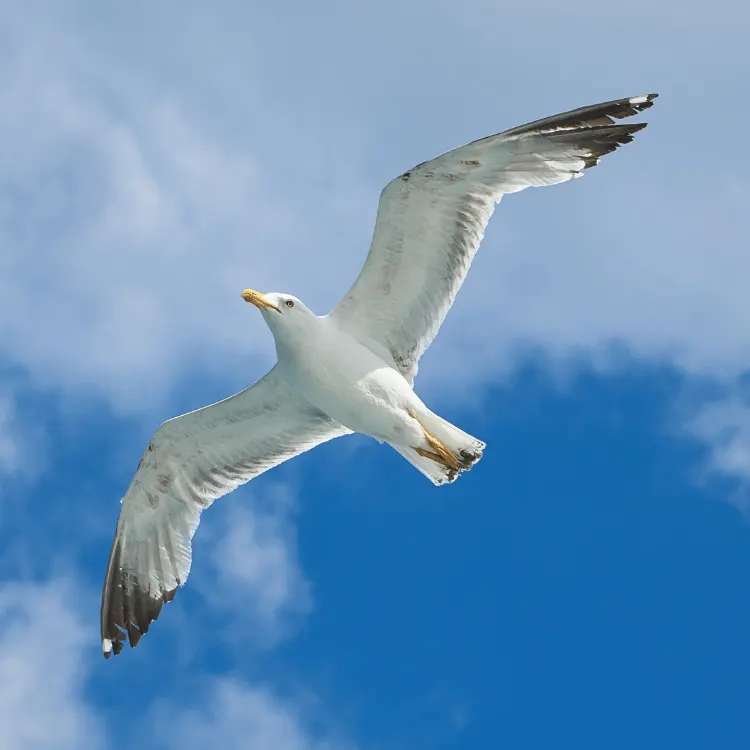
The gull (Larus) is a bird that has become a symbol of freedom and independence. Gulls can live in a wide range of habitats, from sea coasts to towns and cities, and are widespread around the world, including in Croatia. Gulls are superb fliers and incredibly adaptable birds that cope successfully in almost any conditions, which makes them some of the most recognisable birds in coastal areas.
Gull (Larus)
Gull species and their distribution in Croatia
In Croatia we most often come across several gull species, the best known being the herring gull (Larus argentatus), the yellow-legged gull (Larus michahellis) and the Mediterranean gull (Larus melanocephalus). Gulls are common along the coast, but they can also be found inland, where they often appear in large cities such as Zagreb. They often nest on tall buildings and bridges, and they are also present in fishing villages, where they find plenty of food.
Gull habits and behaviour
Gulls are known for their ability to fly at great heights, which allows them to search large areas for food. These birds are known for eating almost anything, from fish and shellfish to food scraps they find in towns. Because their diet is so flexible, gulls often find food around human settlements, but also in natural habitats along the coast. In addition, gulls are known for their social habits. Although they are sometimes solitary, they often gather in groups, especially when feeding or nesting. In towns, gulls can be seen in large colonies on the roofs of buildings or other tall structures, where they nest and go about their social activities. In natural conditions, gulls look for sandy beaches and cliffs where they can nest safe from predators.
Nesting and family life
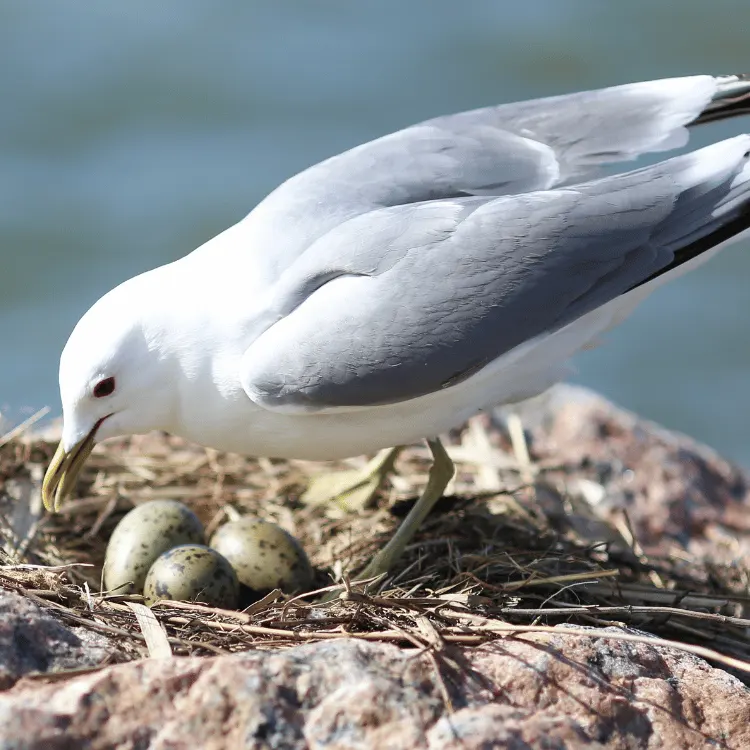
Gulls nest high up, most often on cliffs, rocks or tall buildings. Their nest is usually simple, made of pebbles, twigs and plant debris. These birds are monogamous, which means they pair for life. The female usually lays two eggs, which are incubated for about 25 days. Both parents share incubation and care of the chicks. Gull chicks (known as “puffballs” because of their soft down) hatch after about three weeks, and the parents feed and protect them. Young gulls stay in the nest for several weeks, during which they develop and learn how to fly and find food. Some gulls may stay with their parents for as long as several months before becoming fully independent.
Lifespan
Gulls in the wild usually live between 10 and 15 years, but their lifespan can be shorter because of predators, accidents or disease. In the wild, gulls face threats such as birds of prey and other carnivores, while in towns they are exposed to dangers arising from pollution and collisions with buildings and other structures. Under favourable conditions, however, gulls can live for more than 20 years, especially when protected in zoos or specialised facilities.
Facts and research
Gulls are very intelligent birds, known for their capacity for adaptation and learning. Research has shown that gulls can recognise people, distinguish shapes and objects, and even use tools to get food. Because of their ability to recognise and remember particular shapes and structures, gulls are also used in various scientific studies. One interesting aspect of gull behaviour is their ability to communicate with one another. Gulls use different sounds, gestures and behaviours to communicate, whether warning of danger, announcing food or guiding a partner to the nest. Gulls are also known to migrate frequently, moving from coast to coast in search of food or better nesting conditions.
The ecological role of gulls
Gulls play an important role in the ecosystems they inhabit. As opportunists, gulls help clean up the environment by feeding on food scraps, carrion and organic waste. Gulls also help spread plant seeds, which can help plant species recover in coastal areas. In addition, gulls are prey for many predators, including birds of prey and other carnivores. Their presence in the ecosystem helps maintain the balance between different species of birds and other animals and contributes to biodiversity.
Conclusion
Gulls are incredibly adaptable and versatile birds, and their ability to adjust to different conditions makes them some of the most recognisable and important inhabitants of coastal and urban environments. Their ability to migrate, their social habits and their exceptional navigational skills make gulls a fascinating and important part of the ecosystem. Given their ecological role, gulls continue to play a key part in maintaining the balance of nature while enriching the human environment at the same time.