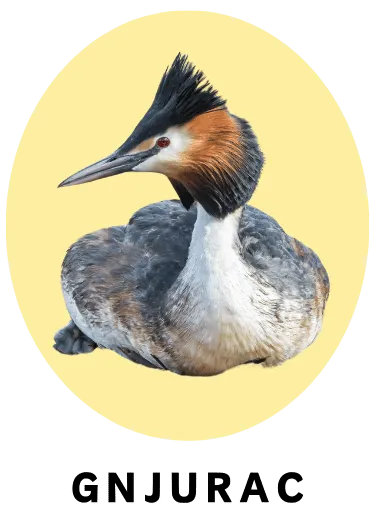
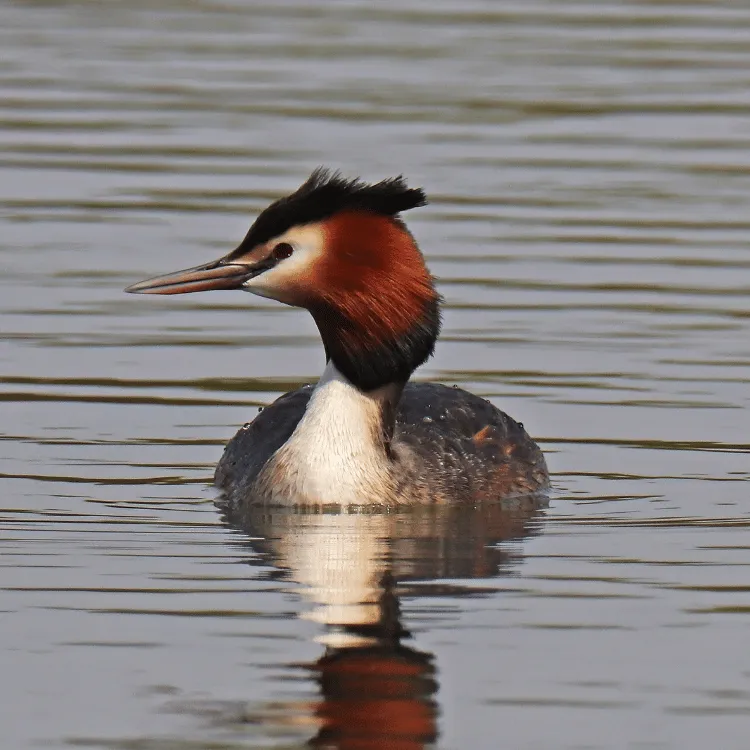
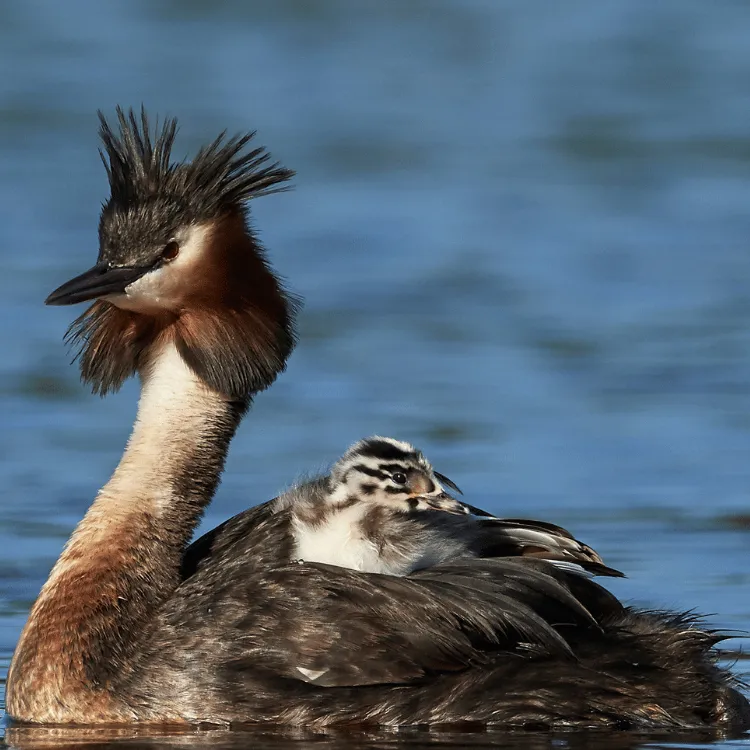
The great crested grebe (Podiceps cristatus) is a bird usually associated with wetlands and open water, and it is known for its exceptional swimming and diving abilities. It is easy to recognise by its distinctive appearance, with a long neck and elegant plumage, and by its ability to dive underwater in search of food. The great crested grebe occurs in many parts of the world, and in Europe it is found in areas with still water, such as lakes, rivers and marshes.
Great crested grebe (Podiceps cristatus)
Grebe species and their distribution in Croatia
The best-known grebe species in Croatia is the great crested grebe (Podiceps cristatus), which is most widespread in the continental parts of the country, especially on lakes, rivers and marshes. Although it is not necessarily tied to the sea, the great crested grebe can occasionally be seen on the Adriatic coast, especially in areas with calm, shallow water. Besides the great crested grebe, there are also rare records in Croatia of the little grebe (Tachybaptus ruficollis), which prefers smaller bodies of water.
Grebe habits and behaviour
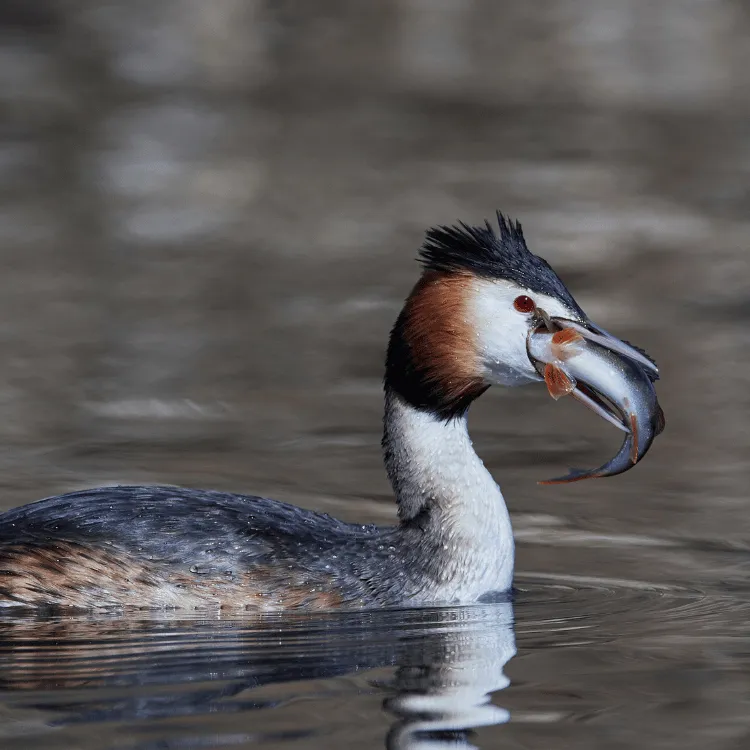
Grebes are birds that spend most of their lives on the water, where they are perfectly at home. They have a very particular way of moving – on water they are excellent swimmers, while on land they are much less agile. Their swimming is characterised by the way they use their legs and lobed toes, which allow them to move quickly across the surface. But they are true masters of diving. When looking for food, grebes dive underwater and can stay submerged for several seconds, and they are also able to dive to great depths. Grebes feed mainly on aquatic organisms such as fish, aquatic insects and small invertebrates. Their diet also includes plants, which they occasionally pluck from the bottom of the water. Their ability to catch food by diving to great depths makes them highly adaptable aquatic predators. Grebes also swim low in the water with only their neck and head above the surface, which helps them stay unnoticed by predators.
Nesting and family life
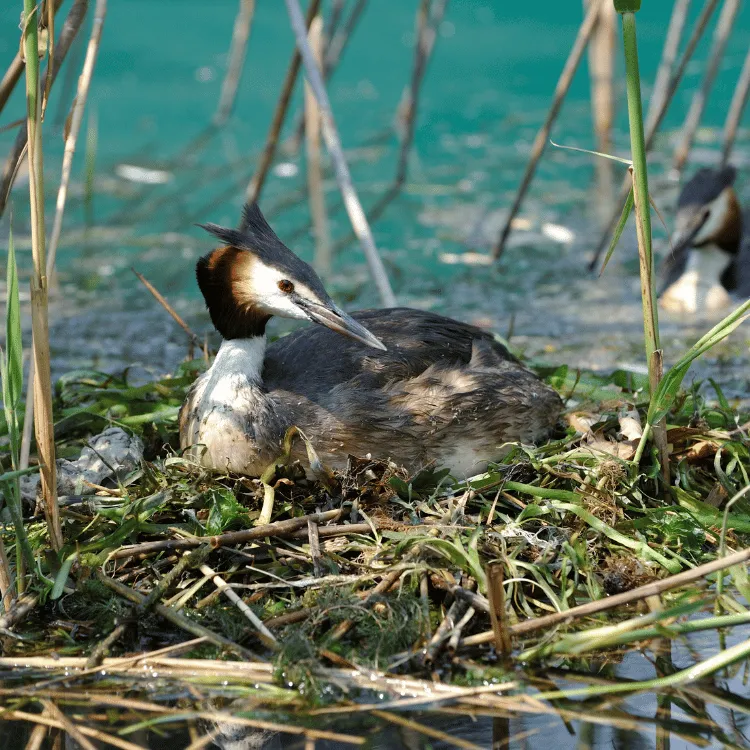
Grebes nest usually in spring, when they build nests in marshy areas or on aquatic plants. The nests are made of plants the bird gathers from the water and are often located in shallow areas near the shore. The female usually lays 3–4 eggs, which are incubated for about 3–4 weeks. Both parents share incubation and feeding the young. Grebe chicks start swimming and diving straight after hatching, and the parents feed them tiny aquatic organisms. Grebes are monogamous birds, which means that pairs usually stay together throughout the breeding season and in some cases beyond it. Their behaviour during the breeding period often includes spectacular swimming dances, in which pairs perform coordinated movements on the water, often seen in the early morning or evening.
Lifespan
The lifespan of a great crested grebe in the wild is usually 10 to 15 years, although many birds do not reach this age because of predators or accidents. Like many water birds, young grebes are more vulnerable in their first months of life, so many chicks do not survive to adulthood. In favourable conditions, such as protected wetlands or nature parks, grebes can live to a ripe old age, and some individuals are known to have survived up to 20 years.
Facts and research
Grebes are the subject of much research because of their exceptional diving abilities and adaptation to life on the water. Studies have shown that grebes, besides being excellent swimmers, also display particular behaviours when foraging and in social interactions with other birds. Research has also found that grebes, although mostly solitary, can show social patterns during migration and while feeding. Another interesting thing about grebes is how they use the water for communication and orientation. The birds can make sounds unique to their species, which they use to mark territory or when interacting with a partner. Grebes are also known for their courtship dances on the water, in which they perform specific movements such as:The mirror dance – The partners swim towards each other and mirror each other’s movements. They take turns shaking their heads and stretching their necks.Running on water – Two grebes rise out of the water at the same time and run across the surface, beating their wings rapidly. This dance is one of the most impressive sights in the bird world.The weed ceremony Both partners dive, bring up a piece of waterweed and then hold it up in their beaks as they face each other. It shows that they are ready to nest together.Feather display – The pair swim side by side, shaking their heads in rhythmic movements. This strengthens their bond before nesting. These dances help grebes find a suitable partner. Pairs often keep dancing even after the pair has formed, which strengthens their relationship.
The ecological role of the grebe
Grebes play an important role in aquatic ecosystems. As predators, they help regulate the numbers of small aquatic organisms, including fish, aquatic insects and crustaceans. Through their feeding, grebes also influence the distribution of plant species in aquatic ecosystems. In addition, their presence on the water contributes to the biodiversity of these areas.
Conclusion
The great crested grebe is a fascinating bird that fits perfectly into its aquatic surroundings. Its swimming and diving skills, together with its behaviour and ecological role in aquatic ecosystems, make it a unique member of the bird world. The grebe’s adaptation to aquatic habitats, together with its exceptional swimming ability, has made it not only a recognisable bird but also a key element in the balance of aquatic ecosystems.