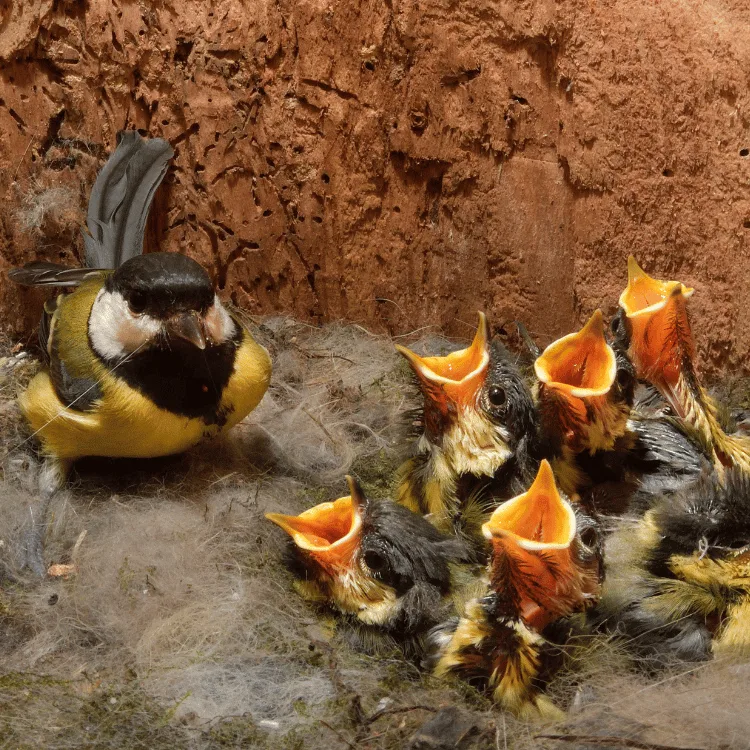
Tits are small, colourful birds of the family Paridae, known for their melodious song and lively behaviour. They are often found in gardens, woods and parks throughout Croatia, where they play an important role in ecosystems. These birds are true natural pest controllers, as they help keep insect numbers in check.
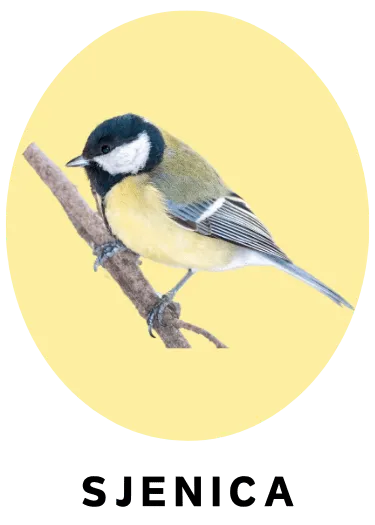
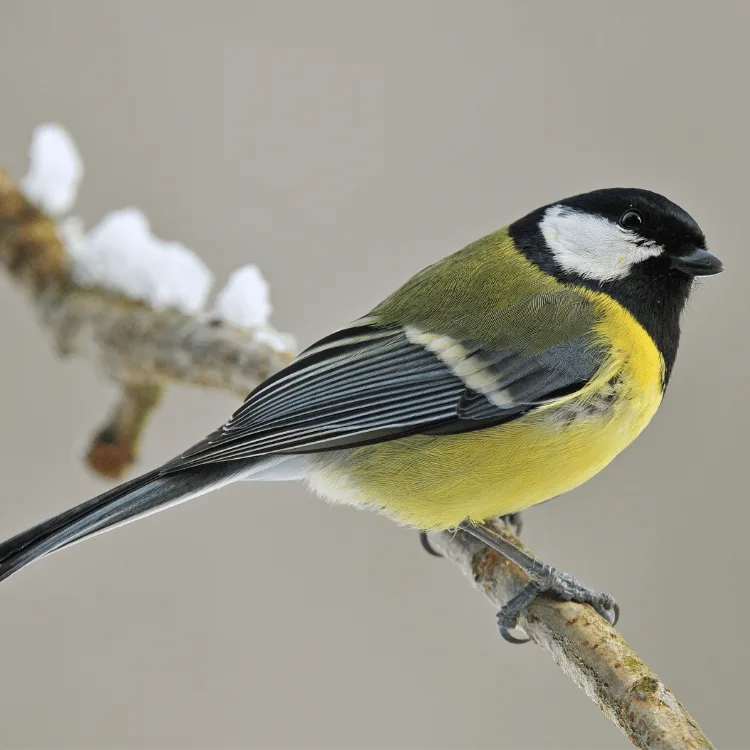
Great tit (Parus major)
Tit species in Croatia
Several species of tit live in Croatia, and each of them has its own unique features. The species we are most likely to see are:
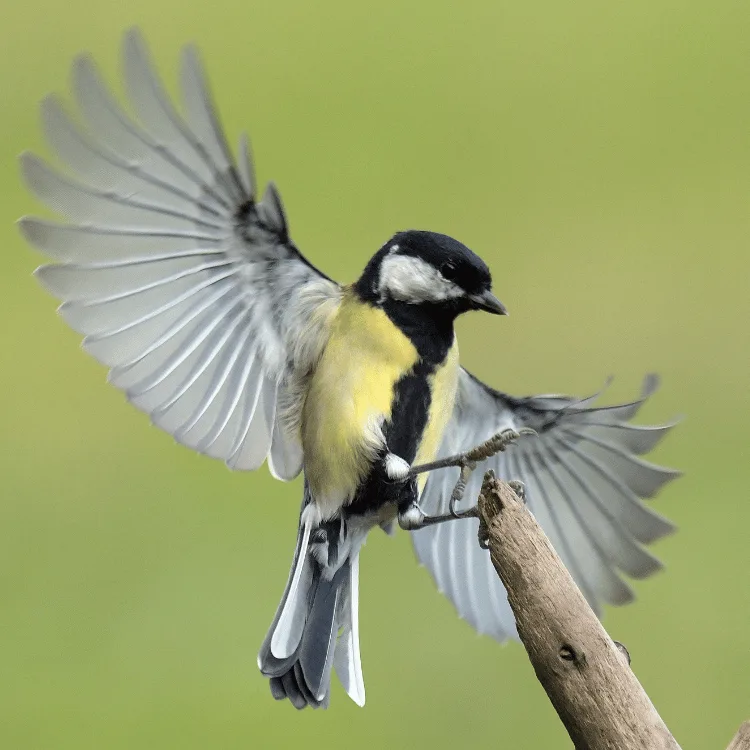
Great tit (Parus major): the largest and best-known species, recognisable by its yellow belly with a black stripe.
Eurasian blue tit (Cyanistes caeruleus): a smaller species with blue wings, white cheeks and a yellow belly.
Marsh tit (Poecile palustris): it has a black cap and a paler belly.
Coal tit (Periparus ater): the smallest of the tits, with a black cap and white cheeks. Each tit species has its own characteristic appearance and behaviour, which makes them easy to recognise.
What do tits look like and how can you tell them apart?
Tits are tiny birds that usually measure between 10 and 15 centimetres. Their plumage is colourful, with yellow, blue, green and white tones that vary from species to species. The blue tit, for example, has a distinct blue tone on its wings, while the great tithas a striking yellow belly with a black stripe. Their appearance is often decorated with contrasting colours that help to identify and distinguish between the species.
Behaviour and life cycle of tits
Tits are very sociable birds. They are often seen in small groups, and in spring and summer they are strongly territorial. In the winter months they gather in flocks and search for food together. During the breeding season, tits occupy tall trees and cavities, where they build their nests from grass, moss and feathers. These birds are known for their melodious song, which they use to mark their territory, attract a partner and communicate with each other.
What do tits eat?
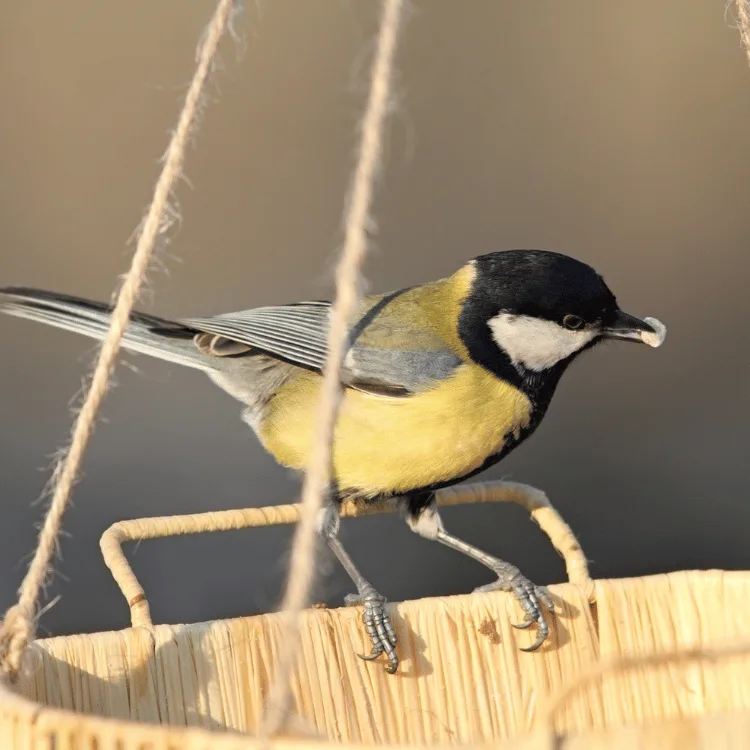
Tits are omnivores, which means they eat a varied diet depending on the season. In spring and summer they feed on insects, caterpillars and spiders, while in winter they switch to fruit and seeds. They also eat nuts, and there are recorded cases of tits feeding on small animals such as insects. Interestingly, tits use their intelligence and skills to hide food in different places, building up stores for the winter.
Breeding and life cycle of tits
Tits nest in spring, and the females usually lay 6 to 12 eggs in nests built in tree hollows. Incubation takes about 12 days, and both parents feed the young until they are able to leave the nest. The young stay close to their parents for a while longer until they learn to survive on their own.
Scientific research on tits
Scientists often study tits because of their adaptability and their ability to survive in urban areas. Research has shown that these birds have an exceptional memory and can find food they have hidden earlier. Tits are also beneficial for ecosystems, as they help to control the numbers of insects and pests.
Interesting facts about tits
Tits are known for their ability to store food, hiding seeds and nuts for the winter.
Although they are small, tits have a very complex social structure and often help one another to find food.
The blue tit is known for feeding not only on natural food sources but also on food that people put out.
Conclusion
Tits are fascinating birds that enrich their surroundings with their colourful plumage and their songs. Whether they are in woods, parks or towns, tits play an important role in the ecosystem. Their adaptability and sociability make them an essential part of the natural world, and watching these small, lively birds brings joy to every nature lover.