The great reed warbler – green guardian of the wetlands
The great reed warbler (Acrocephalus arundinaceus) is a bird of the family Acrocephalidae, known for its characteristic appearance and melodious song. It is a typical bird of marshes and wetlands, and its behaviour and appearance blend perfectly with its surroundings. This bird is very secretive and often stays hidden among the plants, but its song can be heard from far away, which makes it well known and much loved among nature lovers.
Appearance and physical characteristics of the great reed warbler
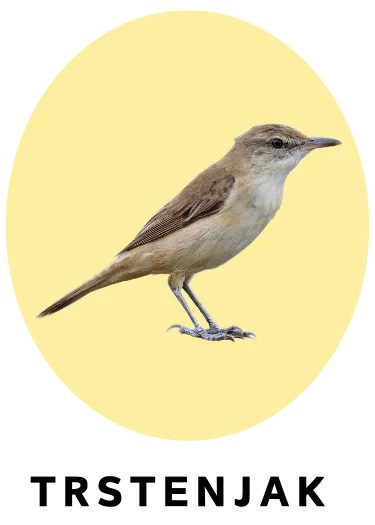
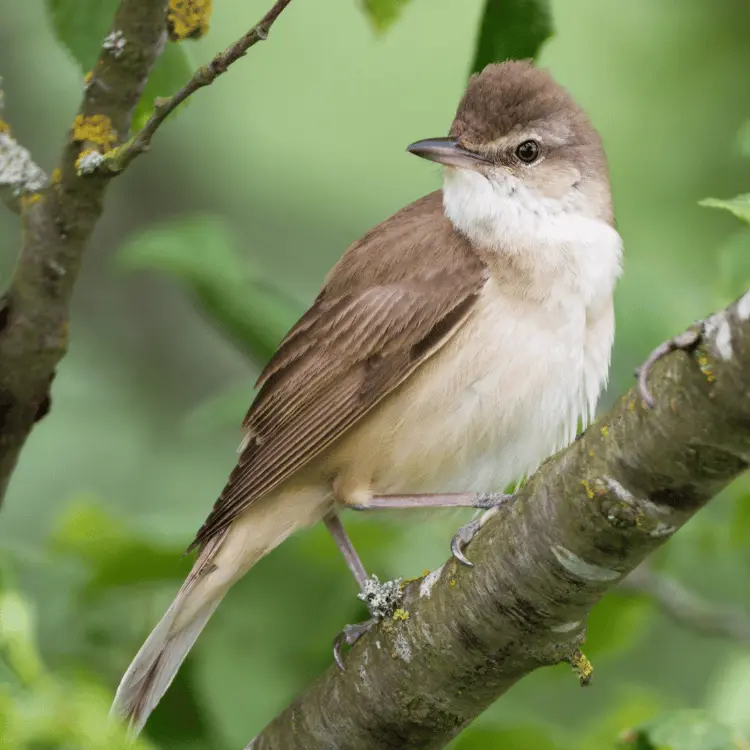
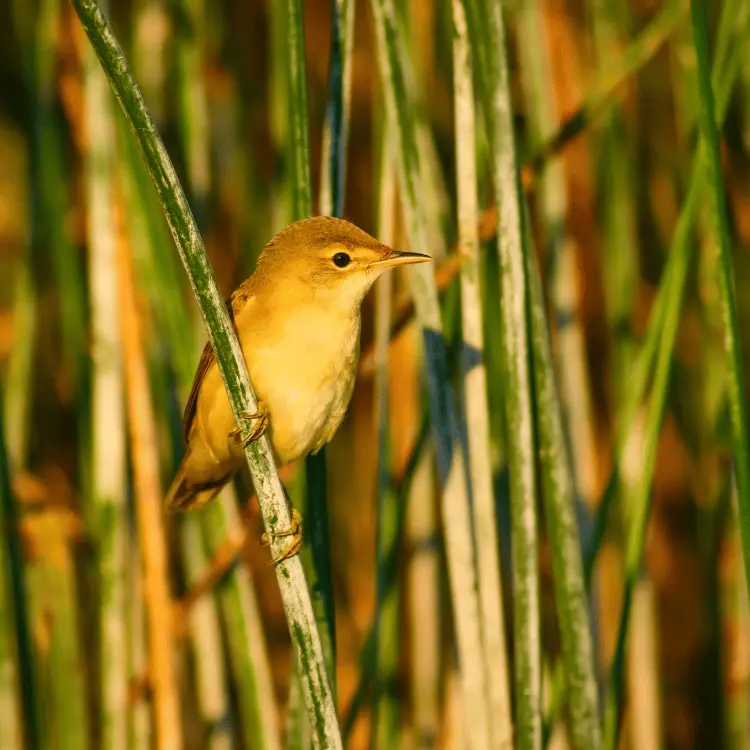
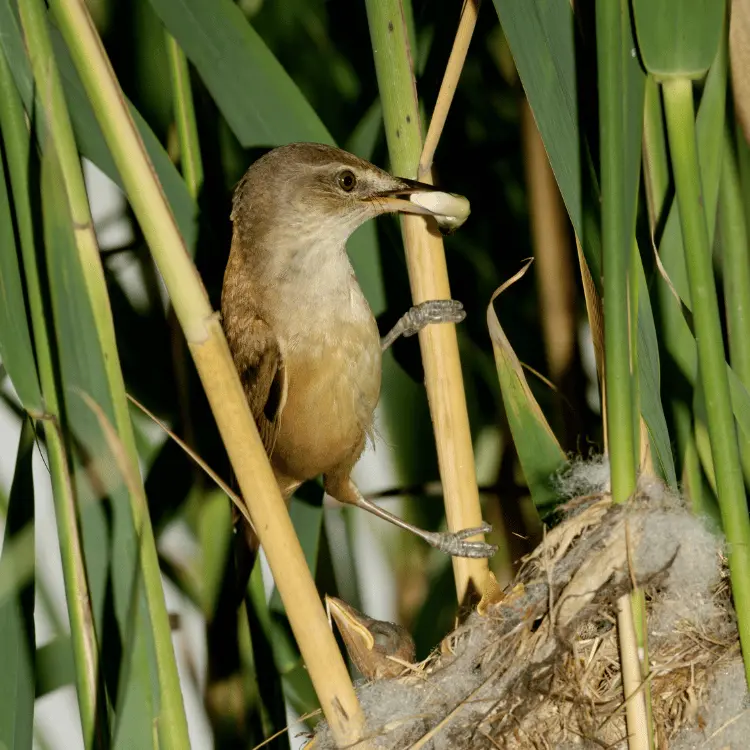
Body and plumage colour: the great reed warbler is brownish-green on the back, while its belly is usually pale yellow. Its plumage blends perfectly into the marshes and reed beds, where it is often hard to spot.
Size: the great reed warbler reaches a length of 17 to 20 cm, with a wingspan of about 24 to 29 cm.
Beak: the great reed warbler has a long, thin beak that is perfect for feeding on small insects, and it also uses it to hunt aquatic organisms.
Tail and legs: the tail is short and rather pointed, while the legs are relatively short, allowing it to move powerfully through dense vegetation.
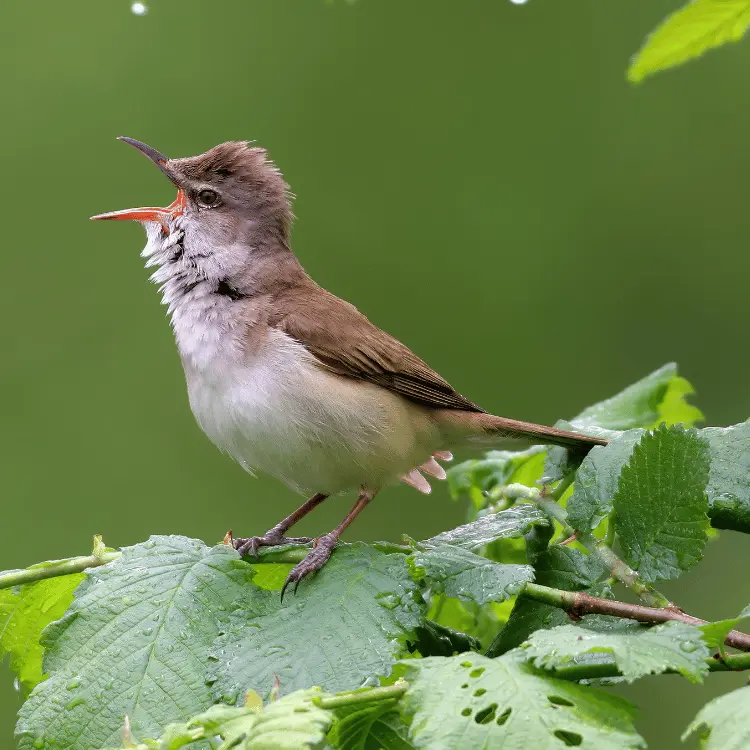
Its size and posture, together with its characteristic upright stance while singing, make it easy to tell apart from other reed warblers.
Habitat and distribution of the great reed warbler
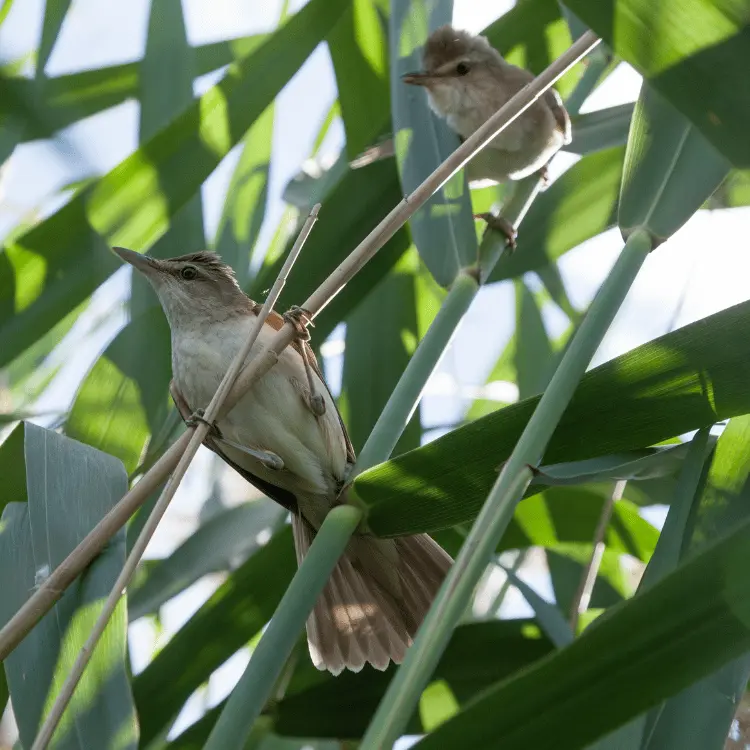
This species lives in marshes, lakes, riverbanks and reed beds, where it hides among dense sedges and reeds.
The great reed warbler is a migratory bird – in summer it lives in Europe and western Asia, while it spends the winter in tropical Africa
What does the great reed warbler eat?
The great reed warbler is an insectivore, and its diet includes insects, spiders, snails and larvae. Occasionally it will also eat small fish or frogs, and in late summer it may eat berries too.
Hunting method
The great reed warbler uses its long beak to search the reeds and marshes for food. It often looks for insects hidden in water and mud, but it can also catch prey in the air.
Behaviour of the great reed warbler
The great reed warbler is known for its song, which is loud and melodious and can be heard from far away, especially in early spring and summer.
Song: the great reed warbler is especially well known for its melodious song, which it often uses to mark its territory or attract a mate. Its song can be quite loud and sound like a soft, rhythmic chant.
Movement: this bird usually hops and moves about through dense reed beds, occasionally poking its head into the plants while it searches for food.
Calls
The great reed warbler’s voice is vivid and loud, and its song is often heard during the breeding season and when the bird is in danger. Its calls can be muffled, but they are clear and easy to recognise.
Caring for the young
The great reed warbler cares for its young in a way similar to many other wetland birds, providing them with a safe place to grow up.
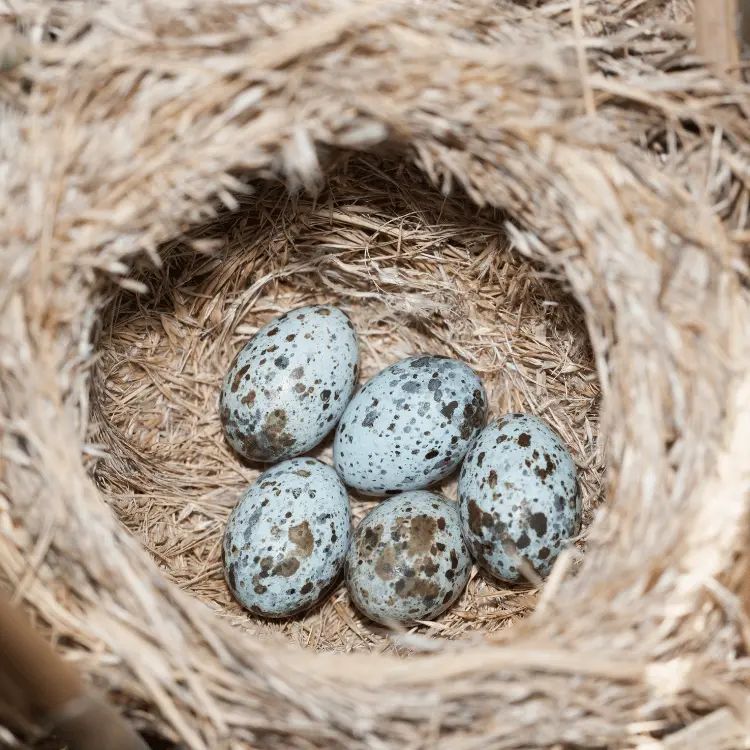
The great reed warbler builds its nest on the ground or in low shrubs and plants, in dense reed beds where it is safe from predators. The nest is usually made of dry grass, leaves and other plant material.
The female usually lays 4 to 6 eggs, which she incubates for about 12 to 15 days.
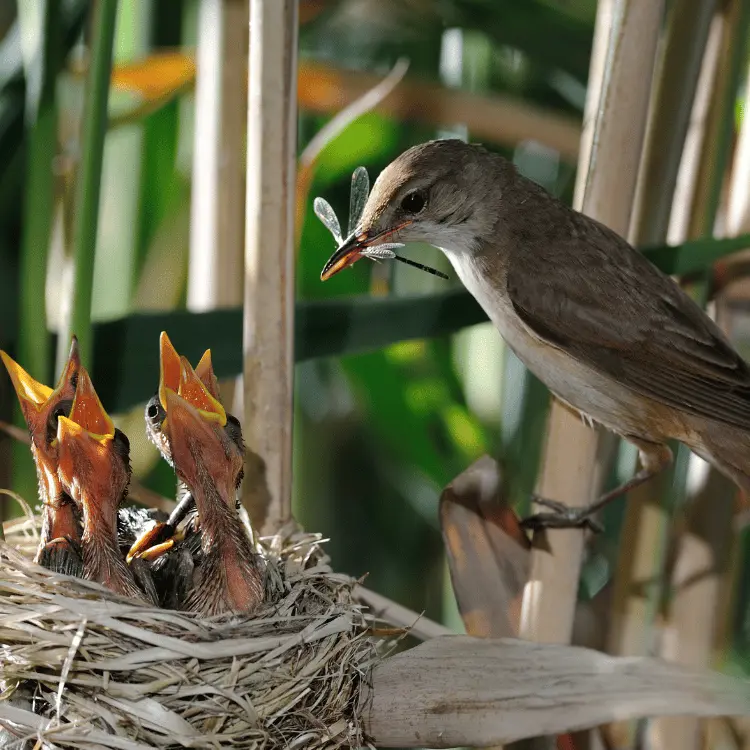
Both parents care for the young, feeding them small insects until they are strong enough to fly.
Interesting facts about the great reed warbler
The loudest singer in the reed beds – the great reed warbler is known for its powerful, harsh and persistent song, which can go on for hours. Males often sing even at night, and their voice can drown out the sounds of the entire wetland ecosystem. As well as its own characteristic song, the great reed warbler can imitate the calls of other birds, including species that do not live in its area.
Unlike many birds that sing hidden among branches, the great reed warbler likes to sing from an upright position, often clinging to reed stems while it loudly performs its song.
Its nest, carefully woven from plant fibres, sits among dense reed stems, which makes it almost invisible to predators.
The common cuckoo (Cuculus canorus) often lays its eggs in great reed warbler nests, forcing the warbler to raise its young instead of its own offspring.
In autumn this bird migrates to sub-Saharan Africa, covering thousands of kilometres on its journey between Europe and Africa.
Although it migrates over great distances, the great reed warbler often returns to the same breeding area every year, which shows its remarkable memory and navigational skills.
The great reed warbler is not only the loud ruler of the marshes but also a fascinating bird with incredible adaptations that allow it to survive in its unique environment.
Conclusion
The great reed warbler (Acrocephalus arundinaceus) is the true ruler of the reed beds, known for its loud song, tireless energy and adaptability. Its persistent singing, its imitation of other birds and its skill at hiding its nest make it one of the most interesting birds of wetland habitats.
Although it is not endangered, the destruction of wetlands and the disappearance of reed beds threaten its future. Protecting wetland ecosystems not only ensures its survival but also protects many other species that share this unique habitat.
If you ever find yourself near a wetland, stop and listen – it may be the great reed warbler whose powerful voice is dominating the whole landscape!