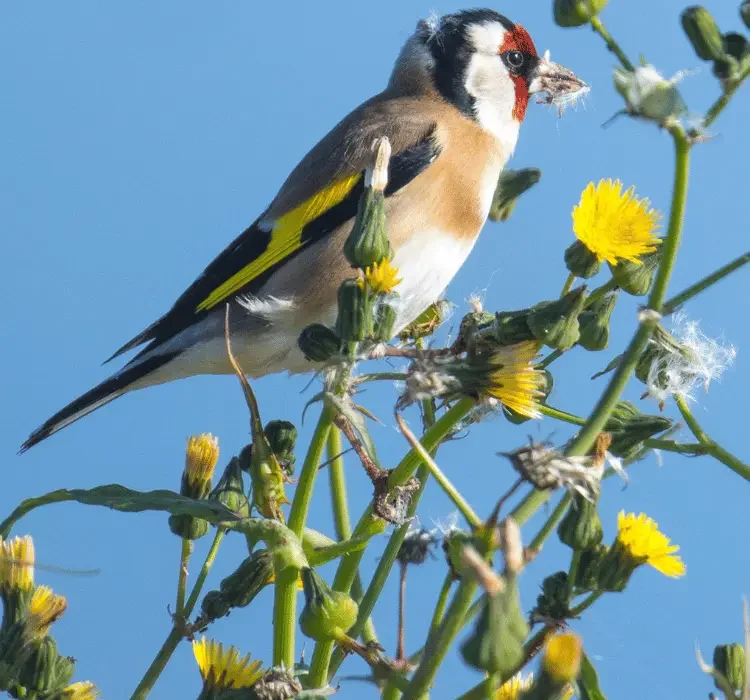
The European goldfinch (Carduelis carduelis) is a small bird known for its colourful appearance, cheerful calls and presence in a wide range of ecosystems. The goldfinch is recognisable by its red face, yellow wing bars and generally colourful plumage, which make it one of the most attractive birds in Europe, Asia and North America. The goldfinch is also highly valued for its melodious song, which often brings life to gardens and woodlands.
Appearance and features of the goldfinch
The goldfinch is a small bird that stands out for its bright colours and distinctive appearance. These birds have recognisable colours and patterns in their plumage that make them irresistible to birdwatchers.
Physical features of the goldfinch
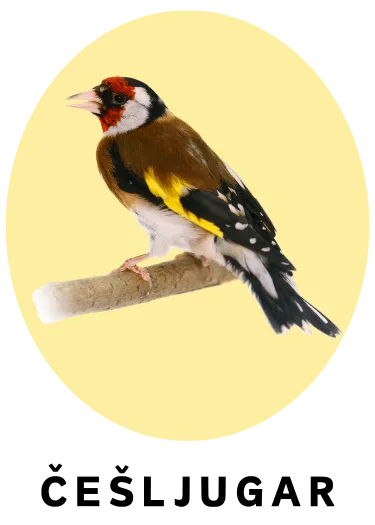
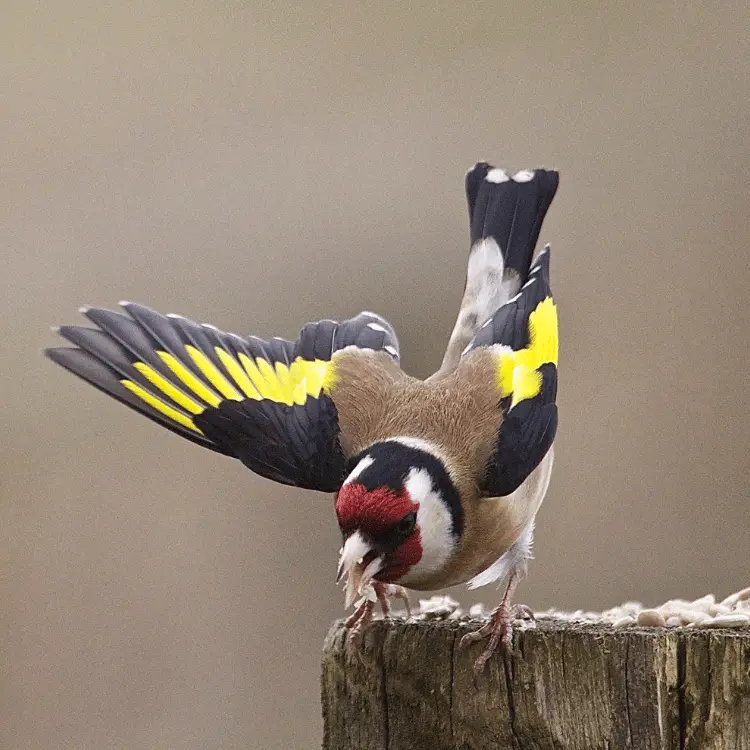
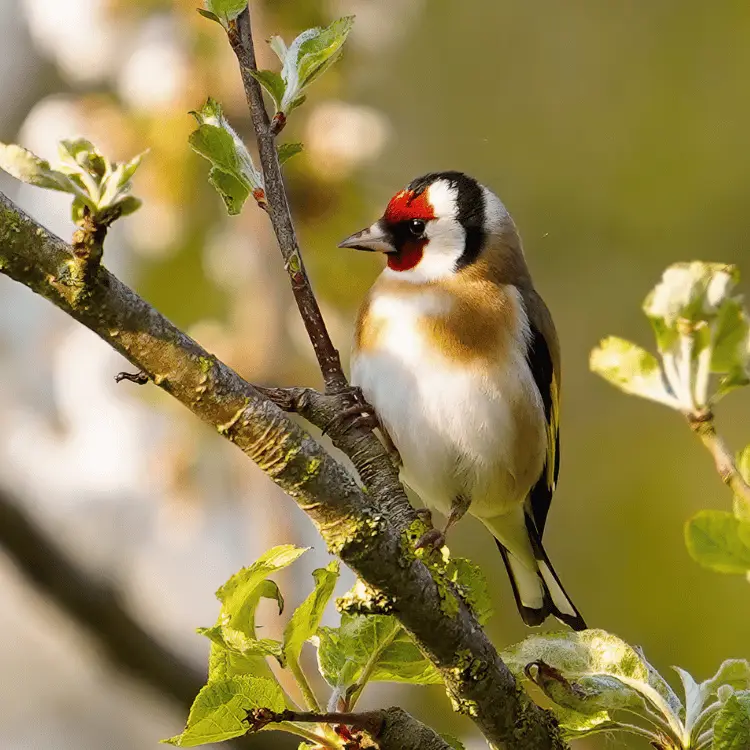
Plumage colour: The goldfinch has a reddish face and throat, while the wings and tail are mostly yellow, and the back and belly are covered in brown and black feathers.
Beak: Its thin, conical beak (a conical beak is a beak shape that resembles a cone. It tapers towards the tip, usually with a firm, sharp point. Seed-eating birds such as finches and canaries often have this kind of beak, because it lets them easily crack the hard husks of seeds. It can also be found in some insectivores, which use it to catch and crush their prey) is ideal for gathering the seeds that the goldfinch feeds on.
Eyes: Its small, dark eyes add to the bird’s charm, and its bright plumage stands out against natural surroundings.
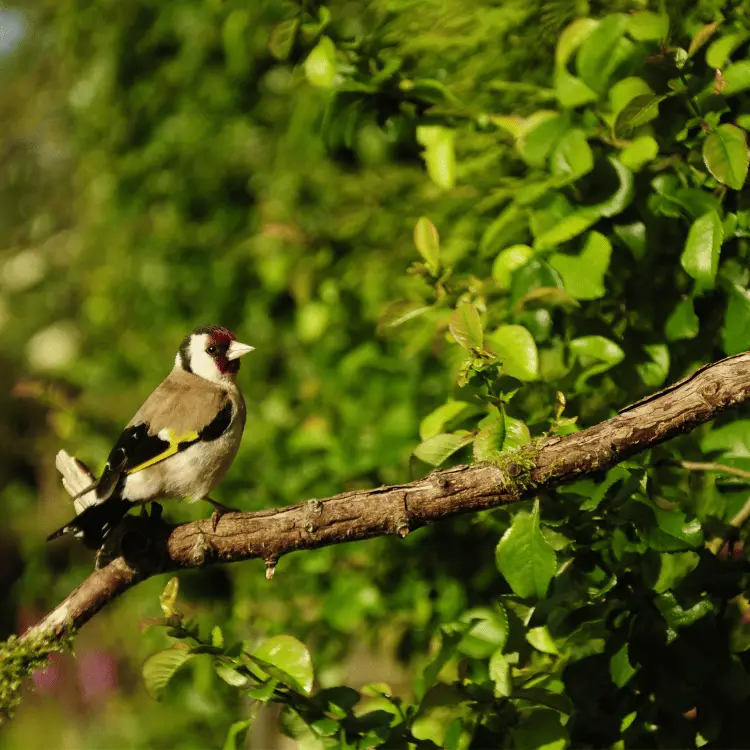
Because of its colour and size, the goldfinch is very easy to recognise in the wild and to spot in trees and gardens.
Goldfinch habitat and distribution
The goldfinch is widespread and adapted to a variety of ecosystems, from woodland to fields, but it is also often found in urban areas such as gardens and parks.
Distribution
The goldfinch is found across Eurasia, where it is most often seen in temperate and subtropical regions.
It can also be found in North America, where it was introduced. The goldfinch prefers open areas with trees, where it can find suitable food sources and nesting sites.
What do goldfinches eat?
The goldfinch is an omnivore that feeds on a variety of plant material, and it loves seeds most of all. For this bird, gathering food is its main activity during the day.
Types of food
Seeds: The goldfinch feeds on the seeds of plants such as dandelion, cypress, grasses and wild garlic.
Fruit: The goldfinch sometimes also eats fruit that is available in summer and autumn
Feeding behaviour
Goldfinches are known for often gathering food in trees, but they can also feed on the ground, especially in winter when food is scarce.
Goldfinch behaviour
The goldfinch is a sociable bird. It lives in small groups or pairs for most of the year, but in winter goldfinches often gather in larger flocks, which makes it easier to protect themselves from predators and cope with colder conditions.
Social behaviour
The goldfinch is known for its melodious song, which is often heard during the breeding season. Its song is loud and pleasant to the ear, which is why this bird is a favourite among bird lovers.
Interestingly, male goldfinches often sing to attract females during the breeding season, putting on a real musical performance in nature.
Migration
Goldfinches are seasonal migrants, which means they move to warmer regions in the winter months and come back in spring.
Goldfinch nesting
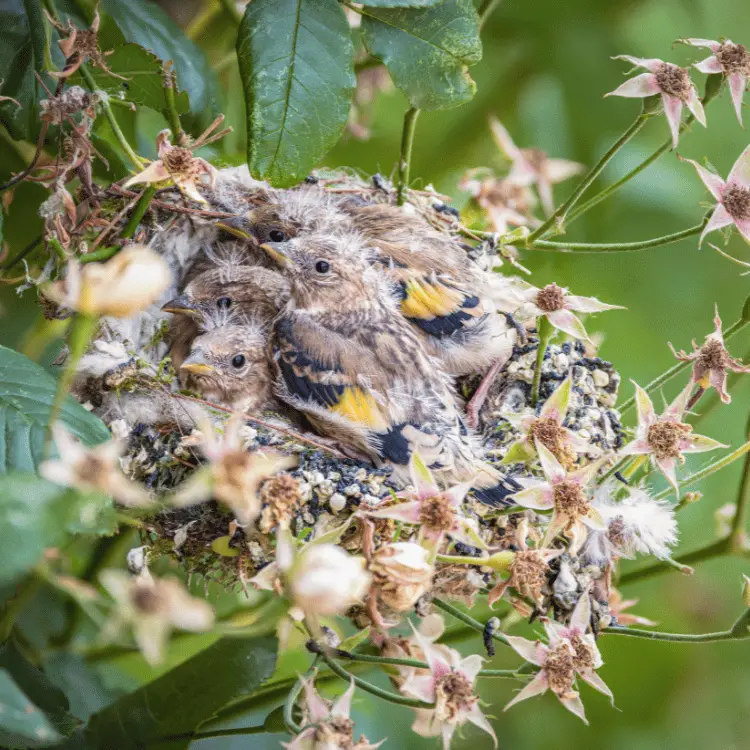
The goldfinch nests in trees and shrubs, where it builds its nest from twigs, grass and leaves. The nest is usually placed in a dense shrub or on a branch that offers safe shelter
Choosing a nest site
Trees and shrubs: Goldfinches look for tall trees or dense shrubs that give them safety and privacy.
Eggs: The female goldfinch usually lays 4–6 eggs, which are light grey with small spots. Incubation lasts about 12–14 days.
Caring for the young
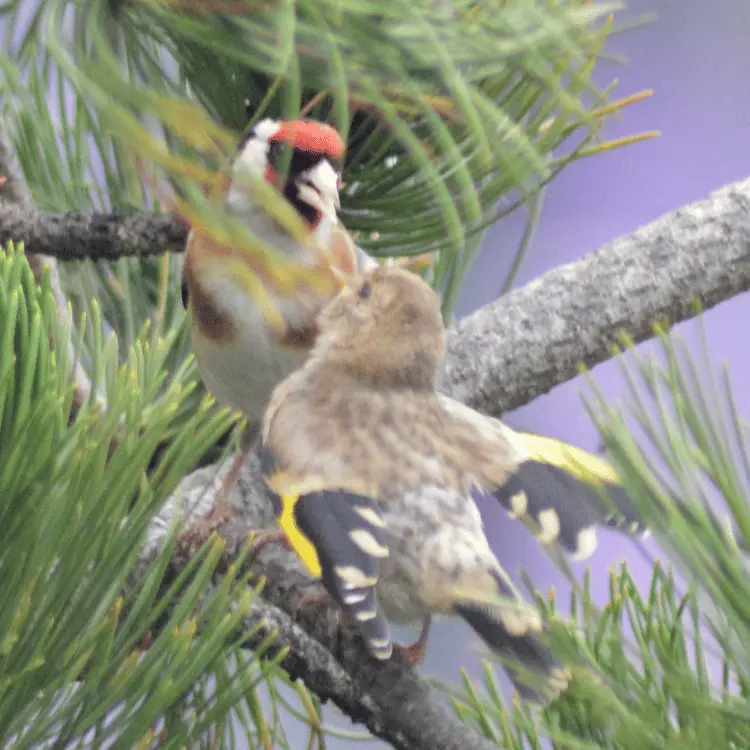
Both parents take an active part in feeding and protecting the chicks. The young grow quickly and are soon able to fly, and the parents teach them how to look for seeds.
Goldfinch facts
Useful in gardens: Goldfinches are good for gardens because they eat harmful insects and help keep the ecosystem in balance.
A symbol of beauty and music: Because of their melodious song and colourful plumage, goldfinches are often a symbol of beauty and music in many cultures.
Longevity: Goldfinches can live up to 10 years in the wild, although their lifespan is often shortened by predators.
Conclusion
The goldfinch is one of the most beautiful and brightest birds, enriching its surroundings with its cheerful song and interesting behaviour. Its presence in nature and in gardens makes the world a more beautiful place, while its ability to adapt to different environments makes the goldfinch a special bird that holds a prominent place in plant and animal ecosystems