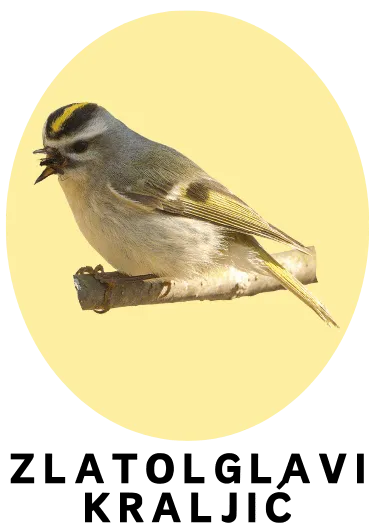
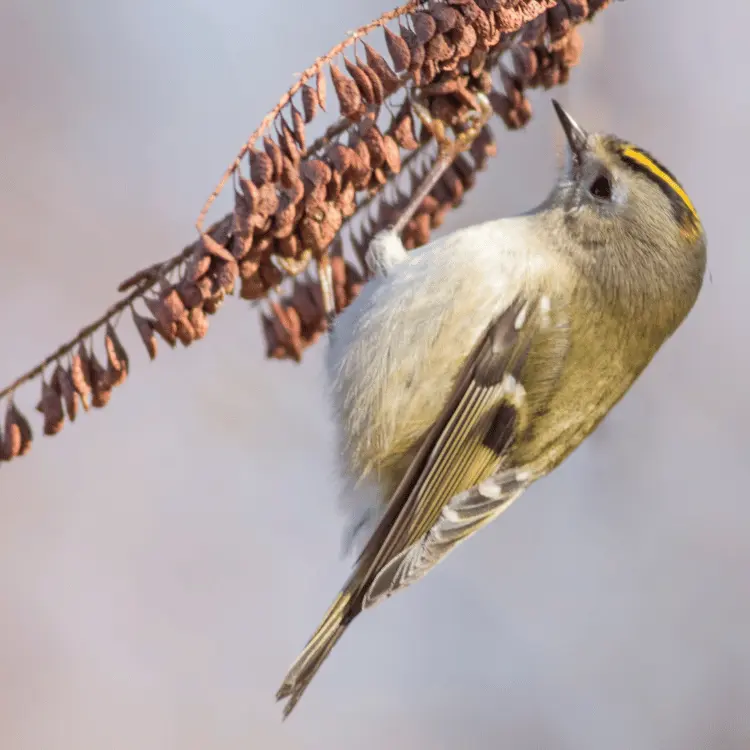
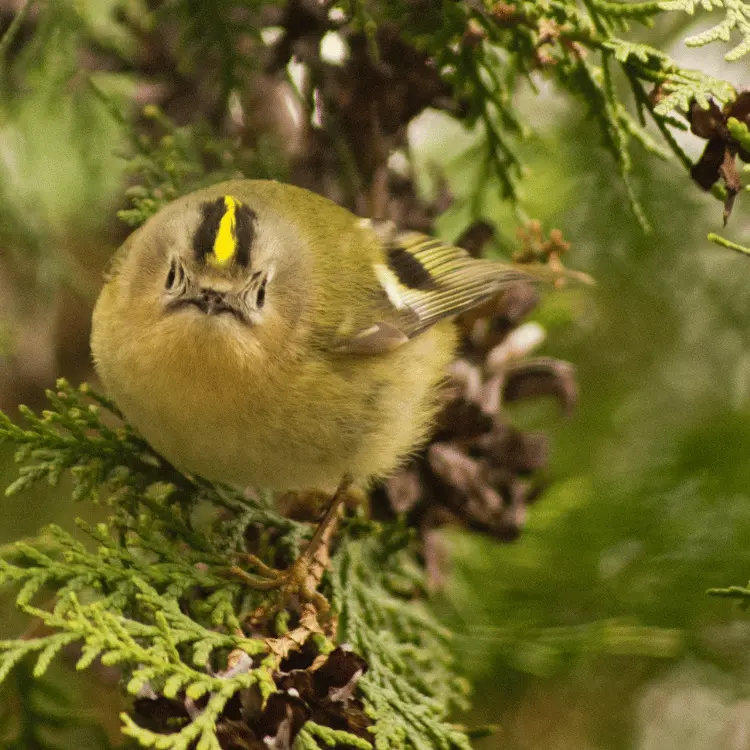
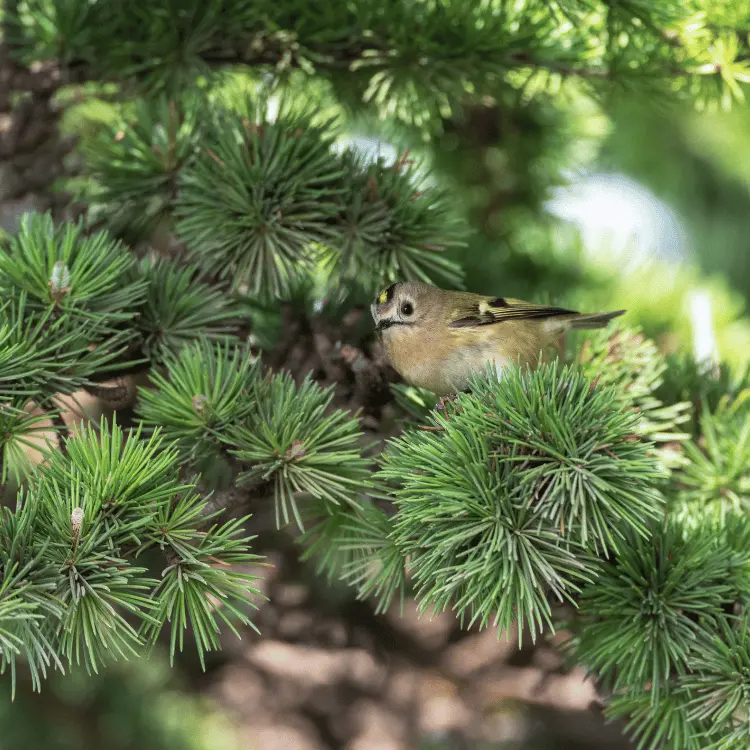
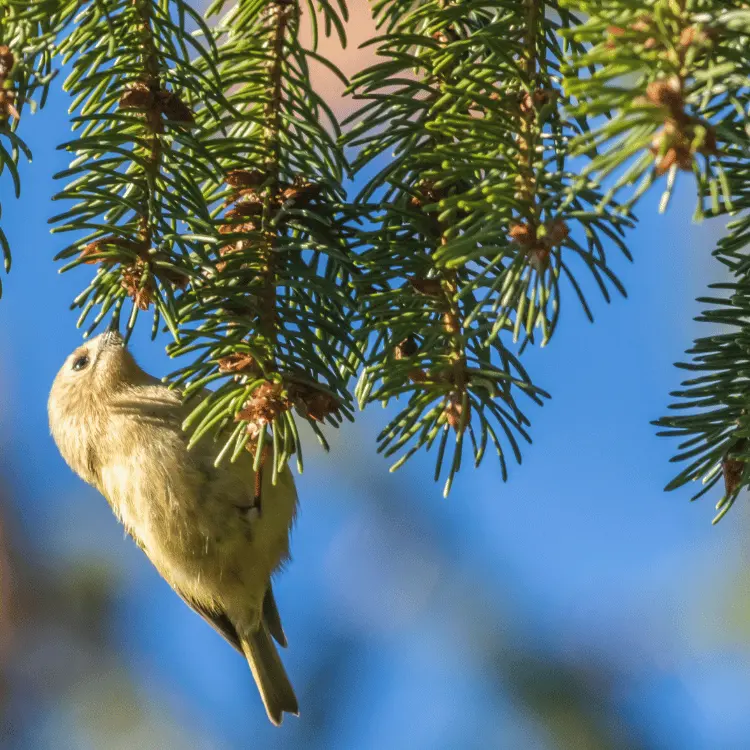
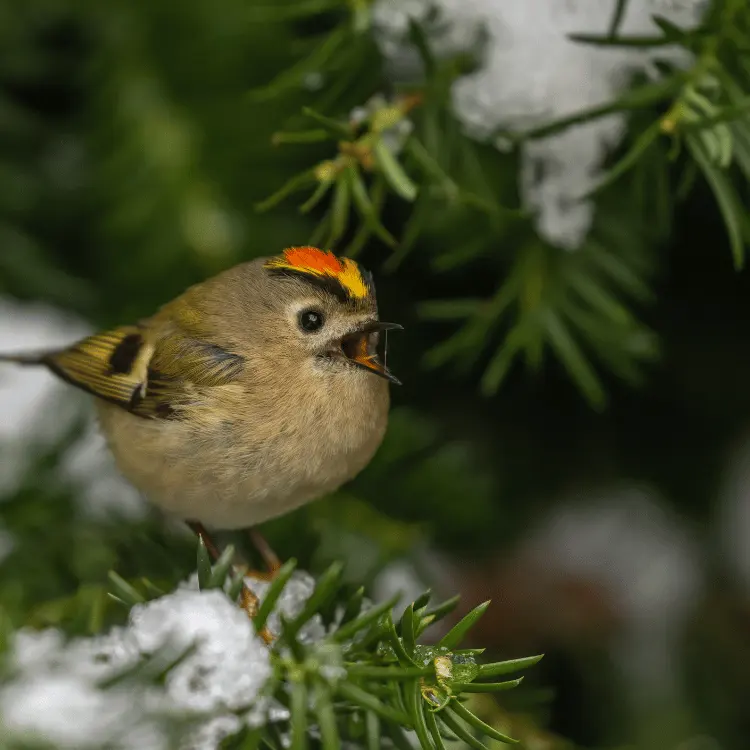
The goldcrest (Regulus regulus) is the smallest bird in Europe and one of the best-known species of the family Regulidae. This tiny bird is known for its vivid colours, especially the gold and red on its head that give it its name. Although it is physically tiny, the goldcrest impresses with its behaviour and adaptability, and it has become a symbol of Europe’s woodlands.
Appearance and distinctive features
The goldcrest is a small but very lively bird. Despite its tiny size, it is easy to recognise thanks to its vivid colours.
Body and plumage colours: The goldcrest is green and yellow on the back, while its flanks and belly are pale, whitish. The most striking part of the body is the golden crown stripe on top of the head, with an orange-red centre that is typical of males.
Size: This bird reaches a length of 8 to 9 cm, with a wingspan of 13 to 15 cm, making it the smallest bird in Europe.
Beak: The goldcrest's beak is thin and adapted for picking insects and other tiny organisms out of tree bark.
Legs: The legs are short but very strong, allowing it to hop and move easily among the branches.
Habitat and distribution
The goldcrest is a woodland bird that lives in dense forests, but also in orchards and parks. It favours areas rich in trees, which offer plenty of food and nesting sites.
This bird is widespread across Europe, where it can be found from the British Isles to Siberia and Scandinavia. The goldcrest inhabits many types of woodland habitat, from pine and deciduous forests to evergreen areas.
It is also found in Asia, where it migrates to more southerly areas in winter.
Diet – a tiny insect hunter
The goldcrest is an insectivore, which means it feeds mainly on insects and spiders. Its beak is ideal for picking prey off trees.
Insects and spiders: The goldcrest hunts small insects, including aphids and other tiny bugs, as well as spiders, which it picks off trees and shrubs.
Seeds: Occasionally, when necessary, it can also feed on seeds, especially in the winter months when food is scarce.
The goldcrest uses its small size and speed to move quickly among the branches and catch its prey fast. Its agility helps it avoid predators while it hunts tiny organisms.
Behaviour and breeding
The goldcrest is a very active and energetic bird. Its behaviour often involves hopping and darting along branches, and it has a very characteristic quick and nimble nature.
Fast movement: The goldcrest is known for flitting very quickly from branch to branch as it searches for food.
Social behaviour: These birds are usually sociable and can be seen in small groups, especially in the winter months, when they forage together.
The goldcrest has a very quiet, high-pitched voice, which it often uses to communicate with other birds. It is not a particularly loud bird, but its song can be heard in spring and summer.
Nesting
The goldcrest takes a versatile approach to caring for its young, and its nests are often found in dense shrubs or trees.
Nesting
The goldcrest builds its nest in shrubs or on tree branches, and the nest is very small and well hidden. This helps the birds protect their eggs from predators.
The female usually lays 4 to 12 eggs, which she incubates for 12 to 14 days.
Both parents take part in feeding the young, giving them tiny insects and spiders until they are strong enough to fly.
Interesting facts
The smallest bird in Europe: The goldcrest is the smallest bird living in Europe and, because of its size, it is easily overlooked.
Adapted to cold conditions: The goldcrest migrates to more southerly regions in winter but, despite its small size, it copes very well with the cold and can survive the cold months.
Conclusion
The goldcrest (Regulus regulus) is one of the smallest yet toughest birds in Europe. Despite its tiny size, it is exceptionally hardy and adaptable, able to survive even harsh winter conditions. Its constant activity, ceaseless search for food and energetic movement among the branches make it a tireless explorer of the woods.
Although it is not endangered, the loss of the coniferous forests in which it nests could affect its future. Preserving natural habitats is key to securing a stable population of this lively and fearless bird.
The goldcrest may be small, but with its lively behaviour, charming appearance and constant twittering it proves that size is not what counts for success in nature.