
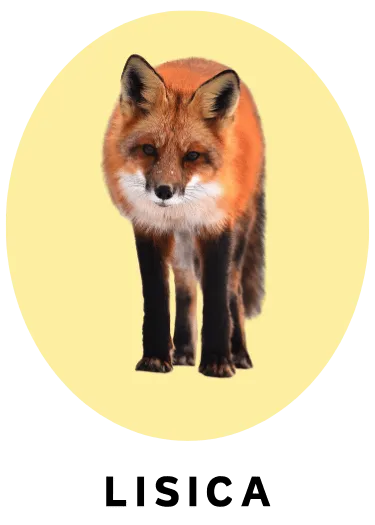
About foxes
Red fox: (Vulpes vulpes)
Foxes are among the most interesting and best-known wild animals, living in many parts of the world. This charming and cunning animal attracts attention with its appearance, behaviour and ability to adapt.
Appearance
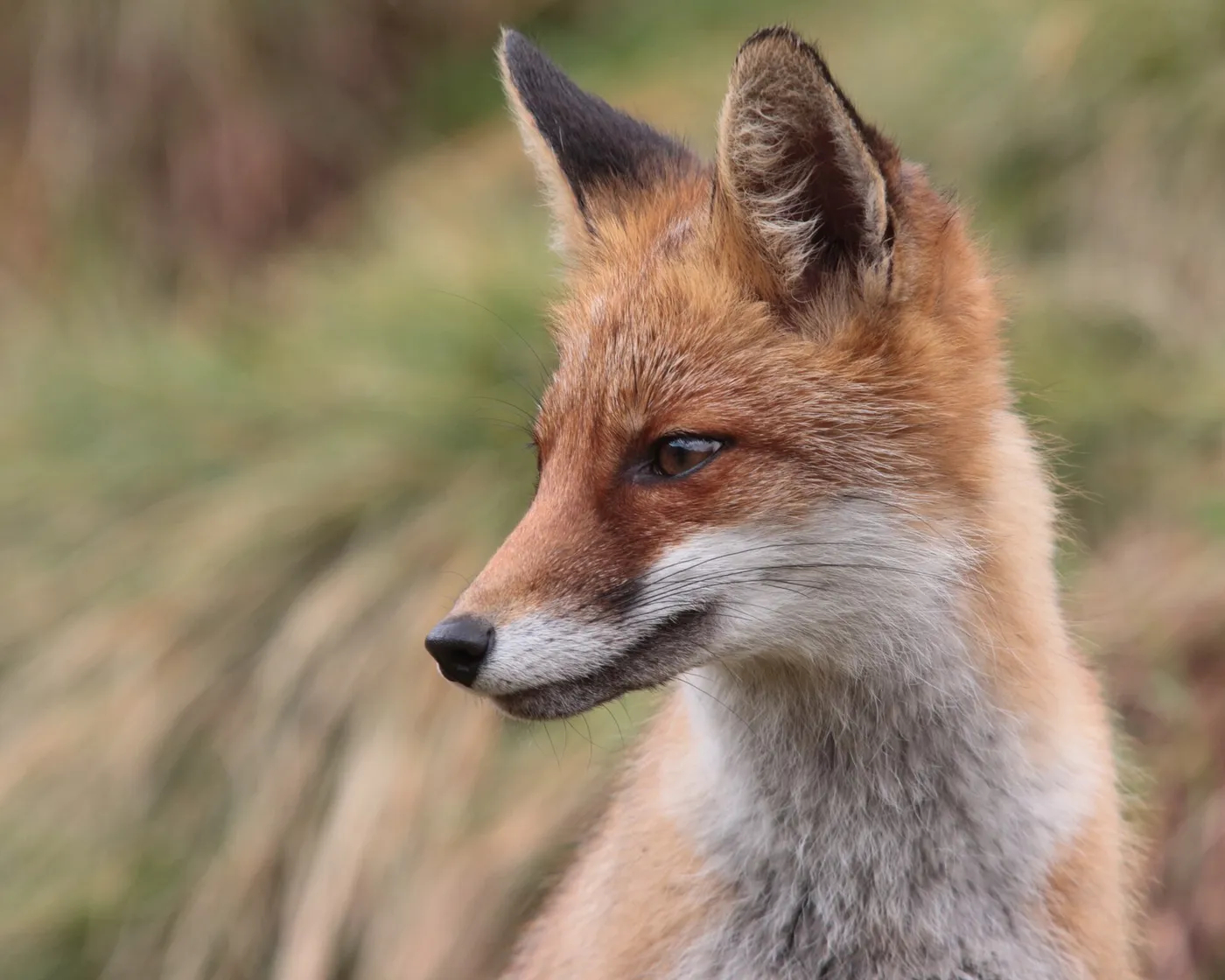
The fox belongs to the dog family, and the best-known species is the red fox (Vulpes vulpes). It is recognisable by its long tail, rounded ears and sharp, piercing eyes. Its orange or reddish fur can sometimes be darker or lighter, depending on its habitat.
Interestingly, foxes are nocturnal animals, which means they are most active at dusk and during the night. Their diet varies, as they are opportunistic predators, which means they eat many kinds of food, including small mammals, birds, fruit and insects.
Habitat and geographical distribution
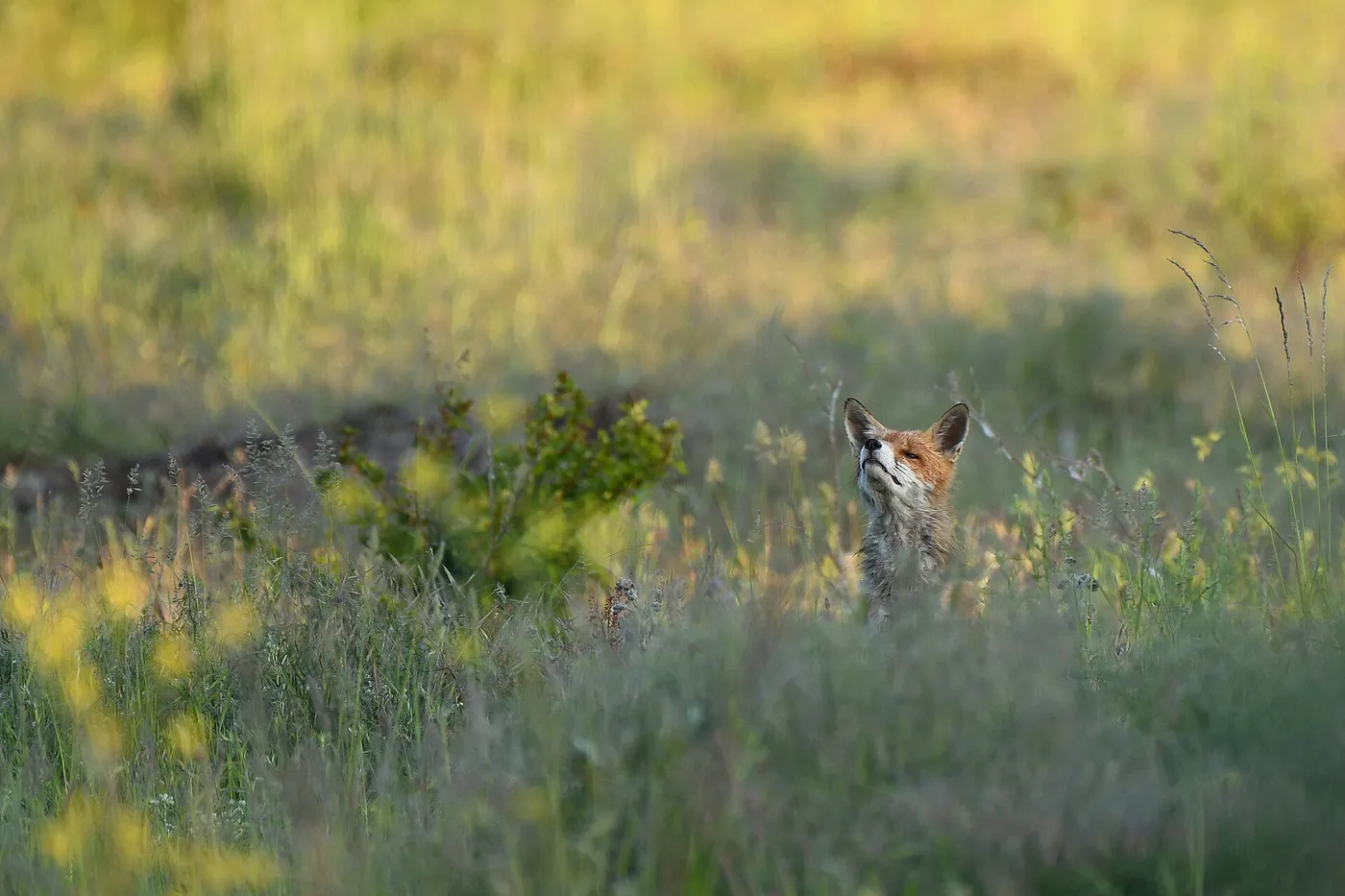
Foxes are very adaptable animals and can live in a variety of habitats, from forests and mountains to urban areas. Because of their adaptability, they can be found almost everywhere, from North America and the European Union to Asia and North Africa.
In urban environments, foxes have become very good at finding food and shelter, and they can often be seen making their way through gardens in search of scraps.
Fox behaviour
Foxes are known for their cunning and resourcefulness. Thanks to their high intelligence, they often use various hunting techniques to get food. Foxes may move about in small groups, but they often hunt alone.
When hunting, the fox relies on its keen sense of smell and excellent hearing, which allow it to locate prey precisely. Interestingly, it uses its tail for balance when running at high speed or making sharp turns during a hunt.
Breeding and cubs
Foxes mate in winter, and the vixen carries her young for about 52 to 53 days. A litter usually has between 4 and 6 cubs. The cubs are born blind and without fur, but they grow quickly and begin to learn basic survival skills from their parents.
After a few months, the cubs become independent and set off to find their own territory. A fox family usually lives in a den that is protected from the weather, while the parents are responsible for protecting and feeding the young.
The fox in culture and mythology
The fox often appears in mythology and folk tales, where it is a symbol of cunning and resourcefulness. In many cultures the fox is seen as a magical animal that can trick its opponents or even accompany spiritual beings. In some legends the fox is often portrayed as a sly and intelligent animal whose behaviour pushes the boundaries of what is considered possible.
Conclusion
The fox is a fascinating animal that has won many hearts with its behaviour, appearance and ability to survive in different conditions. Whether as a symbol in legends, a wild animal in nature or a companion in urban areas, the fox never ceases to be a subject of interest. Its resourcefulness and cunning allow it to survive in almost any conditions, and its presence in so many parts of the world speaks of its incredible adaptability.