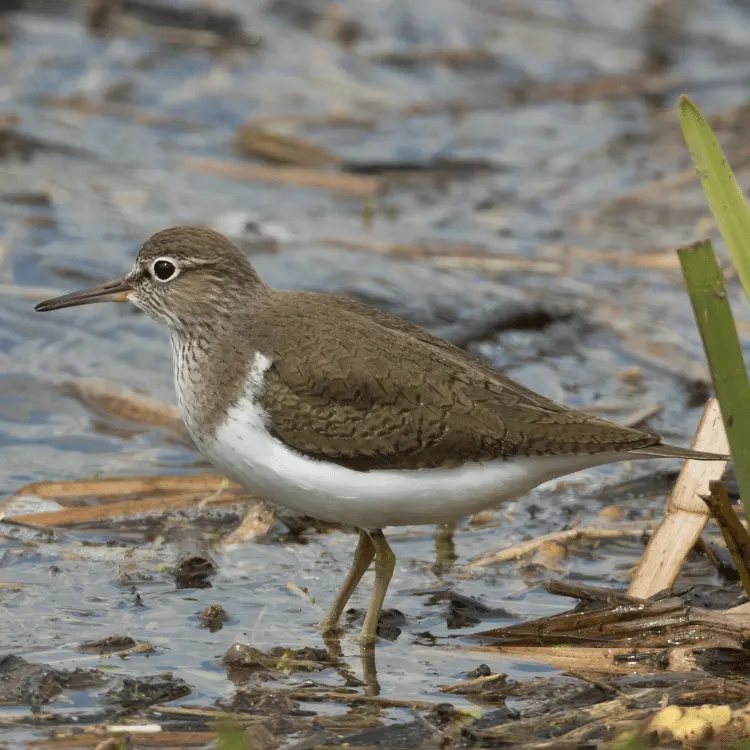
The common sandpiper (Actitis hypoleucos) is a small to medium-sized wader from the sandpiper family (Scolopacidae). It is about 18–20 cm long, with a wingspan of up to 35 cm and a weight of about 40 g.
Its upperparts are covered in brownish feathers, while the underparts are white, which helps it blend into its surroundings. It has long, thin legs and a characteristic thin, slightly curved bill adapted to catching insects and small aquatic creatures.
One of its most recognisable features is the constant bobbing of its tail and body as it walks or stands, which sets it apart from other waders.
Habitat and distribution
The common sandpiper lives on riverbanks, in marshes, by lakes and even on the seashore, especially in areas with rocky and sandy shores.
This species is widespread throughout Europe, Asia and Africa. In summer it breeds in temperate and northern regions, while in winter it migrates to the tropical regions of Africa and southern Asia.
Way of life and diet
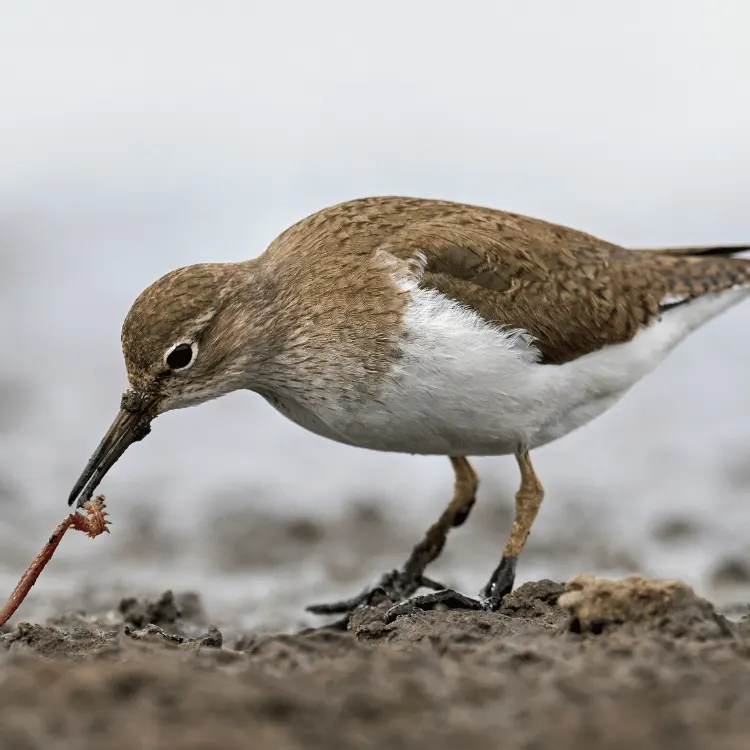
The common sandpiper is active during the day and looks for food along the water’s edge. Its diet consists mainly of insects, small crustaceans, worms and other small invertebrates.
It often uses a “run and stop” technique, moving quickly along the water and stopping suddenly to catch its prey.
Mating and nesting
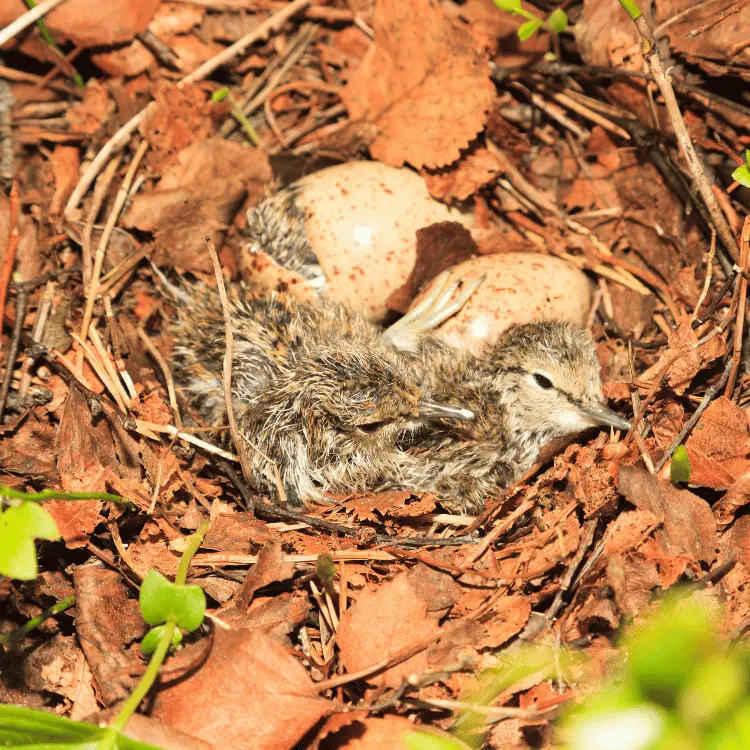
The nesting season lasts from April to July. It is a monogamous species and builds its nest on the ground, hiding it among stones or dense vegetation near the water.
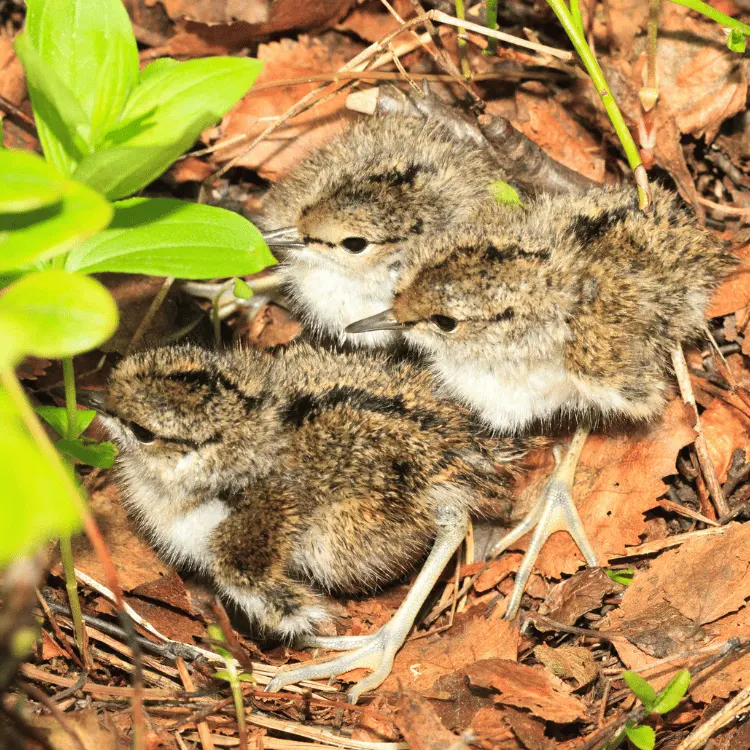
The female lays 3–4 eggs, which both parents incubate for about 21 days. After hatching, the chicks are precocial (able to follow their parents soon after hatching) and become independent very quickly.
Migration and movement patterns
The common sandpiper is a migratory bird that heads to the tropical regions of Africa and Asia in autumn and returns to Europe to breed in spring. During migration it can often be seen along rivers and lakes, where it rests and feeds.
Threats and conservation
Although the common sandpiper is still a relatively common species, it faces threats such as habitat loss, water pollution and a decline in prey due to pesticide use. Climate change may also affect its migration patterns.
To preserve this species, it is essential to protect wetland habitats, limit water pollution and ensure the conservation of natural rivers and shorelines.
Conclusion
The common sandpiper (Actitis hypoleucos) is an inconspicuous but extremely adaptable wader, known for its characteristic bobbing and quick movements along the water’s edge. Although it adapts well to environmental change, protecting its natural habitats is key to the long-term conservation of this interesting species.