The collared dove – a gentle bird with a familiar coo
The Eurasian collared dove (Streptopelia decaocto) is a bird of the pigeon and dove family (Columbidae), recognisable by its gentle call and graceful appearance. This adaptable species is now a common sight in both urban and rural areas, where its characteristic “coo-coo-coo” creates a soothing atmosphere. In many cultures the collared dove symbolises love, peace and fidelity, and its presence close to human settlements testifies to its adaptability and intelligence.
Eurasian collared dove (Streptopelia decaocto)
Appearance and characteristics
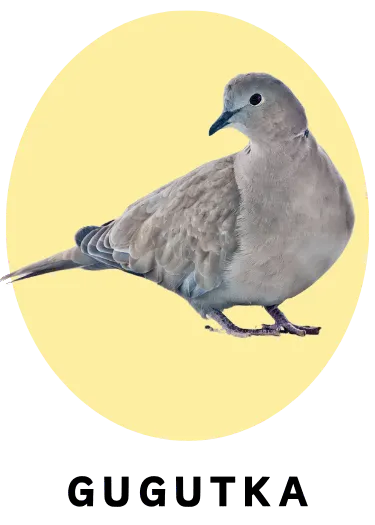
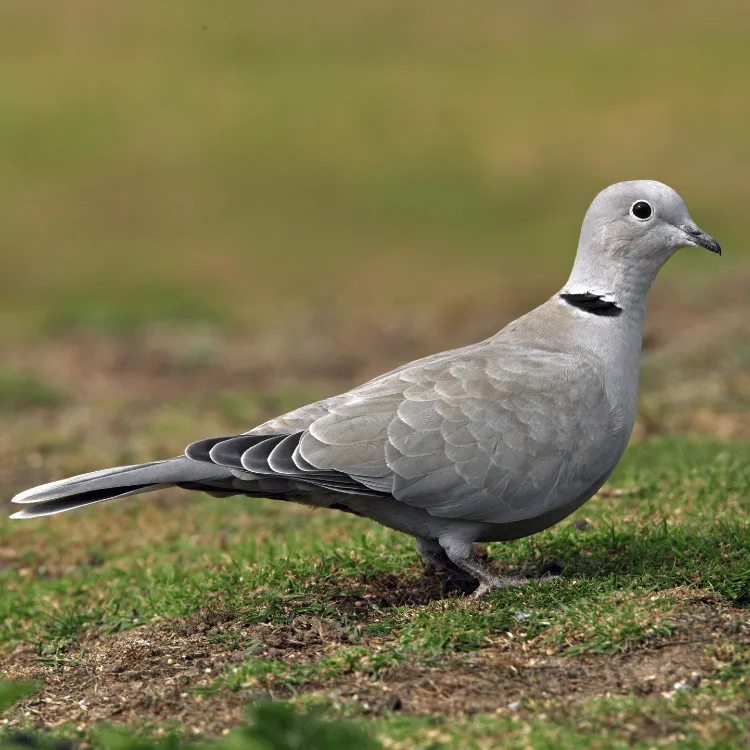
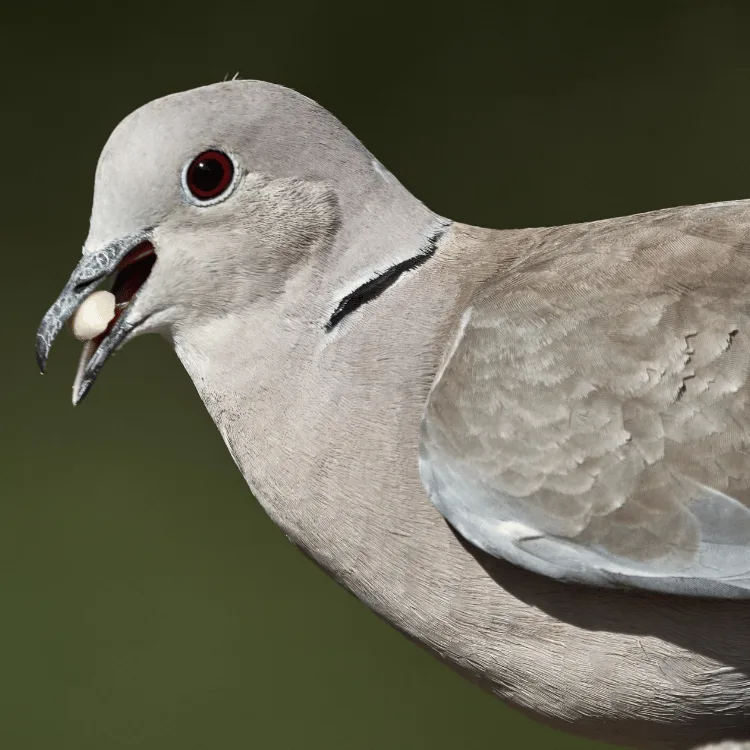
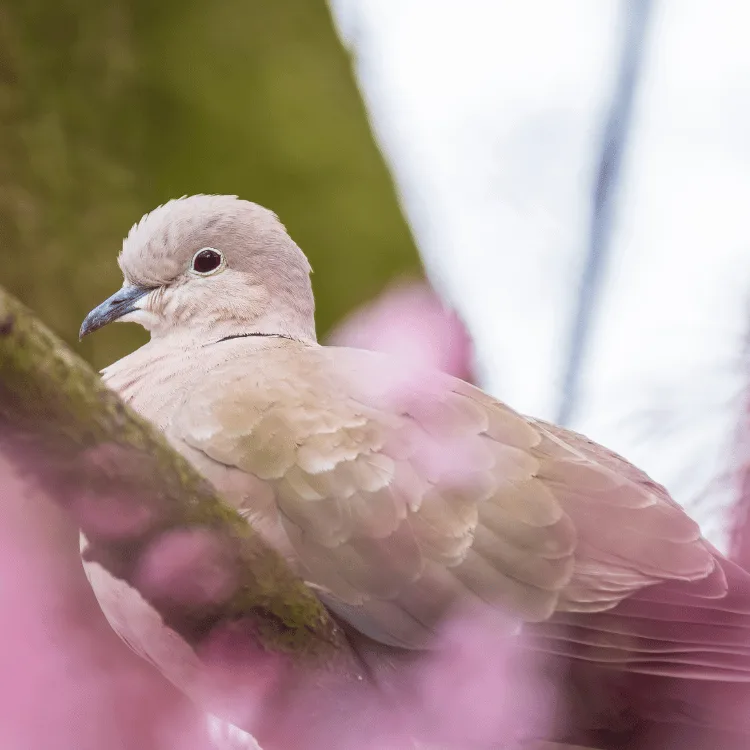
The collared dove is a slender, medium-sized bird, about 30–33 cm long, with a wingspan of 47–55 cm. It is recognisable by its light grey to beige plumage, which gives it excellent camouflage in the wild. One of its most striking physical features is the black half-collar on the back of the neck, which makes it easy to identify. Its eyes are dark and expressive, and its legs are short and reddish. In flight, collared doves are fast and agile, while on the ground they move gracefully and calmly.
Habitat and distribution
The collared dove originally came from Asia, but during the 20th century it spread across almost all of Europe, North America and the Middle East. Today it is a regular sight in towns, villages, parks, orchards and farmland. Its remarkable adaptability has allowed it to live successfully alongside people, so it can often be seen on roofs, trees and telephone wires, from where it keeps an eye on its surroundings and calls with its familiar coo.
What do collared doves eat?
The collared dove is mainly a herbivore, and its diet includes: seeds and grain (wheat, barley, maize) Berries and small fruit Flower buds and leaves Occasionally small insects and snails It usually feeds on the ground, pecking carefully at its food. In towns it often visits bird feeders, where it enjoys the seeds people leave out for it.
Breeding and behaviour
Collared doves are known for their faithfulness to their partner, with whom they often stay for life. The breeding season lasts from spring to late summer, and the male wins over the female with a characteristic display flight, in which he rises steeply into the air and then glides slowly down, cooing softly.
Their nest is a simple structure made of twigs and grass, usually placed in trees, bushes or even on buildings. The female lays two eggs, and both parents share the incubation, which lasts about 14 days. The chicks grow quickly and leave the nest within two to three weeks.
Intelligence and adaptability
Although collared doves are often thought of as simple, tame birds, research shows that they are extremely adaptable and resourceful. They have managed to adapt to different climates and urban environments, using their instincts to find food and shelter. Their ability to learn quickly allows them to recognise danger and avoid predators such as falcons, hawks and cats.
Interesting facts about the collared dove
A symbol of love and peace – Because of its gentle nature and faithfulness to its partner, the collared dove is often associated with love and devotion. Mythological meaning – In some cultures it is believed that the call of the collared dove brings good luck or heralds changes in life. Rapid spread – Collared doves only arrived in Europe at the beginning of the 20th century, but thanks to their resilience and adaptability they spread rapidly. Crop milk – Like other pigeons and doves, collared doves feed their young on “pigeon milk”, a special nutrient-rich fluid that they produce in the crop.
Research on collared doves
Through various studies, scientists have discovered many interesting facts about this species: Remembering routes – Studies have shown that collared doves have an excellent sense of space and can remember the locations of feeding sites and shelters. Communication – Their cooing is not just a random sound – collared doves use different tones and intensities to pass information to their partners and to other birds. Impact on the ecosystem – As part of the natural food chain, collared doves play an important role in spreading seeds and controlling insect populations.
Conclusion
The collared dove is a gentle, adaptable and intelligent bird that wins people’s hearts all over the world with its melodious coo and mild behaviour. Thanks to its resilience, it has become an integral part of the urban and rural landscape, bringing calm and beauty to everyday life. Whether you watch it in a park, on a roof or in the branches of a tree, the collared dove leaves the impression of a peaceful yet resourceful bird whose importance in nature and in human culture is beyond question.