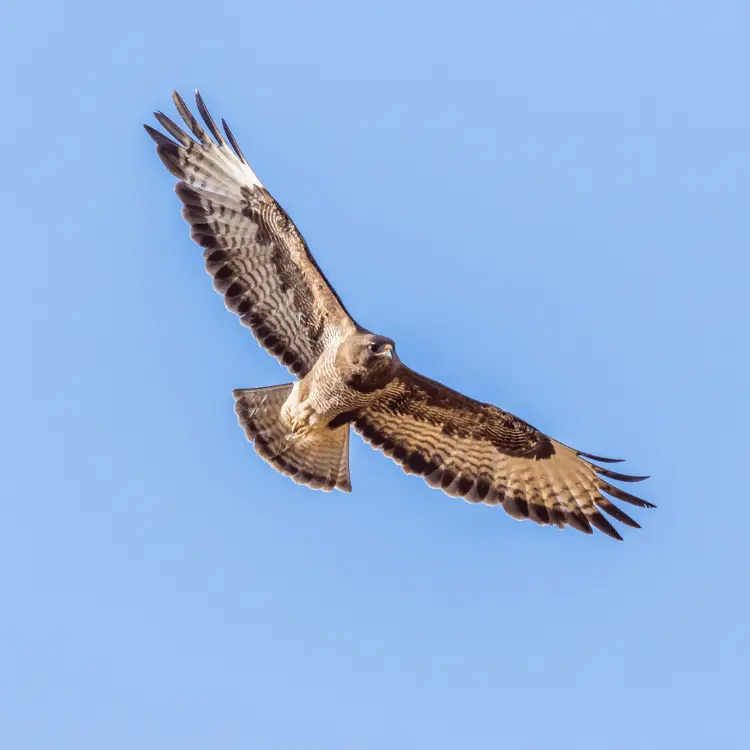
The common buzzard (Buteo buteo) is one of the most common birds of prey in Europe. This powerful migratory bird is recognisable by its broad wingspan, its slow soaring flight and its exceptional adaptability. It is most often seen hovering over fields and woods in search of prey.
What does the common buzzard look like?
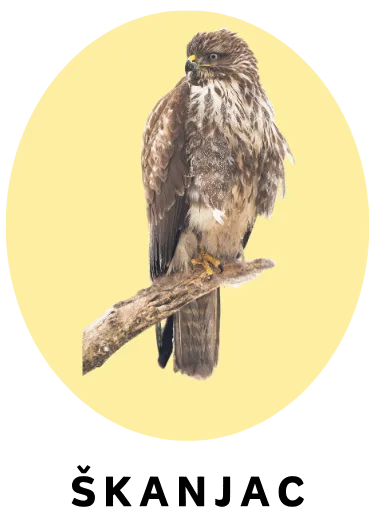
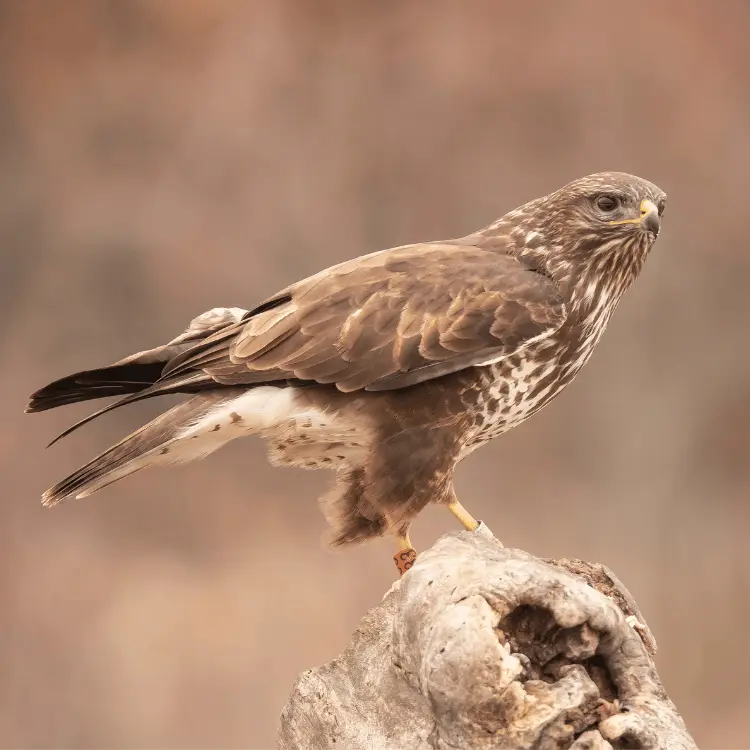
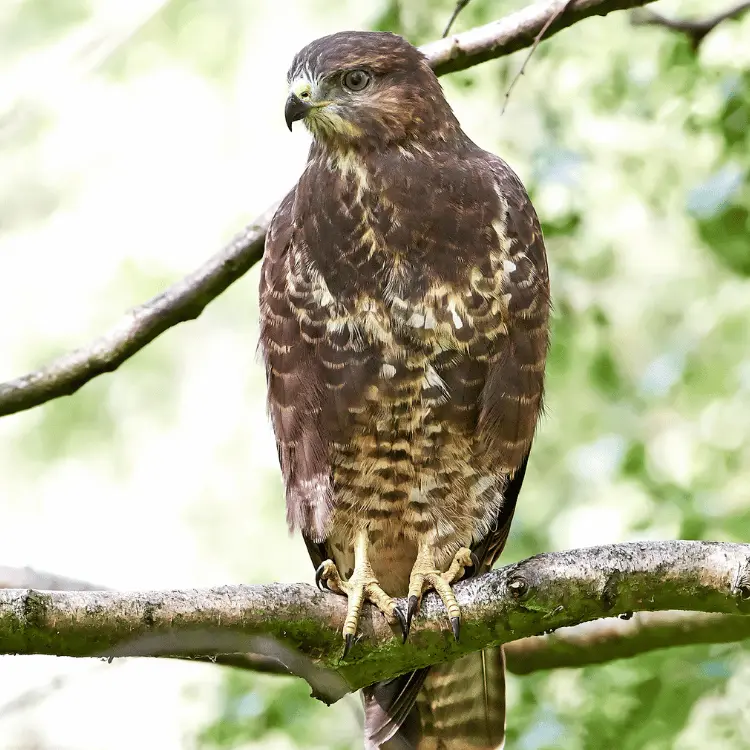
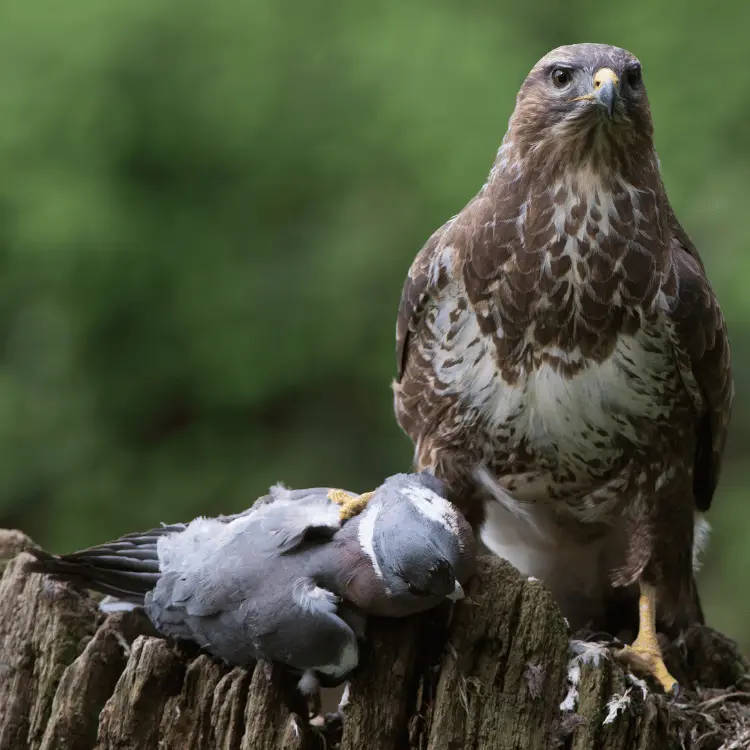
Plumage – the common buzzard comes in various shades of brown, from light to dark, with white markings on the belly and breast. Size – an adult buzzard can reach a body length of 40 to 58 cm, with an impressive wingspan of 110 to 140 cm. Weight – between 500 and 1300 grams, with females usually larger than males. Beak and talons – a sharp, hooked beak and strong talons allow it to catch and tear up its prey efficiently.
Habitat and distribution
The common buzzard is widespread throughout Europe, Asia and North Africa. It prefers open landscapes with enough high vantage points for spotting prey, such as meadows, fields, woodland edges and mountain expanses. The buzzard is also found in urban areas, where it can be seen circling above city parks and suburbs.
Some populations are migratory, while others stay in the same area all year round.
Diet and hunting techniques
The common buzzard is an opportunistic hunter, which means it adapts its diet to whatever prey is available. It occasionally eats birds, reptiles and amphibians, and it does not turn its beak up at carrion either.
Main food – small mammals such as mice, voles and rabbits
Hunting technique – it flies high and uses its excellent eyesight to spot prey, then swoops down suddenly and seizes it with its talons.
Breeding and caring for the young
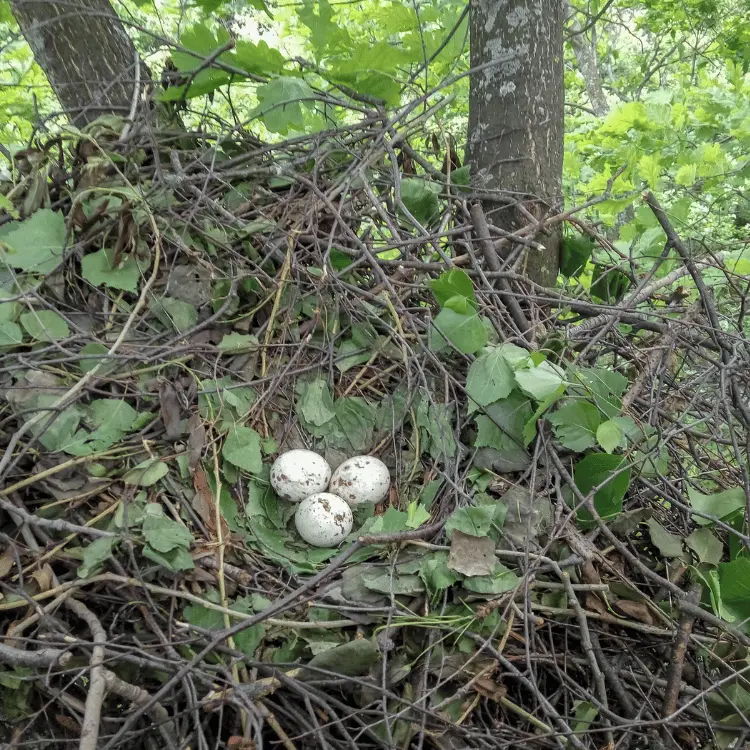
The breeding season begins in March and April, when pairs form and perform impressive aerial displays. It builds its nest in tall trees or on cliffs, using branches, leaves and feathers.
The female lays 2 to 4 eggs, which she incubates for about 35 days, and the young stay in the nest for 6 to 7 weeks, during which the parents feed them intensively before they learn to fly.
Behaviour and communication
The common buzzard is a territorial bird and can often be seen circling in the sky, giving loud calls that sound like a cat’s mewing.
It is adaptable, which allows it to survive in a range of conditions, from wooded areas to open fields and mountains. In the winter months it often gathers in small groups, especially when sharing an area rich in food.
The common buzzard in the ecosystem and in symbolism
The common buzzard plays an important role in the ecosystem because it helps to control rodent populations and maintain the balance of nature.
In folk belief, the buzzard symbolises power, vision and adaptability. It is often associated with spiritual meanings, where it is seen as a guide through life’s challenges.
Threats and conservation
Although the common buzzard is not an endangered species, it faces various threats:
Habitat loss due to urbanisation and deforestation.
Pesticide poisoning and environmental pollution, which reduce the amount of prey.
Poaching and collisions with vehicles, especially in rural areas.
How can you help the common buzzard?
Conserving natural habitats and reducing the use of pesticides. Raising awareness of the importance of birds of prey in the ecosystem. Protecting nests and encouraging a responsible attitude towards wild birds.
Conclusion
The common buzzard (Buteo buteo) is one of the most adaptable and widespread birds of prey. Its ability to hover in the air, its impressive hunting technique and its key role in nature make it a fascinating species. Although it is not critically endangered, conserving its habitat and protecting it from human threats will ensure that this powerful hunter continues to rule the skies.