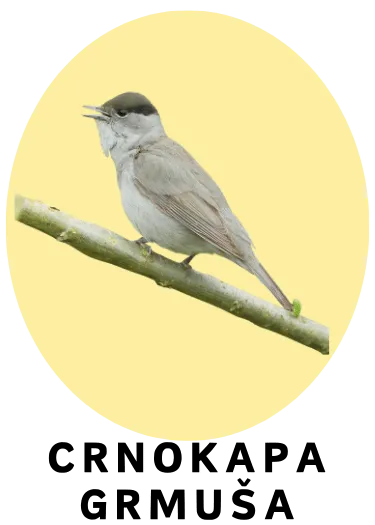
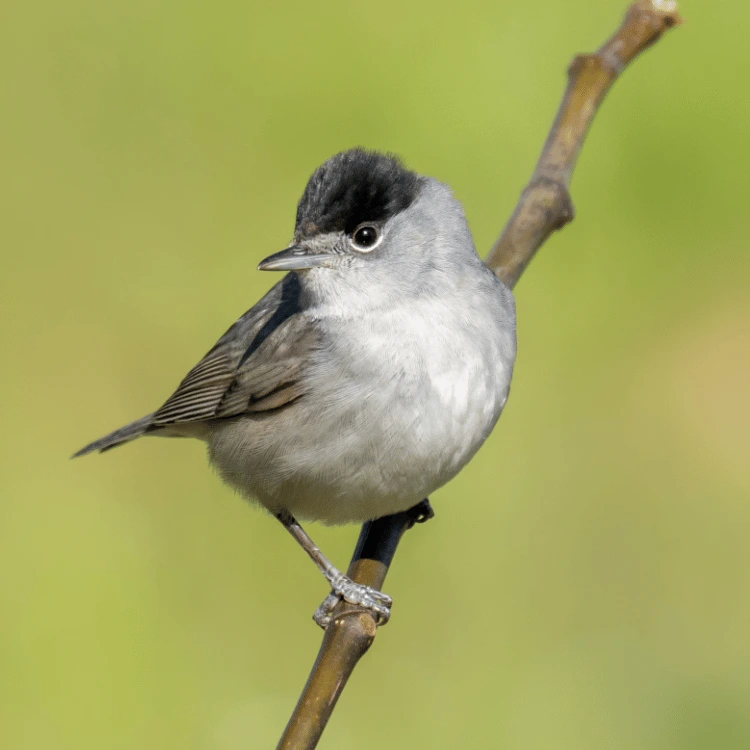
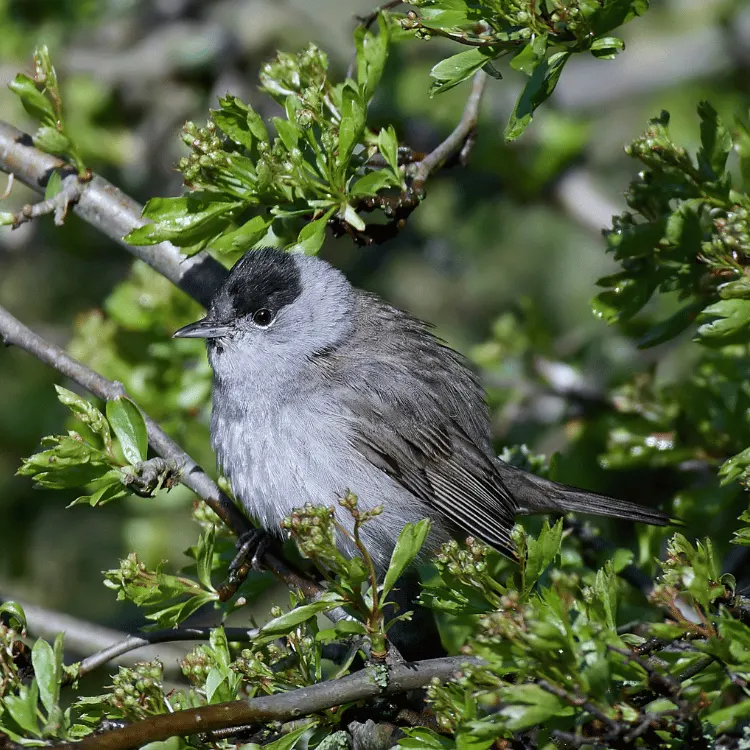
The Eurasian blackcap (Sylvia atricapilla) is a small bird from the warbler family (Sylviidae), known for its melodious song and the distinctive black or brown cap on its head.Size: 13–15 cm long, wingspan 20–23 cm, weight 16–25 g.The male has a black cap, while the female and young have a brownish cap.The rest of the body is greyish-olive, with a slightly paler belly.The eyes are dark and the beak is thin and sharp, adapted to catching insects.
Sardinian warbler (Sylvia melanocephala)
Appearance and identification
Habits and habitat
The blackcap is a bird that likes to live in shrubs and copses, especially in areas with plenty of vegetation. In Croatia it is most often seen in Mediterranean regions, but it is not only found on the coast. You can also often see it in gardens and parks, where it finds enough food and shelter. Warblers like to be in scrubby areas, where they feel safe and can easily feed and nest.
Diet and hunting habits
The blackcap is mainly an insectivore, which means it mostly feedson insects and other small invertebrates. Its diet often includes fruit and berries too, depending on the season and food availability. These birds are very skilled insect hunters, and their diet can range from tiny insects to larger ones such as grasshoppers and beetles. It is particularly interesting that blackcaps often look for food in dense shrubs and on the lower branches of trees, which allows them to react quickly and catch their prey.
Behaviour and interesting facts
The Eurasian blackcap is known for its energetic behaviour and its song repertoire, which it uses to mark its territory and attract a mate. Males signal to females with loud singing, while the female answers with melodies specific to this species. Blackcaps are fairly territorial, especially during the breeding season, but afterwards they can be seen in small groups. Interestingly, these birds are very adaptable – they can successfully settle in urban areas, where they find enough food and suitable nesting conditions.
Breeding and lifespan
The Eurasian blackcap nests in dense shrubs and low trees, where the female lays several eggs. Both parents care for the young, feeding and protecting them until they are independent enough to leave the nest. These birds usually live around 3 to 5 years in the wild, although some individuals can live longer if conditions allow.
Research and scientific interest
Although it has not been studied as much as some other bird species, the Eurasian blackcap attracts the attention of ornithologists and biologists because of its adaptability to different ecological conditions. Scientific research often focuses on the bird’s migration patterns, its feeding habits and its behaviour during the breeding season. The ecology of the blackcap is also important in the context of conserving the plant and animal species that depend on shrubs and other types of vegetation in Mediterranean areas.
Conclusion
The Eurasian blackcap is a fascinating bird whose appearance, behaviour and adaptability offer a great deal of interest to ornithologists and nature lovers. Its presence in a wide range of habitats, including urban areas, makes it an outstanding example of a bird that integrates successfully into diverse ecosystems. Whether you are in a Mediterranean garden or a small wood, the blackcap is a bird that is hard to miss and well worth watching for its rich behaviour and its ability to adapt to human surroundings.