The common blackbird (Turdus merula) is one of the best-known and most widespread birds in Europe, recognisable by its characteristic appearance and song. It can often be seen in urban areas, gardens, parks and woodland. By its very presence the blackbird contributes to the balance of the ecosystem, as it helps control insect populations and spread plant seeds.
Common blackbird (Turdus merula)
Appearance and physical features
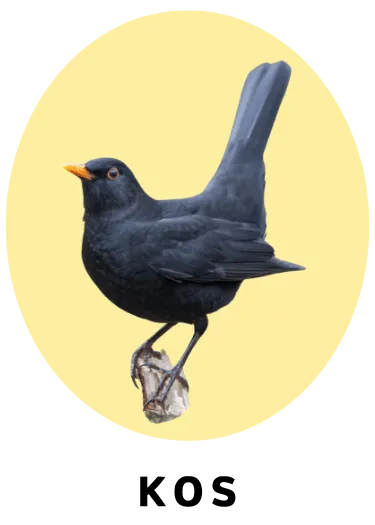
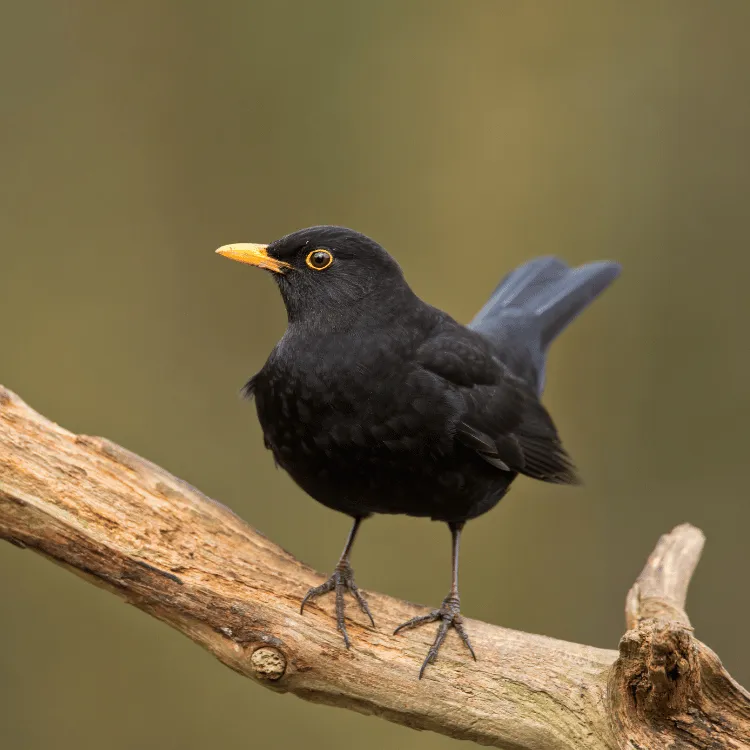
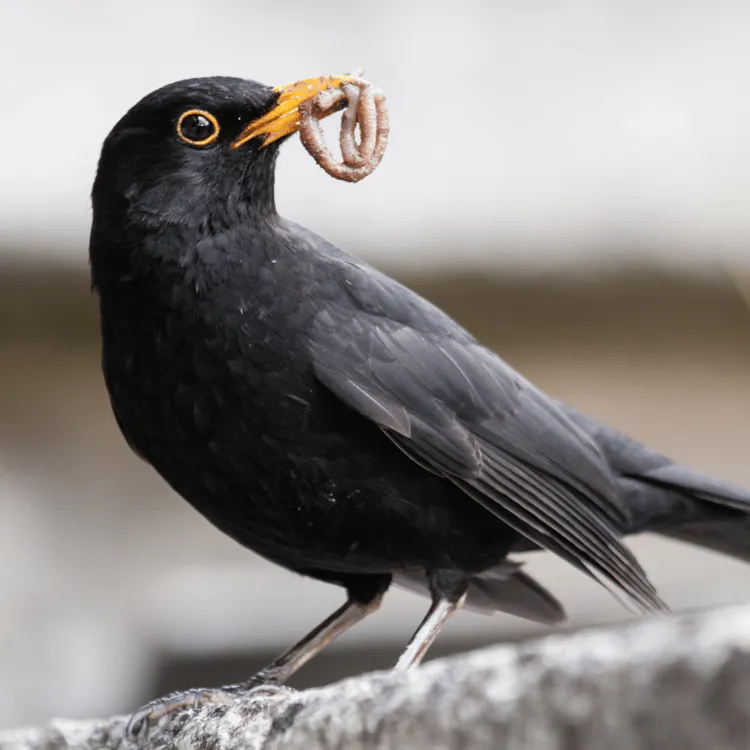
The blackbird is a medium-sized bird with dark, almost black plumage, and the males have a bright orange or yellow bill, while the females are a darkish brown. They have long legs that allow them to run quicklyalong the ground, and their short, strong bill is used to pull worms and insects out of the soil. This bird is also famous for its distinctive voice. Male blackbirds sing melodiously, one of the most beautiful sounds in nature, especially in early spring. The blackbird’s song varies, but it is usually complex and can be heard from early spring to late summer.
Species and subspecies
The common blackbird (Turdus merula), also known as the Eurasian blackbird or simply the blackbird, is a bird species from the thrush family Turdidae. It is the best-known species of the genus Turdus and is widespread in Europe as well as in parts of Asia and North Africa. The blackbird, known as the blackbird or Eurasian blackbird, has several subspecies distributed around the world. Some of the main subspecies include: Turdus merula merula – The best-known subspecies, found across most of Europe, including Britain. Turdus merula bianchii – Occurs in southern Europe, especially in Italy and surrounding areas. Turdus merula azorensis – A subspecies that lives on the Azores. Turdus merula intermedia – Found in Asia, including the southern part of Russia. Turdus merula oustaleti- Occurs in Madagascar and surrounding areas. These subspecies differ in physical characteristics such as plumage colour and size, depending on their habitat.
Habitat and migration
The blackbird is very adaptable in its choice of habitat and can live in forests, parks and gardens, and it is often found in urban areas too. It is not unusual to see blackbirds looking for food in town gardens or parks, especially near orchards and vegetable gardens. In the winter months, blackbirds from northern Europe migrate to more southerly areas such as the Mediterranean, where the climate is milder. Although many blackbirds migrate, in some parts of Europe, especially central and southern Europe, blackbirds stay all year round.
Diet
Blackbirds are omnivores with an adaptable diet. The blackbird’s main food is worms, grubs, various insects and other small invertebrates, which it finds in the soil. However, it also eats berries and fruit, especially in the winter months when food in the soil is harder to get at. Blackbirds can often be seen feeding on berries from shrubs, trees and other plants.
Habits and behaviour
Blackbirds are mainly diurnal birds, but they are most active in the morning and evening. They are known to forage in groups, but males and females often behave independently, especially during feeding. Although they are often seen looking for food on the ground, blackbirds also frequently use the lower branches of trees to rest and perch. In spring and summer, male blackbirds sing to attract a mate and mark their territory. Their singing is also linked to their contest for dominance in particular areas. In the winter months, blackbirds usually form small groups that search the area for food.
Nesting and family life
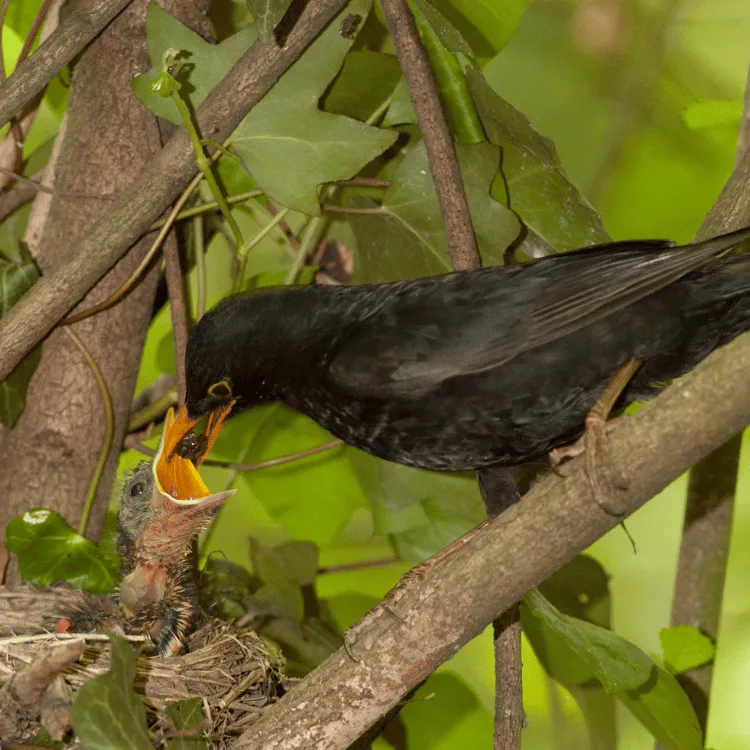
Blackbirds are monogamous and usually form pairs during the breeding season. Females usually choose hidden places in low shrubs, trees or on buildings to build their nest. The nest is usually made of twigs, grass and leaves, and lined in the middle with fine materials such as rotten bark and hair. The female lays 3–5 eggs, which are usually blue with dark speckles. The incubation period lasts about two weeks, after which the chicks hatch. The young are fed insects and fruit until they are big enough to fly.
Lifespan
Blackbirds usually live between 2 and 5 years in the wild, but many do not reach adulthood because of predators, disease or accidents. In captivity, where they are protected from predators and other dangers, blackbirds can live up to 10 years.
Facts and research
Blackbirds are the subject of numerous scientific studies, particularly because of their singing and navigation abilities. Their song, considered one of the most beautiful among birds, is often linked to the male’s behaviour in marking territory and attracting a mate. In addition, blackbirds are ecologically important because they help maintain the balance of the ecosystem, controlling insect populations and spreading plant seeds. Through their diet of worms and insects, they play a key role in reducing the number of agricultural pests.
Conclusion
The blackbird is a bird whose presence enriches the landscape and nature, providing melody in spring and summer and helping to maintain the balance of the ecosystem. With its song, adaptability and important ecological role, the blackbird is an indispensable part of natural systems, reminding us of the beauty of nature and the richness of life.