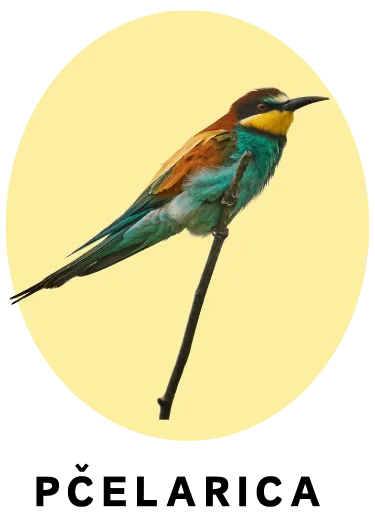
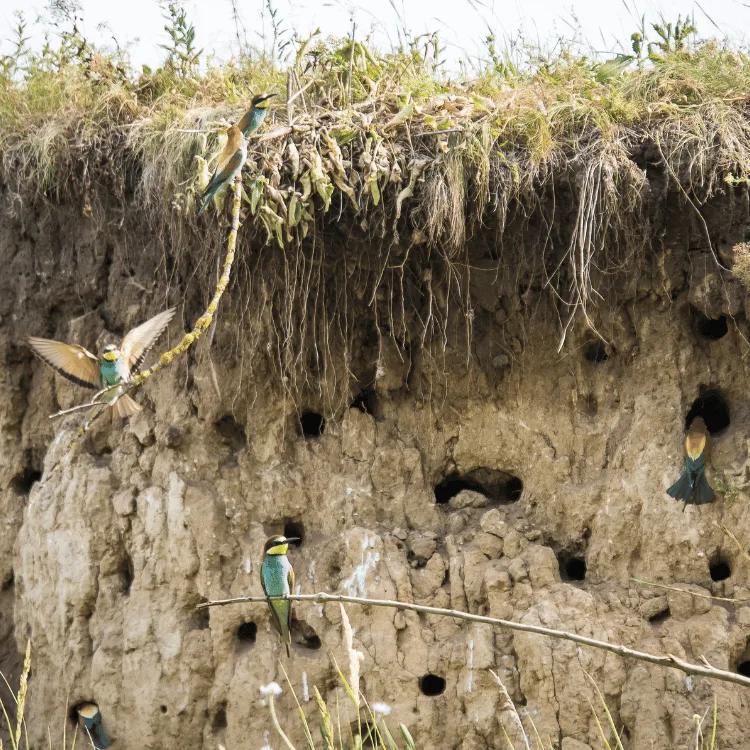
The European bee-eater (Merops apiaster) is a beautiful bird belonging to the family Meropidae. It is known for its lively behaviour, colourful plumage and specialised diet, as its main source of food is – bees. Although in many regions it is a common sight in spring and summer, its presence in any given area depends largely on migration and conditions in nature.
European bee-eater (Merops apiaster)
What does the bee-eater look like?
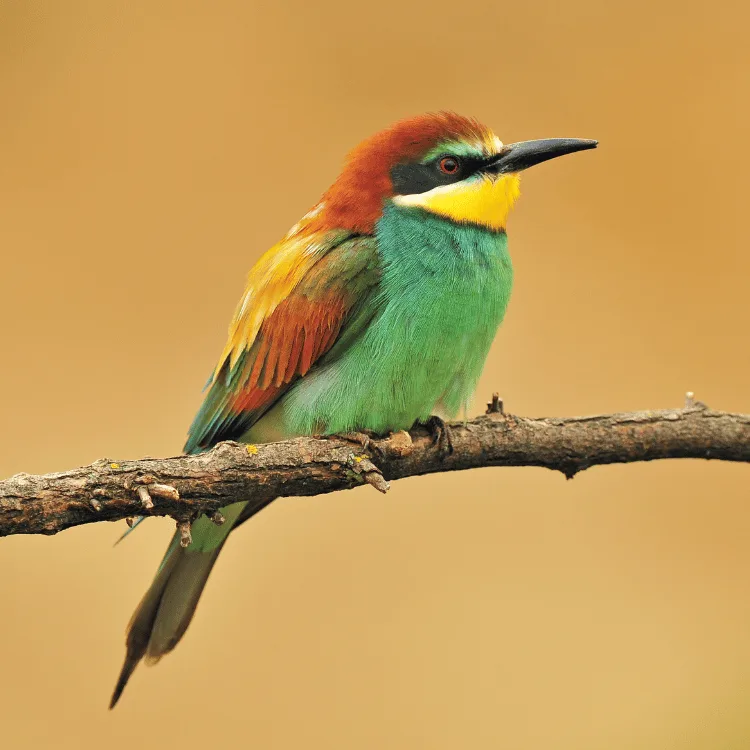
The bee-eater is a medium-sized bird, known for its colourful plumage and striking beauty. Its appearance makes a strong impression on anyone who sees it.
Characteristic physical features
Plumage: the bee-eater is recognisable by its bright green back and blue belly, with red and yellow tones on the front of its body.
Beak: it has a long, sharp beak that it uses to catch bees.
Eyes: large dark eyes that allow it to hunt its prey with precision.
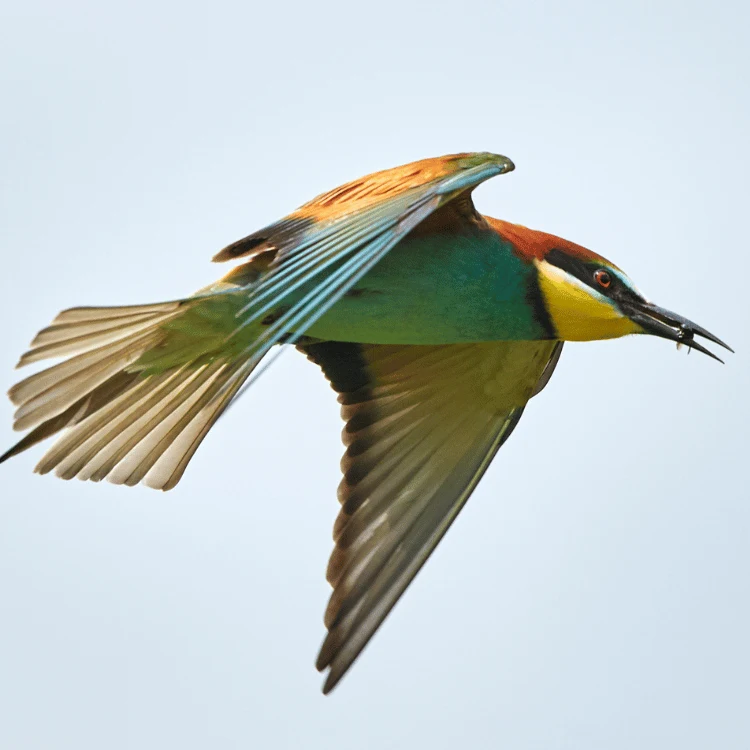
Tail: its long, pointed tail helps to keep it stable in flight.
The bee-eater lives in warm, sunny parts of Europe, Asia and Africa, and migrates south for the winter.
Bee-eater habitat and distribution
The bee-eater prefers open country, such as meadows, woodland edges, fields and rivers, near which there are plenty of bees. Bee-eaters most often live in areas with enough sociable, tall trees, which they use as nesting sites.
The bee-eater is mainly seen in southern Europe, North Africa and the Middle East. Although it is migratory, it can also be found in spring and summer in areas such as Central and Eastern Europe.
What does the bee-eater eat?
The bee-eater is an insectivorous bird, which means it feeds mainly on bees and wasps, although it can also hunt other insects. Its diet is special because it is specialised in hunting bees, which involves several stages:
How the bee-eater hunts
Catching bees: bee-eaters fly high and hunt bees on the wing, snatching them out of the air with their long beaks.
Feeding and handling prey: after catching a bee, the bee-eater usually presses it against a stone or branch to remove the venom glands before eating it.
Their diet also includes grasshoppers, caterpillars and other small insects, and they can often be seen hunting on the wing or flying over areas rich in these creatures.
Behaviour and social life of the bee-eater
Bee-eaters are highly sociable birds that usually live in small groups. They are most active in spring and summer, when they are looking for food and partners.
Bee-eater migration
Migration: bee-eaters migrate south in winter, but return north when food in the form of bees and other insects appears.
Territoriality: although they are sociable, bee-eaters often establish territories for nesting and feeding. These birds usually have strong migratory instincts that allow them to survive the colder months.
Bee-eater nesting
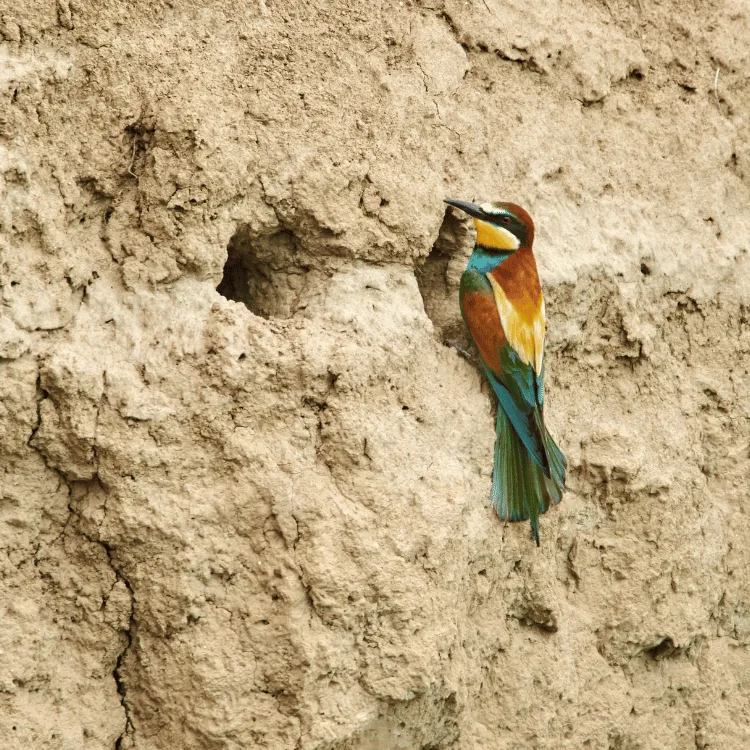
The bee-eater nests in long, open tree hollows or in the walls of old houses, where the presence of natural predators is reduced. Nests are usually built from grass, twigs and bark, and the female lays between 4 and 6 eggs.
Caring for the young
Both parents look after the young, feeding them insects.
The young stay in the nest until they are strong enough to fly, and their diet includes bees and other flower-visiting insects.
Interesting facts about the bee-eater
Feeding on bees: the bee-eater is one of the few birds that specialise in hunting bees, taking advantage of its long beak and precise movements.
Habitat and migration: although they are found in Europe, bee-eaters migrate to warmer areas for the winter and return in spring when bees are active again.
Links with beekeepers: in some regions bee-eaters are known as symbols of a love of nature and are often associated with beekeeping. Many peoples believe that the bee-eater is a good sign for beekeepers and brings a good bee harvest.
Research on the bee-eater
Research has shown that bee-eaters develop special tactics for catching bees, using specific flight and hunting techniques that allow them to successfully catch these aggressive insects. Scientists are also studying how migration and climate change affect the behaviour of bee-eaters.
Conclusion
The bee-eater is a fascinating bird that enchants us with its colourful plumage, lively behaviour and exceptional hunting skills. Its ability to catch bees, its social life and its particular way of life make it unique among birds. The bee-eater is a true icon of spring and of nature, and its song and presence are always a reminder of the richness of the bird world and its connection with the environment.