Bats are the only flying mammals, recognisable by their wings, which are formed from extended layers of skin stretched between their fingers. They are not birds in any sense but mammals, although many people think of them as birds because they can fly. Bats are fascinating animals, known for their ability to navigate in the dark using echolocation, but also for playing a key role in ecosystems by controlling insects and dispersing plant seeds. Bats are very widespread in Croatia, and there are many species living in different types of habitat, from forests to urban areas.
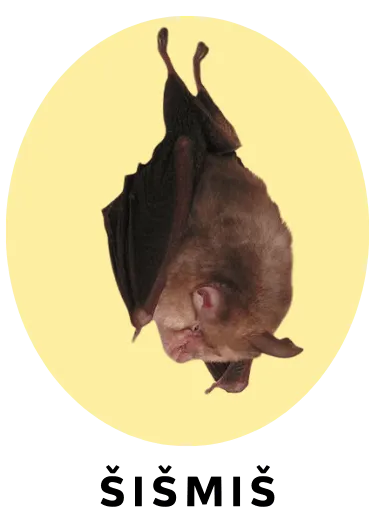
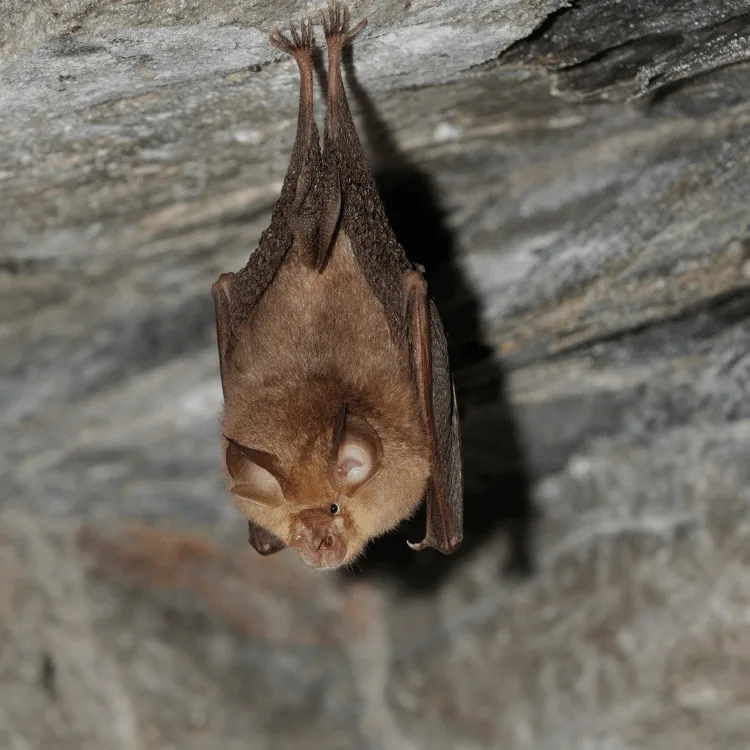
Greater horseshoe bat (Rhinolophus ferrumequinum)
Bat species found in Croatia
More than 30 species of bat live in Croatia, which makes the country a very important area for protecting these fascinating mammals. Among the best-known species are: Greater horseshoe bat (Rhinolophus ferrumequinum): this bat is one of the best-known European species. It has a characteristic horseshoe-shaped noseleaf, which gives it its name. It often lives in hollow trees and old buildings. Lesser horseshoe bat (Rhinolophus hipposideros): similar to the greater horseshoe bat but smaller, the lesser horseshoe bat is most often found in hollow trees or abandoned buildings. Greater mouse-eared bat (Myotis myotis): this bat is found across most of Croatia. It often lives in hollow trees but also in old buildings, and feeds on various kinds of insects. Brown long-eared bat (Plecotus auritus): this species is recognisable by its large, long ears, which help it find its way in the dark. Long-eared bats live in hollow trees and abandoned buildings. European free-tailed bat (Tadarida teniotis): this bat, also known in Croatian as “podkornjak”, likes hollow trees and rocky crevices and cavities. It is relatively rare in Croatia. Common bent-wing bat (Miniopterus schreibersii): a small bat that is often found in tree hollows and cavities in buildings. Although it is very small, it is effective at controlling insect populations. Apart from these, many other bat species live in Croatia in a variety of habitats, and most of them play a key role in maintaining the balance of nature.
Bat habits and behaviour
Bats are nocturnal animals that feed on insects such as mosquitoes, moths and other flying insects. Their diet plays a key role in keeping the numbers of these insects in check, which makes them very important for agriculture and human health, as they reduce the number of pest insects. Bats use echolocation – the ability to emit high-frequency sounds – to orient themselves in total darkness and locate their prey. Unlike many other mammals, bats sleep high up in tree hollows, caves, cavities in buildings and other hidden places. This keeps them safe from predators. Many bats migrate south in winter, where the climate is warmer and food easier to find. Others stay in their habitats all year round.
Nesting and family life
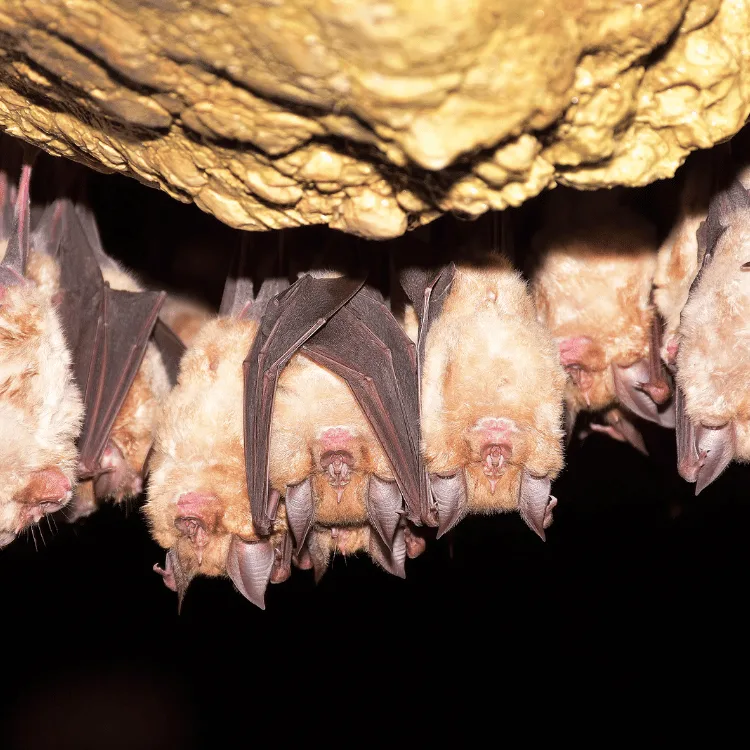
Bats usually start breeding in spring, when the females give birth to their young. Interestingly, bats usually have only one pup, which the mother carries with her until it is old enough to fly and hunt. Although a young bat does not start hunting straight away, its mother helps it learn to hunt until it becomes independent. Bats are social animals and can often be seen in large colonies. In these colonies the females usually give birth to their young, while the males join in hunting and migration. A group of bats usually consists of several hundred to several thousand individuals, depending on the species.
Lifespan
Bats are relatively long-lived for their size, and many species can live up to 15 years, while a few individuals may even reach 30 years. However, a bat’s lifespan often depends on its living conditions, the presence of predators, disease and damage to its habitats.
Facts and research
Bats are the subject of much scientific research, especially because of their ability to use echolocation and to migrate. Scientists have studied how bats use high-frequency sounds to navigate in the dark, as well as how they find their way in nature and orient themselves through dense woodland. In addition, bats are extremely important for ecosystems because they help maintain the balance of insect populations. Without them, the number of mosquitoes and other pest insects could rise sharply, with negative consequences for agriculture and human health.
The ecological role of bats
Bats play a key ecological role in controlling insect populations. Because their diet includes mosquitoes and other flying insects, bats help reduce the number of pest insects in agriculture and in human settlements. They are also important for dispersing plant seeds, as many bat species also eat fruit and carry the seeds to new places.
Conclusion
Bats are incredible animals that play a key role in maintaining the balance of nature. Through echolocation, insect control and seed dispersal, bats contribute to the health of ecosystems. Although they are often seen as mysterious or frightening, bats are of vital importance for conserving biodiversity and the balance of nature.