

About the European badger
European badger (Meles meles)
The European badger (Meles meles) is a secretive and fascinating animal that lives in forests, fields and grasslands throughout Europe and parts of Asia. This nocturnal mammal, known for its stocky build and distinctive black-and-white face, plays a key role in the ecosystem. Although it usually stays hidden from view, its way of life and behaviour are of great interest to biologists and nature lovers.
Appearance and characteristics
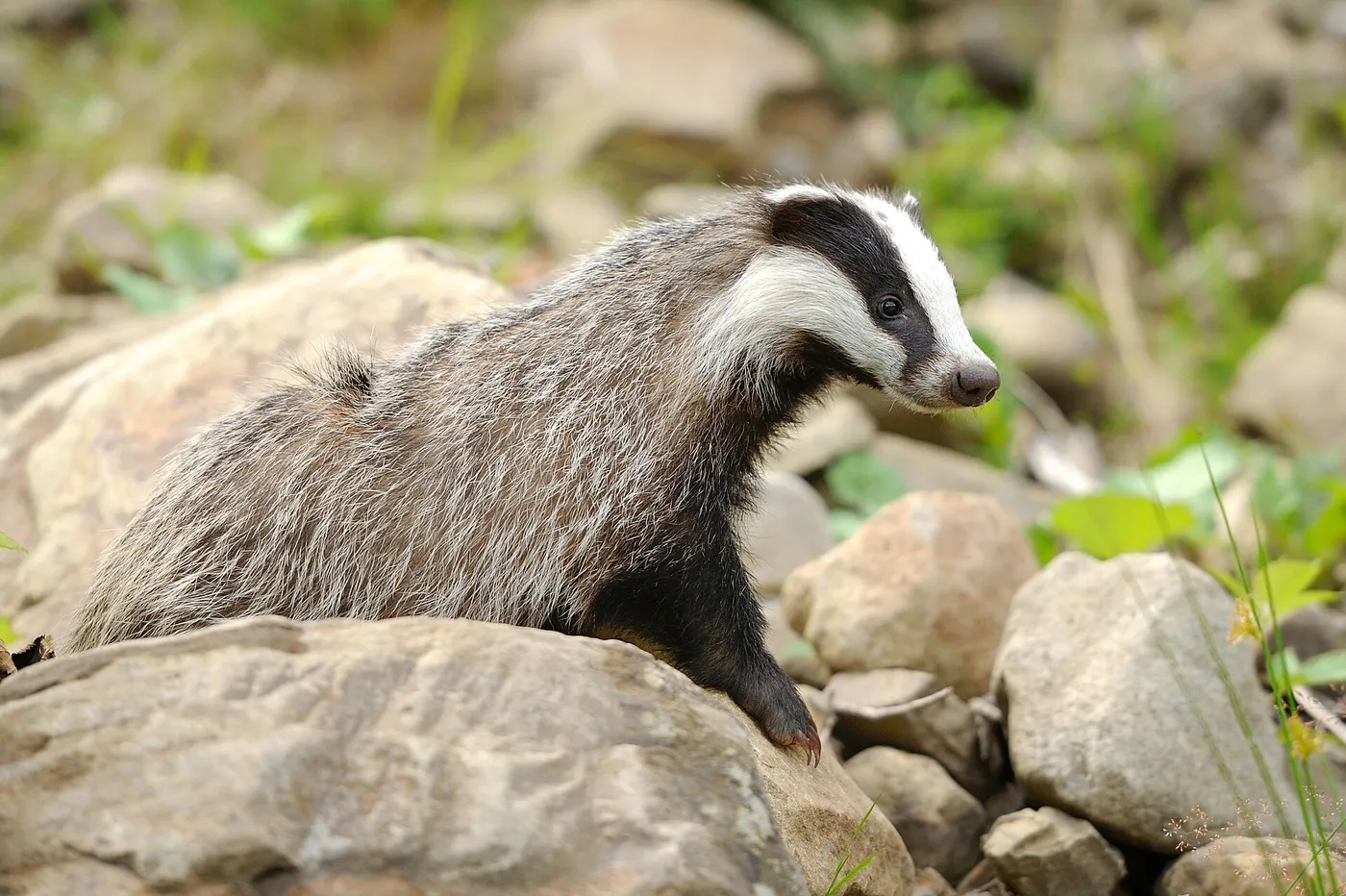
The badger is a strong, stocky animal with a body length of between 60 and 90 cm, plus a tail of another 15 to 20 cm. Adults weigh between 7 and 17 kg, but their weight changes considerably with the seasons. In autumn, before their winter rest, they can be much heavier because of the fat reserves they have built up.
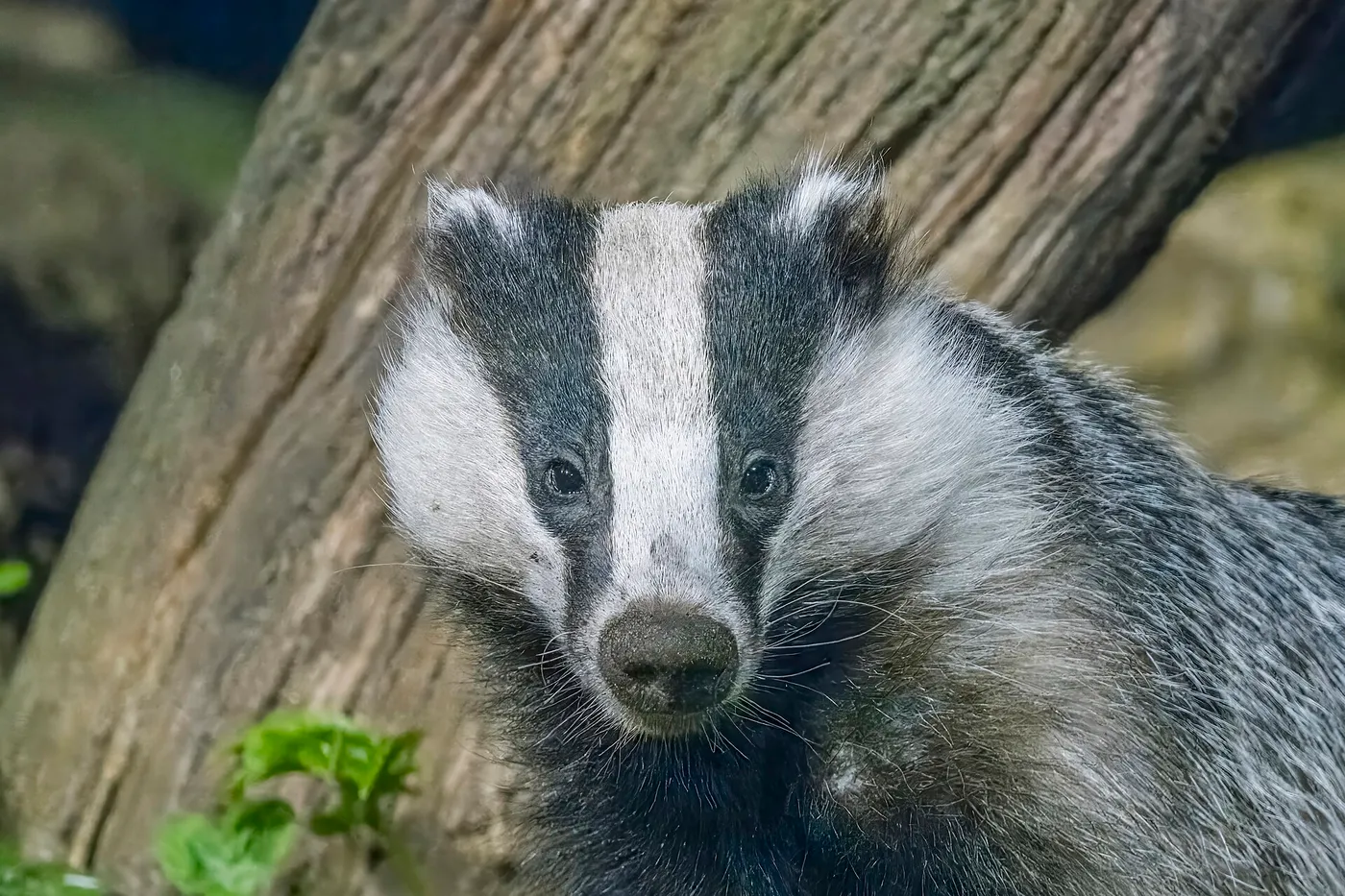
Its fur is thick and grey, while the belly is darker. Its most recognisable feature is the black stripes on its face, which run from the nose to the ears and contrast strikingly with the white background. These markings also serve as protection from predators, as they make badgers less conspicuous in the dark.
Habitat and way of life
The European badger lives in woodland, fields, meadow edges and scrub, and it is often found near farmland. Its habitats offer plenty of shelter and cover, where it can dig its complex underground setts.
Its setts are true architectural wonders of nature. They are complex systems of tunnels and chambers that are used for generations and can be decades old. The inside of a sett is always tidy – badgers regularly bring in dry grass and leaves to make a comfortable bed.
Although they are nocturnal, badgers sometimes come out during the day, especially in quieter areas where there are no threats.
Diet
The badger is an omnivore, which means its diet includes a wide range of foods. It feeds on rodents, insects, snails, fruit, berries, roots and fungi. It is particularly fond of earthworms, which are one of its main sources of protein. In autumn it often eats walnuts and acorns to prepare for the winter.
Its diet adapts to the seasonal availability of food, which makes it a very adaptable animal.
Behaviour and social life
Although the badger often seems to be a loner, it actually lives in small family groups. These groups share the same sett and look after their territory together. Badgers are territorial and mark their area with scent glands and scratch marks on the ground.
In winter the badger does not go into true hibernation, but it greatly reduces its activity and spends most of its time in the sett, relying on the fat reserves it built up over the summer and autumn
Breeding and young
The mating season lasts from spring to summer, but badgers have an interesting ability called delayed implantation. This means that the fertilised eggs do not develop straight away, but only in late autumn. The cubs are born in February or March, and a litter usually has between two and five cubs.
The cubs stay with their mother for several months, during which they learn to hunt, find food and survive in the wild.
Conservation status and threats
According to the International Union for Conservation of Nature (IUCN), the European badger is not currently threatened and is listed as “Least Concern”. Nevertheless, it faces numerous threats, including:
Habitat loss due to urbanisation and intensive agriculture
Road accidents, as badgers are often hit by vehicles
Hunting and controversial culling campaigns, especially in some parts of Europe where they are considered carriers of diseases such as tuberculosis
Despite these challenges, badgers are extremely adaptable and manage to survive even close to populated areas.
Interesting facts about the badger
Badgers are extremely clean – they regularly clean out their setts and never relieve themselves inside them.
They can recognise members of their group by scent, which allows complex social interactions.
They have an exceptional sense of smell, which they use to find food and detect intruders in their territory.
Setts are used for decades and are sometimes taken over by other animals such as foxes or rabbits.
In British folklore the badger is often portrayed as a wise and noble character.
Conclusion
The European badger (Meles meles) is an essential part of European ecosystems, where it plays an important role in maintaining the balance of nature. Its survival skills, complex social life and adaptability make it a fascinating creature.
Despite the threats it faces, its resilience and adaptability allow it to survive in changing conditions. Protecting its natural habitats is key to securing its future, and raising awareness of its importance can help protect this remarkable species.